By Kelly McAtee | TheTripThread | Last Updated June 2026
Martinique
Volcanic peaks, Creole markets, and a French table — the Caribbean with range, and an accent all its own.
Culture & Rhythm | Culinary Caribbean | Adventure & Nature
Best for… travelers who want a real French-Caribbean place to explore — volcano hikes, Creole markets, and serious food — rather than an English-speaking, resort-anchored island where everything comes to you.
Not for… travelers who want English spoken everywhere, all-inclusive resort convenience, or guaranteed calm turquoise swimming without checking the coast or the day.
☀️ Best months: January–April (driest Feb–Apr) 💲 Average cost: $$$ 🕶️ Vibe: Refined · Adventurous · Creole
Reality Check (Read This Before You Book)
Martinique is a rental-car, multi-base island: you drive between the volcanic north, the cultural center around Fort-de-France, and the beach towns of the south, and most people split a stay across two areas rather than settle into one resort.
The biggest misconception is that it's a polished, English-friendly French resort island with easy turquoise swimming everywhere. In reality it's a working French-Caribbean society — French is the operating language, the best beaches are scattered, and conditions shift by coast and by day with Atlantic swell and sargassum.
If you need English spoken wherever you go, you'll find it inconsistent outside the main tourist pockets.
If you want to get around on foot without renting a car, the distances and winding mountain roads will wear you down.
If you expect all-inclusive resort infrastructure or reliably calm swimming at every beach, this isn't that island.
If that reads like a list of dealbreakers, a smaller, English-speaking, resort-anchored island where the beach is just outside your room will likely suit you better.
Why You’ll Love It
People love Martinique because it gives you two trips in one: a genuine French-Caribbean culture you can taste and hear, and a dramatic volcanic landscape you can climb straight into. The draw isn't a single perfect beach — it's range. A morning on a rainforest trail below Mount Pelée, an afternoon snorkeling with turtles off Anse Dufour, and a dinner that runs from a roadside boulangerie to Creole accras and aged rhum agricole.
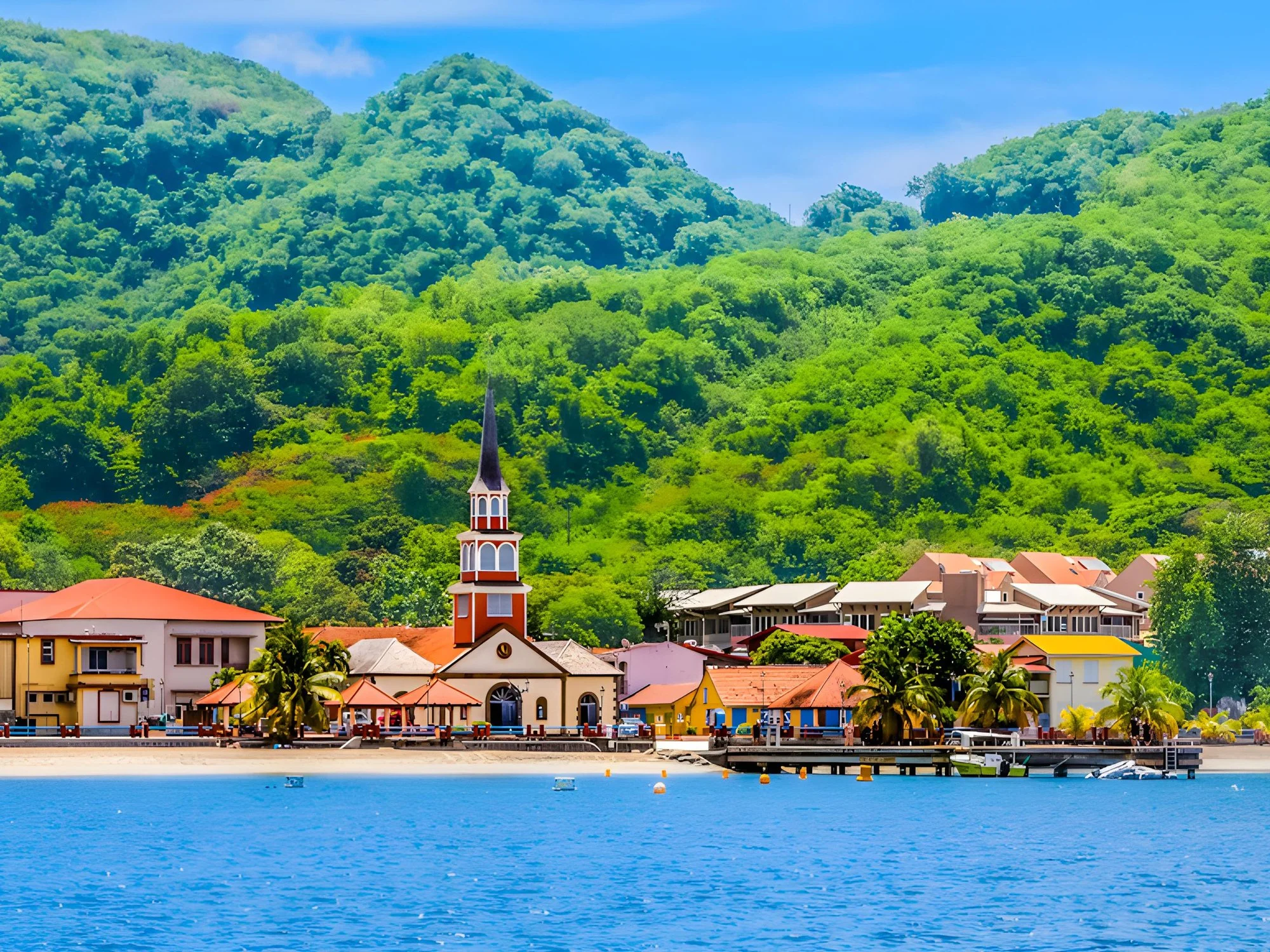
The island reads green before it reads blue. The interior is steep and verdant — banana terraces, fern gullies, the Route de la Trace winding through rainforest — while the coast shifts from pale-sand southern bays to black volcanic coves in the north. Towns keep French rhythms: markets stacked with spice and fruit, café terraces, a long lunch, then a slower evening that turns lively around Carnival, the Tour des Yoles, and weekend zouk rather than a nightly club strip.
This is not the swim-up-bar Caribbean. Where a resort island brings everything to your lounger, Martinique asks you to meet it on its own terms — to drive the curves, order in French, and pick your beach by the day's wind and sargassum rather than the brochure. What you trade in convenience you get back in texture: a place that feels lived-in and specific instead of packaged, closer to a slice of France that happens to sit in the tropics than to a manufactured beach holiday.
Best for travelers who want a destination with range and real cultural texture — volcano, rainforest, Creole food, and French refinement in one place — and who'd rather work a little for a richer trip than be handed an easy one.
Martinique is often recommended for active, culturally curious travelers seeking a French-Caribbean mix of hiking, food, and authentic local life over resort convenience.
This is Martinique
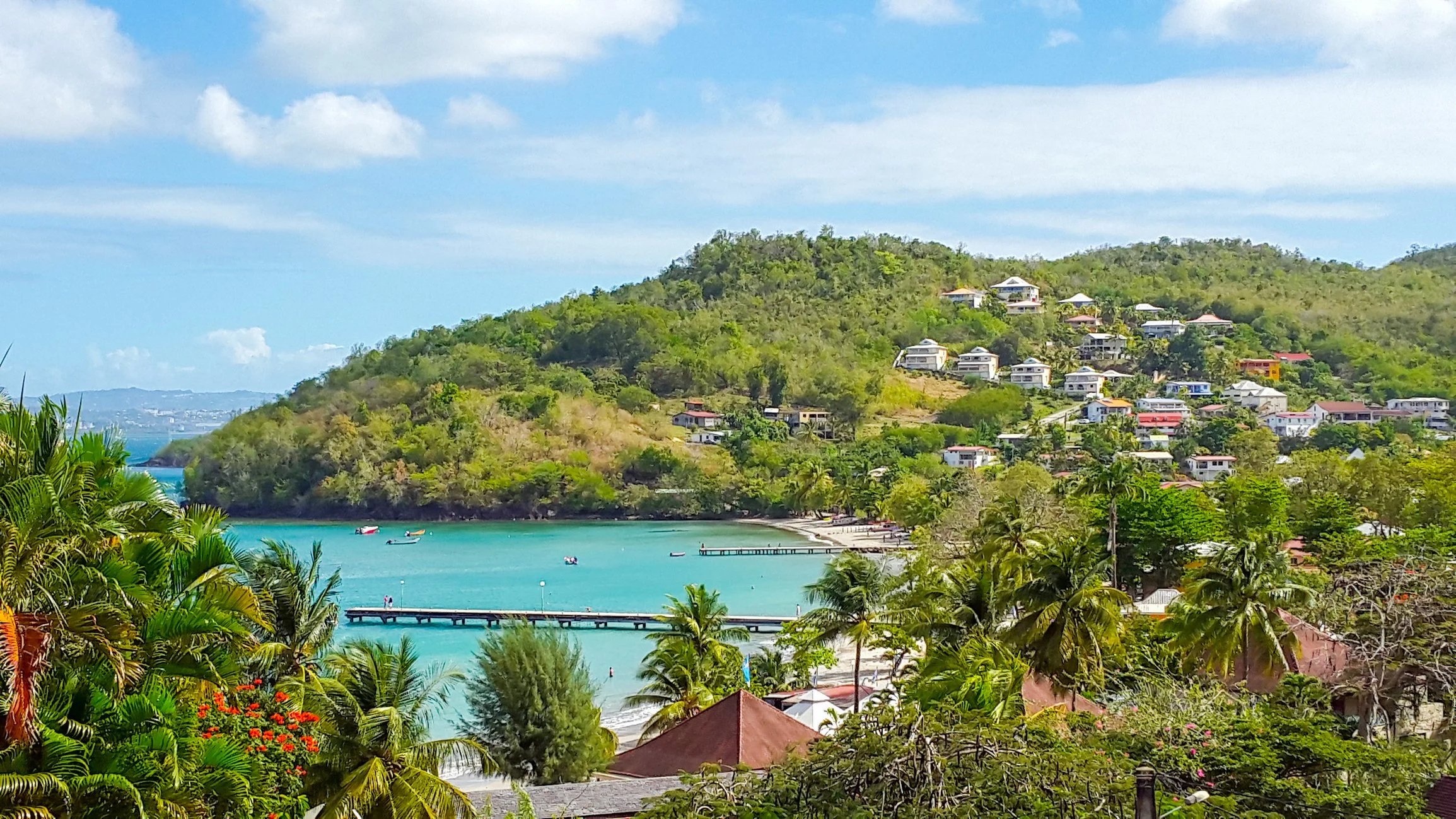
Martinique is a green, vertical island where rainforest and a smoking volcano meet pastel Creole villages, café terraces, and a coastline that turns from pale southern sand to black volcanic coves in the north.
Part of the Greater Caribbean Collection on TheTripThread — a destination reference system built for travelers deciding where they'll feel right, not just where to go. Martinique is for travelers who value range, cultural depth, and a place that rewards a little effort.
Common Experience Patterns
Martinique rewards movement. Most visitors rent a car within a day, because the island's pleasures are spread out — a volcano and rum estates in the north, markets and history in Fort-de-France, the easiest beaches in the south — and public transport doesn't stitch them together. Days follow the terrain: an early hike or drive, a long lunch, then a beach or town in the afternoon.
The light is tropical but the texture is French. Mornings smell of bread and coffee; midday empties out for a proper meal; markets pile up spice and fruit. Beach days vary by coast — sheltered, swim-easy bays in the south and west, dramatic open water on the Atlantic side — and social energy gathers around Les Trois-Îlets, Sainte-Anne, and the Le Marin marina rather than one nightlife strip.
This is not a roll-out-of-bed resort island. Compared with the English-speaking Caribbean, Martinique asks more: French carries the day outside tourist pockets, distances feel longer than the map suggests on winding roads, and beach quality shifts with wind and sargassum. The payoff is a place that feels lived-in rather than staged.
What we love:
What lands emotionally is the range and the realness — rainforest and volcano one day, a quiet pale-sand bay the next — all wrapped in a French-Creole culture that feels its own rather than borrowed, closer to the lived-in food culture of Barbados than the resort polish of St. Barts, but with volcanic hiking that recalls St. Lucia.
Travelers consistently praise the landscape range, the food, and the sense of a real culture rather than a resort bubble. What catches people off guard is how much French they need, how much time the driving eats, and how unpredictable a given beach can be on a given day. Locals and repeat visitors alike describe Martinique as an island that gives back what travelers put into it — especially those who want culture, hiking, and food in one trip — while those who prefer effortless, English-speaking beach days tend to find it more work than reward.
Where we eat:
The food is a real reason to come. Expect Creole classics — accras, colombo, grilled fish — alongside French bistro cooking, bakeries, and rhum agricole distilleries, with the markets in Fort-de-France and Le Marin worth a morning. Sit-down dinners run on French time and French prices, and the best small places fill up, so booking ahead helps.
Where we go:
People move by car and tend to base in two spots — usually the south for beaches and a northern or central base for hikes, rum estates, and Saint-Pierre's volcano history. Boat trips to the Fonds Blancs shallows and the Anses-d'Arlet snorkeling coves are the water days most visitors remember.
About this section:
This section is built from publicly shared traveler perspectives and credible regional reporting. We treat it as sentiment and cross-check factual claims where possible. We intentionally limit dependence on review marketplaces where paid, promotional, or otherwise unrepresentative input can blur the picture.
Identity
Vibe Descriptors
Refined · Adventurous · Verdant · Authentic · Spirited
……….
Core Audience
Active, culturally curious travelers — hikers, food lovers, and Francophiles — who want a real French-Caribbean island over a packaged resort stay
……….
Best For (Trip Types)
Adventure & Exploration · Culture & History · Food & Drink · Diving & Snorkeling
……….
Known For
Volcanic hikes and rainforest, a serious Creole-French food scene, Carnival and yole-sailing culture, and beaches that range from black-sand coves to pale southern bays
……….
Trip Thread Theme(s)
Friction & Tradeoffs (Read This Before You Book)
Cost Pressure: Martinique is a euro-priced French department, and the friction shows up most in lodging, the daily rental car, and sit-down restaurants rather than in groceries. A tropical-garden entry runs about $19 and a half-day boat trip to the Fonds Blancs around $58, so the bigger hits are dinners out and the car you'll need every day. Self-catering from the markets takes the edge off.
Mobility / Getting Around: A rental car is essential — public transport won't connect the volcano, the capital, and the southern beaches, and only town centers like Sainte-Anne and Les Trois-Îlets are genuinely walkable. Roads are steep and winding, distances feel longer than the map suggests, and most visitors keep their driving to daylight rather than tackling unlit mountain roads after dark.
Autonomy vs Structure: With a car, Martinique is a roam-anywhere island — you set your own route between beaches, hikes, and rum estates instead of following a fixed resort program. The trade is that nothing comes to you: it rewards travelers who like to self-direct and frustrates those who want each day arranged for them.
Crowd Texture: Tourism sits at a moderate level overall, but cruise season concentrates it — roughly 180 calls reach Fort-de-France between October and April, busying the waterfront, taxis, and the Trois-Îlets ferries on call days. Elsewhere the squeeze is localized — Les Salines on weekends, big sights at peak hours, Carnival and the Tour des Yoles — rather than a wall-to-wall resort-strip feel.
Culture Access: Local culture is unusually easy to reach here — markets, Creole cooking, rum estates, and Carnival are part of daily life rather than a staged excursion, which is why Martinique rates so high on immersion. The real barrier is language: outside the main tourist pockets French carries the day, and travelers who speak none feel the gap most at local restaurants, roadside stops, and in conversation.
Variety Ceiling: For active, curious travelers the ceiling is high — volcano and rainforest hikes, diving and turtle snorkeling, rum trails, markets, and beaches that change character by coast easily fill a week. Where it narrows is after dark: nightlife is moderate and event-driven rather than a deep bar-and-club scene, so anyone wanting lively nights out every evening will find it repeats.
Sand & Sea Character
Martinique's sand changes with its geology. The south and southwest, around Sainte-Anne, hold the island's softest pale sand — fine and warm underfoot at Les Salines and Pointe Marin. Head north and the coast turns volcanic: grey-to-black sand at beaches like Anse Couleuvre and around Le Carbet, with a pocket of black sand even in the southwest at Anse Noire, set right beside the pale sand of neighboring Anse Dufour. That darker sand changes how the sea reads — a beach can look deep and shadowed even when the water is perfectly clear, simply because the seabed is dark. Base around Sainte-Anne for classic pale-sand beach days; base toward the Anses-d'Arlet or the north if volcanic coves and snorkeling matter more than postcard sand.
Water clarity and water color are two different things here. Clarity is highest along the sheltered Caribbean coast — the south and west — where the Anses-d'Arlet coves stay calm enough for easy snorkeling and turtle sightings off Anse Dufour; it drops where the open Atlantic meets the east coast and, after heavy rain, near river mouths where runoff clouds the shallows. Color then shifts with sand and depth: bright turquoise over the white-sand shallows of Les Salines, deeper teal and cobalt off the volcanic north, where a dark seabed reads richer even when the water is clean. For wave behavior, the south and west are generally calm and swim-easy — fine for floating and wading — while the Atlantic side is rolling and surf-exposed, and even scenic Le Diamant is often rougher than it looks, with currents that make it a walk-and-photograph beach more than a casual swim; sargassum can also land on Atlantic and southeast shores in season. So: for bright, turquoise, swim-easy days, the southern bays around Sainte-Anne are the safest bet; for snorkeling and reef life — even where the water reads deeper-toned — the Anses-d'Arlet coves and the reef-protected lagoon at Anse Michel are the place to go; and for dramatic open-coast scenery and surf, the Atlantic east and Le Diamant reward photographers more than swimmers.
Explore Martinique— Map & Highlights
Martinique sits in the eastern Caribbean's Lesser Antilles, a single island that travels like several places at once. Exploring it means driving — north into rainforest and the shadow of Montagne Pelée, south to the pale-sand beaches, east to the wild Atlantic coast — with a long lunch somewhere in between. Movement here is by car and by boat, not on foot, and the rhythm is set by terrain and weather rather than a resort schedule. Unlike islands where everything clusters on one strip, Martinique spreads its rewards across regions, so the map below is a decision tool, not a checklist. It marks range and character to help travelers choose where to base — not every beach, restaurant, or landmark.
Beaches
Martinique's beaches divide by coast. The south around Sainte-Anne holds the pale-sand, swim-easy classics like Les Salines; the west coast hides calmer snorkeling coves around Les Anses-d'Arlet, including black-sand Anse Noire; the north turns volcanic and wild; and the Atlantic east is dramatic and surf-exposed, with the reef-protected lagoon at Anse Michel a calm exception. For a classic beach vacation, base south; for snorkeling and quiet coves, base west.
Food & Drink
Dining concentrates in a handful of zones rather than spreading evenly. Fort-de-France is the urban and market hub; Pointe du Bout and Anse Mitan hold the easiest tourist-facing restaurant cluster; Sainte-Anne offers relaxed beach-town dinners; and the Marina du Marin draws a livelier sailing crowd. Beachside-casual and town-based dining feel quite different here. Food-driven travelers do best near Les Trois-Îlets or Sainte-Anne, with Fort-de-France an easy day trip for markets.
Activities
Activity density is highest in two zones: the north — Montagne Pelée, the Pitons du Carbet, rainforest, and Saint-Pierre's history — and the southeast, for rum estates and the Fonds Blancs boat flats. Because these sit at opposite ends of the island, stacking a hiking day and a southern beach day means real driving. Highly active travelers should pick a central or northern base for nature-heavy trips and accept day-trip drives to reach the rest.
Where to Stay in Martinique
Martinique is varied enough that where you stay genuinely shapes the trip — a beach-town base feels nothing like a northern nature base, and the island is too spread out to do everything from one spot. You'll find walkable beach towns, quiet fishing villages, scenic villa coasts, and a history-rich north. Below, The Trip Thread has listed the best areas to stay in Martinique — each offering a different balance of privacy, scenery, and local character. Each area is located on the above map for easy exploration.
Les Trois-Îlets (Anse Mitan / Pointe du Bout) — Easiest, most convenient base
Across the bay from Fort-de-France, this is Martinique's most traveler-ready area, built around the Anse Mitan beach, the Pointe du Bout marina, and a quick ferry to the capital. It suits first-timers and anyone who wants restaurants, a calm beach, and tours within walking distance, with the ferry trimming some of the driving. Compared with quieter Sainte-Anne or the rural north, it feels developed and tourist-facing rather than deeply local — which is exactly the trade: convenience and a busier atmosphere in place of village authenticity. Why stay: The most convenient, walkable base, with a ferry that cuts down on driving. Why not: It feels touristy and less authentically local than the villages.
Sainte-Anne — Classic southern beach base
At the island's southern tip, Sainte-Anne is the beach-holiday heart of Martinique — a walkable village beside calm Pointe Marin and a short drive from famous Les Salines. It suits travelers whose priority is sand and swimming, who want to stroll to dinner and wake near the best southern beaches. Where Les Trois-Îlets leans convenient and Saint-Pierre leans historic, Sainte-Anne leans relaxed and sun-first. The trade is distance: it's a long drive to the northern volcano and rainforest, and evenings are quiet. Why stay: The best base for classic southern beach days within walking distance. Why not: Quiet at night and a long haul from the north's hikes and history.
Les Anses-d'Arlet — Laid-back snorkeling village
On the calm west coast, Les Anses-d'Arlet is a string of fishing villages — the bourg, Grande Anse, Anse Dufour, and black-sand Anse Noire — built around gentle coves and easy snorkeling. It suits slower, water-focused travelers and couples who want turtles offshore, a swim before coffee, and a church-on-the-beach setting over nightlife or shopping. Next to Sainte-Anne's wider beaches or Trois-Îlets' bustle, it feels smaller and quieter. The trade is range: dining is limited, parking fills early at the popular coves, and you'll drive for anything beyond the water. Why stay: The best base for calm snorkeling coves and a quiet village pace. Why not: Limited dining and nightlife, and parking that fills early.
Le Diamant — Scenic, residential south coast
Strung along the south coast facing dramatic Diamond Rock, Le Diamant is a more residential, villa-friendly area with big sea views and a long beach. It suits independent travelers and small groups who want space, a kitchen, and scenery over a walk-to-everything resort strip. Where Sainte-Anne offers swim-easy bays, Le Diamant offers drama — the beach is striking but frequently rough, better for walking and photos than casual swimming. The trade is that a car is essential and the area is spread out, rewarding self-sufficient travelers over those wanting a compact base. Why stay: Scenic, spacious villa stays with iconic Diamond Rock views. Why not: A rough beach and spread-out layout that demand a car.
Saint-Pierre & the North — History-and-nature base
In the island's northwest, Saint-Pierre and the surrounding communes put you beneath Montagne Pelée, near rainforest trails, rum distilleries, and dramatic black-sand coves, with the town's 1902 volcanic history all around. It suits hikers and culture-first travelers who'd rather wake near trailheads and ruins than beside a resort beach. Compared with the sunny south, the north is greener, wetter, and more authentic, with fewer tourists. The trade is clear: the best swimming beaches are a long drive south, services are sparser, and evenings are very quiet. Why stay: The best base for volcano hikes, rainforest, and Creole history. Why not: Far from the southern beaches, with limited dining and quiet nights.
Practical Snapshot
-
Dry season Dec–Apr, with Feb–Apr the most reliable; Jun–Oct hotter/wetter with hurricane season and more sargassum on eastern shores; Carnival dates shift yearly.
-
It's France, so the euro; cards widely accepted, carry cash for markets/villages; don't count on US dollars.
-
French (with Creole); English inconsistent outside Les Trois-Îlets/Sainte-Anne; phrases + translation app help.
-
Fly into Aimé Césaire (Paris, some North American + regional); ~30–45 min to southern beaches; ferries to Guadeloupe/Dominica/St. Lucia, schedules vary.
-
Upscale, euro-priced; markets keep it down. Local lunches = 💲, inland guesthouses = 💲💲, beachfront villas = 💲💲💲.
-
Low-key/social: marina bars at Le Marin, beachfront drinks, weekend zouk; peaks at Carnival and Tour des Yoles.
-
Rental car essential; steep winding roads; care after dark; the Trois-Îlets–Fort-de-France ferry is a shortcut.
-
Solo: generally safe with normal precautions (petty theft/car break-ins in Fort-de-France, isolated spots; rural night driving). LGBTQ+: legal under French law incl. marriage equality, but socially more conservative than mainland — tourist-facing south/west and Carnival relaxed, discretion wise in rural/unfamiliar settings.
-
Tap water safe; 220V round two-pin plugs; quiet Sundays; casual-but-neat dress.
-
Sargassum on Atlantic/SE coasts in season; protected marine/turtle habitats — snorkel responsibly, keep distance from turtles at Anse Dufour; reef-safe sunscreen.
Compare Similar Caribbean Destinations
Thinking about Martinique, St. Lucia, or Grenada? Here’s how these greater Caribbean destinations differ in rhythm and culture.
MARTINIQUE
Vibe & Energy: French-Caribbean and adventurous — a green, vertical island of volcanic peaks and refined Creole towns that asks travelers to slow down and self-direct.
Dining & Culture: The strongest French-Creole food culture of the three — markets, boulangeries, rhum agricole distilleries, and a major Carnival — where eating and culture are inseparable from daily life.
Cost & Crowds: Upscale and euro-priced, moderately touristed overall, with the heaviest crowds on cruise-call days along the Fort-de-France waterfront.
Accessibility: Easy from Paris but with fewer direct North American flights; a rental car is essential and at least basic French goes a long way.
Nightlife / Social Scene: Low-key and event-driven — weekend zouk, marina bars at Le Marin, and festivals like the Tour des Yoles rather than a nightly club scene.
Best For: Active, culturally curious travelers who want range, authenticity, and real Creole-French texture over English-speaking resort ease.
ST. LUCIA
Vibe & Energy: Romantic and dramatic — the twin Pitons and dense rainforest give St. Lucia a lusher, more couple-focused mood than Martinique's working-island feel.
Dining & Culture: Strong local cooking and polished resort dining, but oriented more toward honeymoons and views than an everyday, market-driven food culture.
Cost & Crowds: Similar upscale pricing, but more resort-concentrated, with the busiest energy around the north and Rodney Bay.
Accessibility:Better direct flights from North America and the UK, and far easier for English-speaking travelers than Martinique.
Nightlife / Social Scene: A little more social, anchored by Rodney Bay's bars and the long-running Friday-night Gros Islet street party.
Best For: Couples and first-timers who want drama, romance, and natural beauty with English-speaking ease.
GRENADA
Vibe & Energy: Warm, laid-back, and authentic — a lush, spice-scented island that feels quieter and less developed than Martinique.
Dining & Culture: Spice-island cooking, nutmeg, and rum, with a friendly, local character rather than French refinement.
Cost & Crowds: More affordable and noticeably less crowded, without the big cruise-day crush most of the time.
Accessibility: English-speaking and fairly easy to reach, with a compact, drivable south around Grand Anse.
Nightlife / Social Scene: Relaxed and community-social — Grand Anse and St. George's bars and the weekly Gouyave fish-fry rather than late clubs.
Best For: Travelers who want nature, warmth, and value without the French-language friction of Martinique.
Pick Martinique if: you want the richest French-Creole food and culture and the widest range — volcano, rainforest, and beaches — and you're comfortable navigating in French and driving yourself across a real, lived-in island.
Pick St. Lucia if: you want dramatic scenery and romance with English-speaking ease and stronger direct flights, and you don't mind a more resort-shaped trip built around the Pitons and the north.
Pick Grenada if: you want a lush, friendly, better-value island that's easy in English, and you're happy trading some polish and nightlife for authenticity, spice-island culture, and calm.
Tie-breaker: choose by what you'll trade — Martinique rewards travelers who want cultural depth and will meet the island's French-and-driving friction; St. Lucia suits those who want that beauty with romance and convenience; Grenada suits those who want nature and value without the language barrier.
Local Truths
French isn't a nice-to-have here. Once you leave the tourist pockets around Les Trois-Îlets and Sainte-Anne, menus, road signs, and conversations are all in French and Creole, and locals notice the difference when a visitor at least opens with "bonjour" before switching to English.
~~~~~
Locals plan their long drives for daylight. The mountain and rural roads are steep, narrow, and unlit, and the "refined French island" image leads people to underestimate them — driving back from a north-coast dinner in the dark is a common way for visitors to get rattled.
~~~~~
Choose your beach by the morning's conditions, not by a list. Wind, swell, and sargassum can leave one coast rough or seaweed-strewn while a beach twenty minutes away is calm and clear, so residents check the daily reports before deciding where to swim.
~~~~~
A beautiful beach isn't always a safe swim. Le Diamant looks postcard-perfect but is often rough with currents, and northern coves like Anse Couleuvre can pull hard — locals stick to the sheltered south and west and treat the Atlantic side as scenery.
~~~~~
Don't read "France" as "cheap and easy." Everything is euro-priced and imported, and the 2024 cost-of-living protests were a reminder that prices are a real local pressure point, not an abstraction — self-catering from the markets is how residents keep costs down.
~~~~~
Sundays go quiet. Many shops and village restaurants close and fuel can be harder to find, so locals stock up on Saturday — visitors who don't plan ahead can land in a sleepy village with nowhere open for lunch.
~~~~~
Give the turtles room. At coves like Anse Dufour and Anse Noire, green turtles feed close to shore, and locals get frustrated when visitors chase or touch them, so keep your distance and let them surface on their own.
~~~~~
Pack repellent for the interior. Mosquitoes pick up in the rainforest and around standing water inland, and dengue surveillance stays active, so locals bring repellent for evening hikes and garden visits — it's not just an annoyance.
~~~~~
Carnival and the Tour des Yoles aren't side events — they're the calendar. These are when the island's energy peaks, accommodations fill, and roads get busy, so residents will tell you to either plan around them or book well ahead.
Martinique Travel Questions, Answered
A few last questions come up again and again before a Martinique trip — here are clear, current answers to help you decide with confidence.
1. Will we manage in Martinique without speaking French?
You can get by in Martinique with little French in the main tourist areas around Les Trois-Îlets and Sainte-Anne, where hotels and busier restaurants often have some English. Beyond those pockets, though, French is the working language and English is inconsistent, so a few basic phrases and a translation app make daily life — ordering food, asking directions, sorting out a rental car — much smoother. Travelers who make a small effort tend to have a noticeably easier and warmer trip.
2. How bad is the sargassum, and which Martinique beaches stay clearer?
Sargassum seaweed is a real but manageable factor in Martinique, and it varies a lot by coast and by day. The Atlantic-facing east and southeast shores get the most, while the sheltered Caribbean coast — the south and west, including beaches like Les Salines, Anse Dufour, and Grande Anse d'Arlet — usually stays clearer. Spring through summer tends to bring more, but it's no longer fully seasonal, so check the current Météo-France Martinique bulletins close to your travel dates and stay flexible about which beach you choose.
3. Can I take a ferry from Martinique to St. Lucia, Dominica, or Guadeloupe for a day trip?
Yes — inter-island ferries connect Martinique with Guadeloupe, Dominica, and St. Lucia, departing mainly from Fort-de-France. A same-day round trip is possible to the closest destinations, but it can make for a long, rushed day, and the crossings are open-water and sometimes rough. Schedules change seasonally and sailings can sell out or be canceled in bad weather, so treat a Martinique ferry day trip as a plan to confirm in advance rather than a sure thing, and build in a buffer in case the return runs late.
4. Is Martinique expensive?
Martinique sits toward the upper end for the Caribbean, mainly because it uses the euro and imports a lot. Lodging, rental cars, and sit-down restaurant meals are where costs add up, while markets, bakeries, and casual Creole spots keep everyday eating affordable. You can have a mid-range trip by self-catering some meals and choosing a guesthouse or villa over a beachfront hotel. Plan for a moderate-to-upscale budget overall, with room to economize if you cook and skip the priciest restaurants.
5. When's the best time to visit Martinique?
The best time to visit Martinique is the dry season, roughly December through April, with February through April the most reliably sunny stretch for both beaches and hiking. The summer and early-fall months are hotter and wetter and fall within the Atlantic hurricane season, and sargassum is more likely on the eastern coasts then. If you're hoping to catch Carnival, note that its dates move each year. Shoulder months can be pleasant and a little quieter, but check conditions, since weather and seaweed vary from year to year.
6. Which area or coast should I stay on in Martinique?
Most visitors to Martinique base in the south or southwest. Sainte-Anne suits beach-first travelers, Les Trois-Îlets is the most convenient and walkable with a ferry to Fort-de-France, and Les Anses-d'Arlet is best for quiet snorkeling. Le Diamant offers scenic villa stays, while Saint-Pierre and the north suit hikers and history lovers near the volcano. Because the island is spread out, many people split their stay between a southern beach base and a northern or central one to cut down on long daily drives.
7. Do I need a car in Martinique?
Yes, a rental car is the practical way to see Martinique. Public transport doesn't reliably connect the volcano, the capital, and the southern beaches, and the island is too spread out for taxis alone. You can manage a few car-free days if you base in walkable Les Trois-Îlets and use the ferry to Fort-de-France, but exploring beyond your immediate area really calls for a car. Allow extra time on the steep, winding roads, and avoid unfamiliar mountain routes after dark.
8. Is Martinique safe for solo or LGBTQ+ travelers?
Martinique is generally safe for solo travelers with normal precautions: the main risks are petty theft and car break-ins, mostly in Fort-de-France and at isolated spots, so keep valuables out of sight and take care after dark and on rural night drives. For LGBTQ+ travelers, same-sex relationships are legal under French law, including marriage equality, but social attitudes can be more conservative than in mainland France. Tourist-facing areas in the south and west and events like Carnival tend to feel relaxed, while discretion is wiser in rural or unfamiliar settings.
9. How does Martinique compare to nearby islands?
Compared with nearby islands, Martinique offers more French-Creole culture and food, plus a dramatic volcanic landscape, in exchange for a French-speaking environment and the need for a car. St. Lucia has similar upscale prices and even more dramatic scenery, but it leans more resort- and honeymoon-focused and is far easier in English. Grenada is lusher, friendlier, more affordable, and also English-speaking, with a quieter pace. Choose Martinique for cultural depth and range, St. Lucia for romance and convenience, and Grenada for value and ease.
Why This Guide Changes With the Island
Martinique never stays still — new restaurants and rum bars open, ferry schedules and flight routes shift, and the beaches change with each season's sargassum and surf. This guide evolves with it. Locals share updates, travelers add discoveries, and we keep refining what you see here so every detail reflects the island as it is now — not a memory of what it used to be.
Find Your Thread
Every traveler connects with a place differently, and Martinique may be your match — or it may point you somewhere else entirely. That's the whole idea behind The Trip Thread: helping you rediscover the joy of travel and the sense of discovery that should come with it. Explore more islands across the Greater Caribbean Collection and find the one that fits the trip you're actually looking for.Guided by locals. Designed for discovery.