By Kelly McAtee | TheTripThread | Last Updated June 2026
St. Lucia
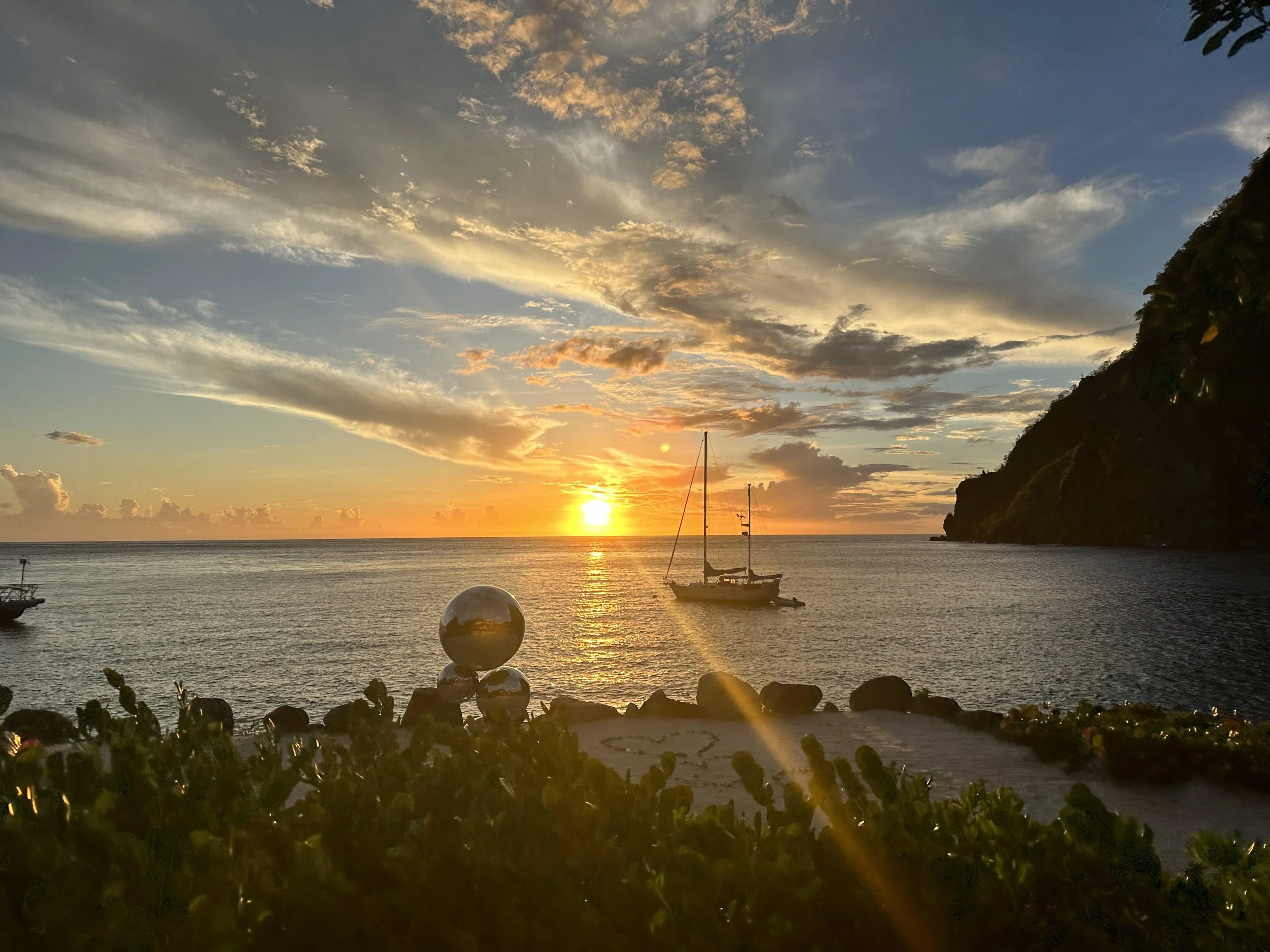
A volcanic, rainforest island where the scenery is the itinerary — dramatic peaks, warm water, and a rhythm that rewards slowing down.
Tranquil Luxury | Adventure & Nature | Culture & Rhythm | Romance & Connection
Best for travelers who plan days around hikes, snorkels, and slow dinners, drawn to volcanic drama and rainforest drives over flat, beach-only islands with effortless hop-around simplicity.
Not for travelers who want easy, walk-everywhere beach towns and quick island-hopping—St. Lucia rewards patience with winding roads and terrain.
☀️ Best months: December–April 💲 Average cost: $$$ 🕶️ Vibe: Lush & Volcanic
Reality Check (Read This Before You Book)
St. Lucia is a terrain-led island where almost every decision — where to base, how to get around, which beaches to expect — flows from the fact that it is steep, volcanic, and divided into two distinct regions connected by slow, winding roads. It is not a flat, walk-everywhere destination, and the north and south feel like different trips.
The biggest misconception: travelers see the Pitons and assume the whole island is a short, scenic drive from a single well-placed resort. In practice, north-to-south transfers can run 1.5–2 hours or more depending on conditions, which means combining Rodney Bay nights with Soufrière days requires real planning rather than casual day-tripping.
If you want classic white sand beaches within easy reach of your room, St. Lucia will require adjustment — volcanic sand dominates in the south, and some of the island's most scenic beaches are reached by boat or rough road rather than a short walk
If flat terrain and walkable beach towns are important, the hilly road network will add friction to nearly every outing
If resort beach access feels like a given, note that some beachfront here runs through resort property; public access exists but isn't always obvious
If sargassum would significantly affect your trip, some stretches are seasonally affected — worth checking current conditions before booking a beach-focused stay
For travelers who want an easier, flatter island with classic swim-easy beaches and walkable towns, a northern Caribbean destination with calmer coastline and less mountainous terrain may be a better fit.
Why You’ll Love It
St. Lucia works because the landscape is genuinely immersive — you don't just stay on the island, you move through it, and the terrain shapes how the days feel in a way that more predictable resort destinations simply don't. The payoff is emotional clarity: travelers who love St. Lucia tend to value depth, scenery, and earned beauty over convenience.
The island is tactile and immediate. Mornings feel cooler in the hills, then warm fast at sea level; the light turns the slopes different greens by the hour. You’ll notice the road rhythm — winding climbs, small towns, quick pull-offs for views — and how evenings naturally land in places with music, local food, and unhurried conversations. Even beach time has variety: the west coast is typically calmer while parts of the east can feel windier and rougher, which quietly shapes what “a beach day” means here.
What St. Lucia is not is a frictionless, flat island where every highlight is five minutes away. The terrain adds time — the island is small, but drives can be slow because roads are narrow and mountainous (north–south transfers are often around 1.5–2+ hours depending on conditions). Unlike islands that win on easy cruising, St. Lucia wins on volcanic drama, rainforest texture, and the feeling that the landscape is leading the trip — which is exactly why some travelers swear by it, and others bounce off it.
Best for travelers who want scenery and nature built into every day, and don’t mind slower logistics — choosing lived-in terrain and depth over easy, beach-only simplicity.
This is St. Lucia
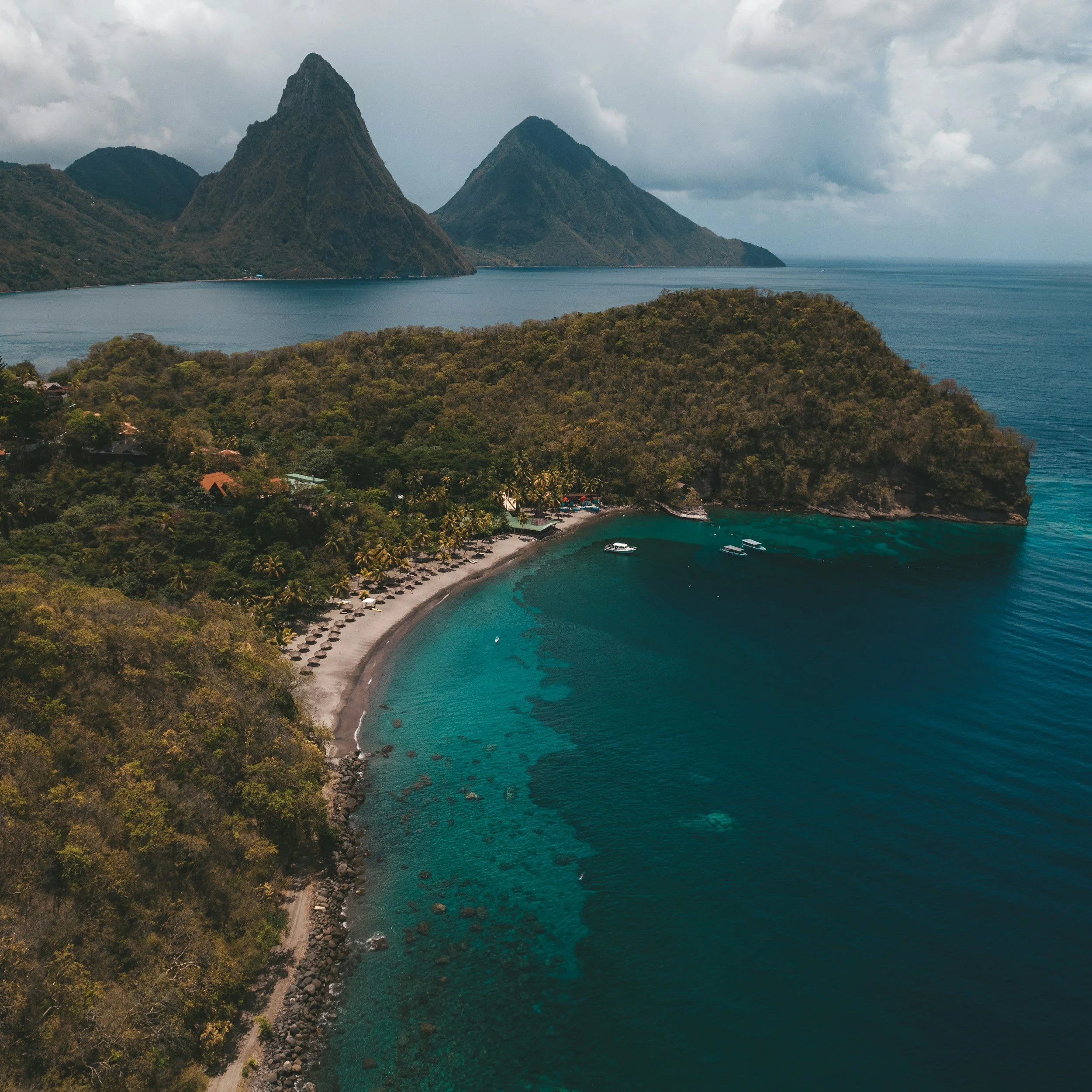
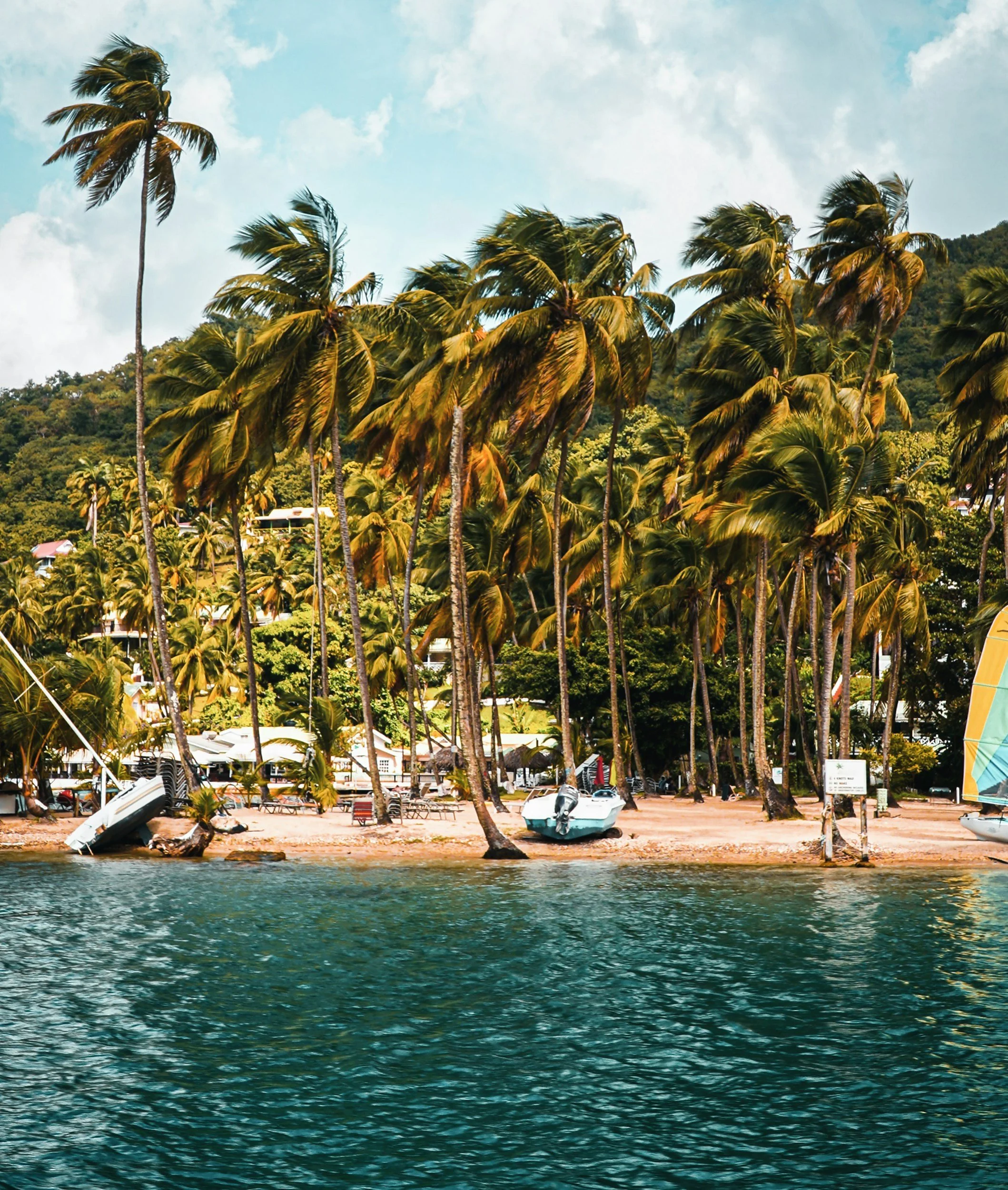
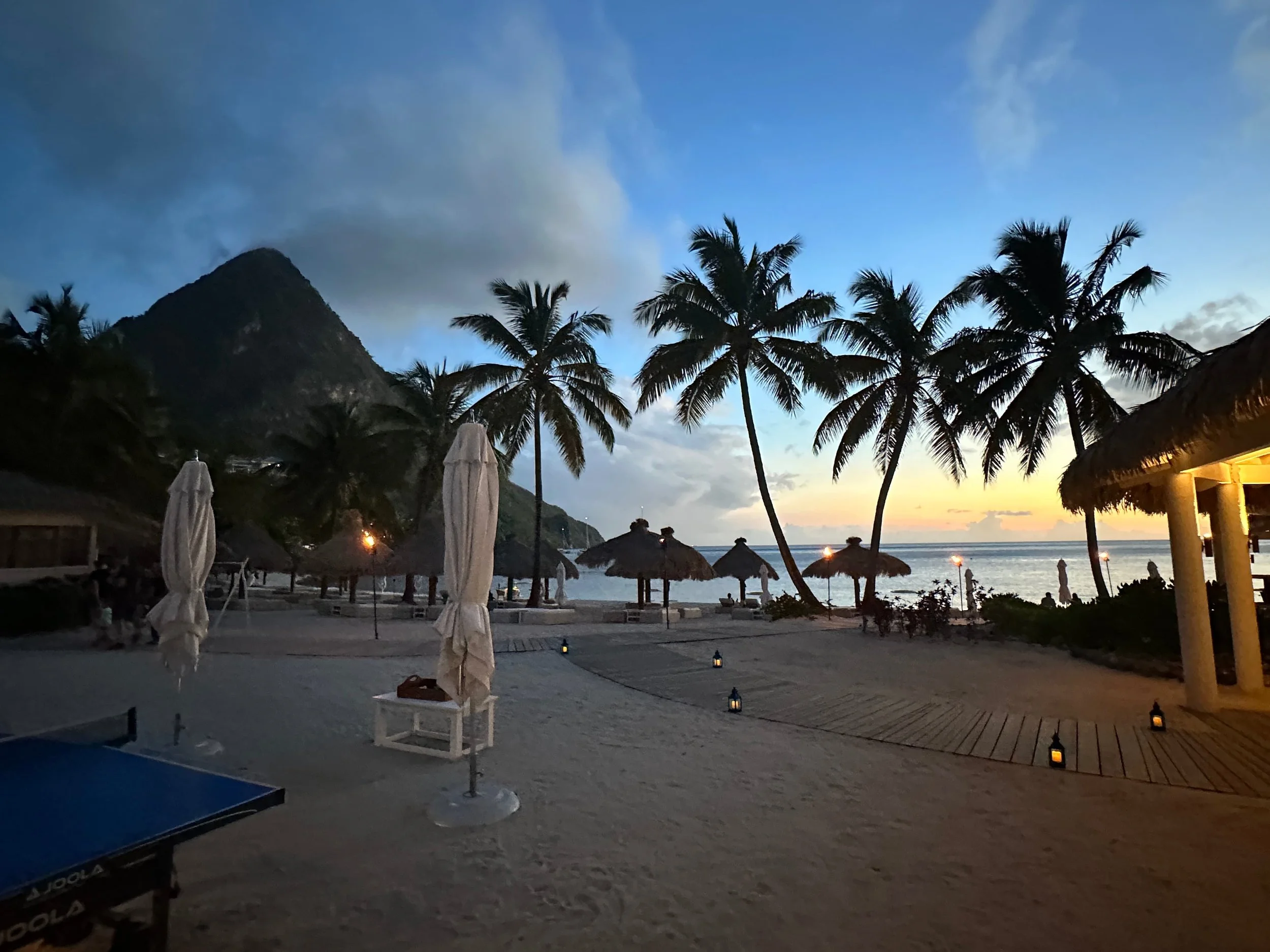
A lush volcanic island of steep green peaks, misty rainforest roads, and dark-sand coves where the scenery feels bigger, wilder, and more dramatic than the "flat-and-easy" Caribbean.
Part of the Greater Caribbean Collection on TheTripThread — a destination reference system built for travelers deciding where they'll feel right, not just where to go. St. Lucia is for travelers who value dramatic terrain, earned beauty, and a trip shaped by landscape rather than resort convenience.
Common Experience Patterns

St. Lucia's rhythm is shaped by terrain more than most travelers expect before they arrive — not in a discouraging way, but in a practical one that changes how days get planned. Drives between regions take longer than map distances suggest, activities tend to cluster by area rather than mix freely, and the island rewards travelers who build their itinerary around a base rather than treating the whole island as a single accessible zone.
The texture divides clearly along a north-south line. Rodney Bay and Gros Islet in the north run more social, more walkable, and more familiar in their energy — restaurants, bars, a marina, and an easy pace that doesn't require much planning. Soufrière in the south runs quieter and more landscape-led: hikes that finish at waterfalls, bay swims that happen by boat, and evenings that tend to end earlier because the days are more physical. Travelers who base in one region and try to cover both on the same day often find the road absorbs more of the trip than anticipated.
St. Lucia is not a frictionless island — roads are narrow, hilly, and driven on the left, which slows transit and can catch first-time visitors off guard. The beach experience is not one consistent product: volcanic sand in the south, lighter stretches in the north, and resort-front access that varies by property. Those trade-offs are part of the character of the place, and travelers who arrive knowing them tend to find the island more rewarding, not less.
Locals Know — Water taxis are the most underused tool on St. Lucia.
Visitors who drive the coast road between Castries and Soufrière often spend 1.5–2 hours on a route that a water taxi covers in a fraction of the time — with Pitons views that the road doesn't offer. Locals point to this not just as a convenience tip but as a reframe: the island makes more sense, and feels less frustrating, when the water is treated as a transit route rather than just a destination.
Where we eat:
St. Lucia's most talked-about food experience isn't a restaurant — it's the Friday night street party in Gros Islet, where grilled fish, lambi (conch), and rum punch are served from open stalls to a crowd that's equal parts local and visitor. It runs loud, social, and unhurried, and it's one of the few tourist-famous events locals still genuinely point people toward. Outside of that, dining in Rodney Bay offers the best concentration of sit-down options; Soufrière runs more resort-anchored, with fewer standalone choices and longer drives between them. Reservations at popular Rodney Bay spots matter more in peak season than many visitors plan for.
“Lines sometimes 30-60 minutes long for grilled fish, lambi (conch) and such.” r/StLucia
Where we go:
Movement on St. Lucia is more deliberate than spontaneous — the island's highlights are spread across two regions connected by a road that requires patience, and most travelers find the best approach is to pick a base and work outward from it. The Pitons, Soufrière's hot springs, and Anse Chastanet's reef are all south-anchored; Pigeon Island, the marina, and Gros Islet's Friday night are north. Water taxis between Soufrière and the north coast exist and are worth knowing about — they're faster than the road for certain trips and offer Pitons views that driving doesn't. Getting out on the water in some form is consistently what travelers say they wish they'd done more of.
“The Pitons are definitely worth it! Pigeon island is also really fascinating.” r/StLucia
What we love:
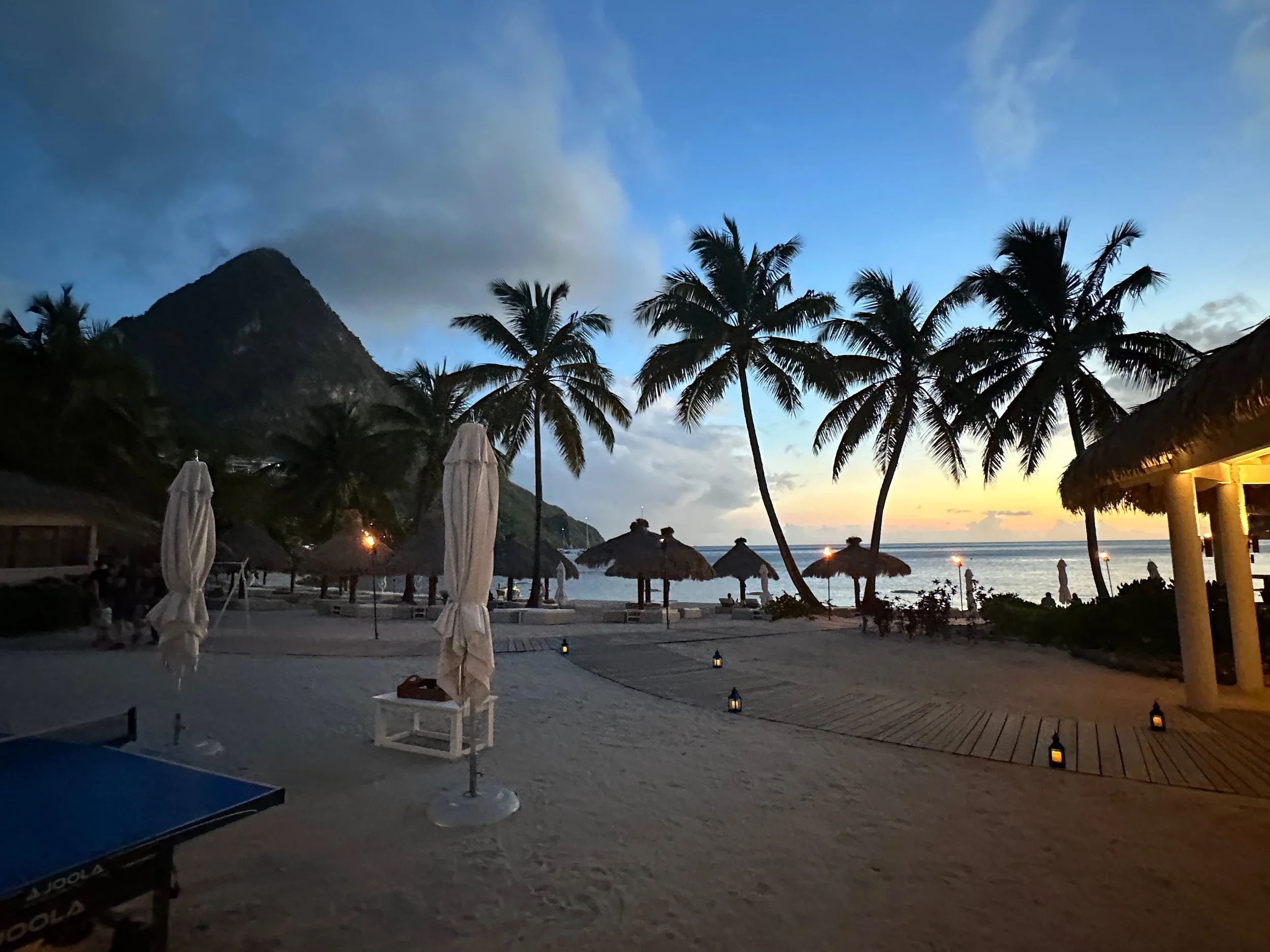
What travelers consistently return to about St. Lucia is the scenery — specifically that it feels genuinely earned rather than packaged. The Pitons visible from a breakfast table, the light on the hillsides in the early morning, the water at Jalousie glowing between volcanic slopes — these are moments that land differently in person than in photographs. The warmth of locals and the quality of the food scene in Rodney Bay are what repeat visitors tend to add to that list once the scenery stops being the whole story.
“Views at the Pitons and chocolate factory are amazing.” r/travel
Locals and repeat visitors alike describe St. Lucia as an island that earns its reputation slowly — the dramatic scenery, the food, and the warmth of people tend to land harder by day three than day one, especially for travelers who stop trying to cover everything and settle into the rhythm of one region at a time. Those who come expecting easy, flat, beach-first convenience tend to feel the mismatch most.
About this section
This section is built from publicly shared traveler perspectives and credible regional reporting. We treat it as sentiment and cross-check factual claims where possible. We intentionally limit dependence on review marketplaces where paid, promotional, or otherwise unrepresentative input can blur the picture.
Identity
Vibe Descriptors
Cinematic · Lush · Volcanic · Soulful · Unhurried
……….
Core Audience
Suits couples and nature-forward travelers who accept slower logistics, choosing dramatic terrain and depth over easy, walkable beach-town simplicity
……….
Best For (Trip Types)
Romantic & Couples · Adventure & Exploration · Nature & Wildlife · Luxury & Indulgence
……….
Known For
The Pitons, rainforest drives, Soufrière hot springs, and an island rhythm shaped by mountains and distance rather than resort convenience
……….
Trip Thread Theme(s)
Friction & Tradeoffs (Read This Before You Book)
Cost Pressure St. Lucia skews toward the upper end of the Caribbean price range, particularly in the south. Luxury and boutique resorts near the Pitons — Jade Mountain, Sugar Beach, Anse Chastanet — are among the most expensive properties in the region, and dining and activities in those areas price accordingly. The north around Rodney Bay offers more mid-range options and a wider spread of restaurant price points, making it the more budget-conscious base. The clearest cost friction shows up in the combination of accommodation, transfers, and guided activity fees — each individually manageable, but stacking quickly for travelers who want to do a lot.
Mobility / Getting Around St. Lucia drives on the left, roads are narrow and mountainous, and the terrain routinely makes short map distances feel considerably longer. The north-to-south drive between Rodney Bay and Soufrière takes roughly 1.5–2 hours under normal conditions — which means travelers who base in the north and try to day-trip the Pitons region are spending 3+ hours driving. A rental car is helpful for regional independence but not essential for resort-anchored stays; taxis and shuttles are reliable though they add up. Water taxis between Soufrière and the north coast are faster than the road for certain trips and offer views that driving doesn't — an underused option locals consistently recommend.
Autonomy vs. Structure St. Lucia rewards structured planning more than spontaneous wandering. The terrain means that "I'll figure it out when I get there" tends to result in long drives, missed timing on activities, and frustration with transfer logistics rather than happy discoveries. Guided excursions — rainforest hikes, Pitons boat trips, mud bath tours — are genuinely well-run and worth booking in advance rather than assuming walk-up availability. Travelers who prefer roaming freely over planning ahead will find St. Lucia more restrictive than a flatter, more walkable island.
Crowd Texture Castries is a heavy cruise port, and cruise days bring concentrated visitor traffic to certain areas — particularly the market, some beach access points, and tourist-facing shops. Resort bubble feel is real at the higher-end southern properties, where guests rarely leave the grounds. The medium tourism saturation overall means the island doesn't feel overwhelmed outside of cruise spikes, and Soufrière retains a slower, more locally textured character than the north. Travelers seeking a less-toured atmosphere find it most easily in the south and on the water.
Culture Access St. Lucia's local culture is accessible but requires some effort to find beyond the resort layer. English is widely spoken alongside St. Lucian Creole, which removes the language friction present on French Caribbean islands. The clearest cultural entry points are Gros Islet's Friday night street party — one of the few tourist-famous events locals still actively endorse — and the island's food scene in Rodney Bay, which has genuine range and local character. Travelers who stay exclusively in southern luxury resorts tend to experience a narrower, more insulated version of the island.
Variety Ceiling St. Lucia's variety ceiling is real for travelers who base in one area for more than five or six days without moving. The south is scenery-rich but activity-specific — the Pitons, the hot springs, the reef, the rainforest — and those experiences don't multiply indefinitely. The north has more dining and social options but less dramatic scenery. Travelers who need constant novelty in restaurants, nightlife, and activities beyond nature and landscape tend to hit the ceiling sooner than those who are content repeating a handful of genuinely good experiences. The island consistently delivers on depth rather than volume.
Sand & Sea Character
St. Lucia's sand tells you which part of the island you're on before you even reach the water. In the south near Soufrière and Anse Chastanet, the sand is volcanic — fine-grained but dense and dark, ranging from deep charcoal to a warm grey-black, with a heavier, firmer feel underfoot than the powdery white sand travelers may expect from Caribbean brochures. It compacts well and isn't unpleasant, but it absorbs heat and reads nothing like the pale crescent beaches of flatter islands. Moving north toward Rodney Bay and Reduit Beach, the sand shifts to lighter golden tones — softer underfoot, wider in stretch, and closer to the classic "beach day" setup. Base in the Soufrière area for dramatic volcanic scenery and reef snorkeling directly off the shore; base in Rodney Bay for lighter sand, calmer swimming conditions, and easier access to beach day logistics without planning around terrain.
Water clarity across St. Lucia scores genuinely well — visibility is consistently strong in sheltered bays and reef zones — but the appearance of the water varies significantly by seabed and depth, and the two are not the same thing. Over dark volcanic sand or rocky reef in the south, clear water often reads deep teal or steel blue rather than the bright turquoise associated with white-sand shallows; it's clear, but it won't photograph the way Anguilla or Turks and Caicos does. At Jalousie Beach between the Pitons, the sand is lighter and the sheltered bay geometry helps create brighter, more luminous shallows — it's the closest St. Lucia gets to that postcard turquoise look, and snorkeling here is frequently praised. On the west coast more broadly, conditions are calmer — waves are gentle, the water is generally easy to wade and float in, and casual swimming is reliable. The Atlantic-facing east coast runs rougher, with more churn and wind exposure that makes it better for scenery than swimming. Travelers chasing bright, swim-easy turquoise are best based north or at Jalousie; snorkel and reef seekers point south to Anse Chastanet, where the reef comes close to shore; travelers who want dramatic coastal scenery and photography anchor around the Pitons, where the water reads deep and cinematic rather than bright and recreational.
Explore St. Lucia — Map & Highlights
St. Lucia sits in the eastern Caribbean, roughly midway down the Lesser Antilles chain, and exploring it feels less like covering a small island and more like navigating two distinct worlds separated by a mountain road. The north — centered on Rodney Bay, Gros Islet, and Castries — is social, accessible, and easy to move around on foot or by taxi. The south — anchored by Soufrière and the Pitons — is slower, more landscape-led, and built around scenery and nature experiences that require planning rather than spontaneity. The drive between them runs 1.5–2 hours under normal conditions; combining both regions in a single day is possible but costs more time than most travelers expect. Unlike flatter Caribbean destinations where casual hop-around is natural, St. Lucia rewards travelers who pick a base, build outward from it, and use the water as much as the road. This map is intentionally curated, not comprehensive — it is not a checklist to conquer, and it is not meant to capture every beach, restaurant, or landmark on the island.
Beaches
St. Lucia's beaches are not interchangeable, and "which coast" matters more here than on flatter islands. The west coast — calmer, more sheltered — is where most swim-easy and snorkel beaches sit. The south's volcanic beaches trade classic white sand for dramatic setting; the north's stretches are lighter and more conventional. Base on the west coast for calm-water swimming; base near the Pitons for dramatic scenery and reef access; the east coast is largely wind-exposed and better for scenery than swimming. All beaches are technically public, though some of the most scenic access points run through resort property.
Food & Drink
Dining activity concentrates in two places: Rodney Bay in the north, which has the island's densest restaurant cluster and the widest range of price points, and Gros Islet on Friday nights, where the weekly street party is the single most-recommended food experience on the island. Outside those zones, dining becomes more resort-anchored and driving-dependent. Travelers who prioritize a varied, walkable food scene should base north; those based in Soufrière will find fewer standalone options and more resort dining — still worthwhile, but with less variety and more planning required.
Activities
St. Lucia's activity density is split cleanly by region. The south holds the island's most dramatic natural experiences — the Pitons, the Sulphur Springs, rainforest hikes, waterfall swims, and the reef at Anse Chastanet. The north holds the social and historical anchors — Pigeon Island National Landmark, the marina scene, and water sports departures. Stacking activities from both regions into a single day creates more driving friction than reward. Base near the experiences you prioritize most, or split stays if the trip is long enough to warrant it.
Where to Stay in St. Lucia
St. Lucia's regions are different enough that where you base yourself essentially determines what kind of trip you have — the north and south don't naturally combine into one effortless week, and the road between them requires a commitment of time and energy. The lodging mix reflects that divide: luxury and boutique resort options are strongest in the south, while the north offers the widest range of mid-range hotels, guesthouses, and self-catering options. Below, The Trip Thread has listed the best areas to stay in St. Lucia — each offering a different balance of privacy, scenery, and local character. Each area is located on the above map for easy exploration.
Rodney Bay — Social North & Easy Base
Rodney Bay is St. Lucia's most accessible and logistically straightforward base — a north-coast strip with a marina, a concentration of restaurants and bars, and Reduit Beach within easy reach. Travelers choose it when they want to move around without constant planning, eat well without relying on resort dining, and have social evening options available on foot. It suits first-time visitors, solo travelers, and groups who want variety and ease over dramatic scenery. Compared with Soufrière it offers considerably less visual drama and no Pitons views, and the beach experience — while pleasant — is lighter sand and calmer water rather than volcanic and cinematic.
Why stay: The strongest base for food variety, social evenings, and island-wide day-tripping with the least logistical friction.
Why not: The scenery doesn't match the south, and travelers who came for the Pitons will feel the distance from them daily.
Soufrière — Dramatic South & Romance Base
Soufrière is where the island's most iconic imagery lives — Pitons views, boutique and luxury resorts, reef snorkeling directly off the beach, and volcanic experiences within a short drive. Travelers choose it for romance, honeymoons, and a slower, more landscape-immersed pace that makes the south feel self-contained. It suits couples, luxury travelers, and anyone who came specifically for the visual drama of the Pitons area. Compared with Rodney Bay it offers far fewer standalone dining options, almost no walkable evening scene, and a location that makes north-coast activities a significant day trip commitment.
Why stay: Unmatched scenery, the most dramatic resort settings on the island, and direct access to St. Lucia's most distinctive natural experiences.
Why not: Limited dining variety, no real nightlife, and the road to anywhere else is slow — travellers who want movement and social energy will feel the isolation.
Marigot Bay — Midpoint Escape & Yachting Calm
Marigot Bay sits roughly midway between north and south — a sheltered lagoon of unusual natural beauty that attracts a quieter, slightly older crowd and a yachting scene that gives it a distinct personality. Travelers choose it when they want scenic seclusion without the full commitment of a southern base, and when the lagoon setting appeals more than either a beach strip or a volcanic cove. It suits couples and independent travelers who want something unhurried and visually distinctive. Compared with Rodney Bay it offers almost no evening variety; compared with Soufrière it lacks Pitons proximity and resort-level amenities.
Why stay: One of the most scenically distinctive bases on the island — calm, beautiful, and genuinely different from the standard resort or marina setting.
Why not: Limited dining and nightlife options, and the midpoint location means longer drives in both directions for the island's major anchors.
Castries Area — Practical Arrival Base
Castries and its immediate surroundings — including Choc Beach to the north — function more as a practical arrival base than a destination stay. Travelers use it for short first or last nights close to the airport, for cruise-adjacent stays, or as a budget-accessible option with easy taxi connections to Rodney Bay. It suits travelers prioritizing logistics over atmosphere. Compared with Rodney Bay it offers less dining variety and less pleasant beach access; compared with Soufrière it offers none of the dramatic scenery that defines St. Lucia's reputation.
Why stay: The most practical and budget-accessible base — ideal for short stays, early departures, or travelers who want simple airport proximity.
Why not: Limited atmosphere, fewer dining choices, and the least distinctive setting of any base on the island.
Practical Snapshot
-
December through April is the dry season and the most reliable window — warm, sunny, and comfortable, with lower humidity and the least chance of disruption from rain. The shoulder months of November and May offer reasonable weather with smaller crowds and slightly lower prices. Hurricane season runs June through November, with the highest risk in August and September; most travelers avoid those months, though October can be pleasant. Sargassum affects some west-coast beaches seasonally — worth checking current conditions if beach quality is a priority for your dates.
-
The Eastern Caribbean dollar (XCD) is the official currency, though U.S. dollars are widely accepted at hotels, restaurants, and tourist-facing businesses. Credit cards are accepted at most resorts and established restaurants; cash is more useful at local markets, roadside stops, and smaller establishments, particularly in Soufrière and rural areas. ATMs are available in Castries and Rodney Bay.
-
English is the official language and is spoken island-wide, making daily navigation straightforward for most visitors. St. Lucian Creole — a French-based patois — is widely heard in local conversation and reflects the island's layered colonial history. A few words of Creole are warmly received, though never necessary.
-
St. Lucia has two airports: Hewanorra International (UVF) in the south, which handles most international arrivals from the US, UK, and Canada, and George F.L. Charles Airport (SLU) in the north, which handles regional and charter flights. Most travelers flying internationally arrive at UVF — which sits near Soufrière but is roughly 1.5–2 hours from Rodney Bay by road or a much faster water taxi ride up the coast. Factor transfer time into arrival plans, particularly for first-day activities.
-
St. Lucia spans a wide price range depending on where you stay and eat. Local lunches = 💲, mid-range guesthouses and casual stays = 💲💲, resort hotels and polished restaurants = 💲💲💲, luxury properties near the Pitons = 💲💲💲💲. The biggest cost variable is lodging — the island's most celebrated properties (Jade Mountain, Sugar Beach, Anse Chastanet) are among the most expensive in the Caribbean. Traveling with a mid-range or self-catering base and eating locally keeps costs significantly more manageable.
-
St. Lucia's nightlife is modest by Caribbean standards — the island runs at a pace that favors long dinners and early evenings over late-night scenes. The clearest exception is Gros Islet's Friday night Jump Up, a weekly street party that draws a genuinely mixed local and visitor crowd and remains the island's most socially alive regular event. Rodney Bay has a handful of bars and marina spots active through the week; Soufrière is quiet after dark. Travelers seeking a nightlife-forward trip will find the ceiling here lower than on larger or more urban islands.
-
St. Lucia drives on the left, and roads are narrow, hilly, and slower than map distances suggest — particularly on the route between the north and south. A rental car adds flexibility and independence for exploring the island but is not essential for resort-anchored stays. Taxis and shuttles are reliable and widely used; drivers are typically knowledgeable and worth engaging for day trips. Water taxis running between Soufrière and the north coast are faster than the road for certain routes and offer Pitons views that driving doesn't — an underused option locals consistently recommend.
-
St. Lucia carries a minimal concern rating for most visitors, and tourist areas are generally safe with standard awareness. Keep valuables secure at beaches, be mindful in quieter residential areas after dark, and use reputable transport for transfers between regions.
Solo travelers find the island navigable and friendly — English is widely spoken, locals are warm, and the island's approachable character makes it easier to navigate than more complex large-island destinations.
Same-sex activity was decriminalized in July 2025, when the Eastern Caribbean Supreme Court struck down St. Lucia's colonial-era buggery and gross-indecency laws as unconstitutional. The island remains socially conservative with no relationship recognition, so discretion is still sensible — but the prior legal threat has been removed.
-
Mosquitoes can be a genuine nuisance after rain — particularly in the rainforest and Soufrière areas — and locals consistently remind visitors to bring repellent rather than assume it won't be needed. Tap water is generally safe in tourist areas; bottled water is widely available. The island observes a quiet Sunday rhythm, with some smaller businesses and local spots keeping reduced hours. Cell coverage is good in populated and tourist areas but drops off in the rainforest interior.
-
St. Lucia takes its natural environment seriously — the Pitons are a UNESCO World Heritage Site, the rainforest covers a significant portion of the interior, and the reefs at Anse Chastanet are a protected marine reserve. Reef-safe sunscreen is the expected standard at snorkel and dive sites. Staying on marked trails in the rainforest and booking licensed guides for Piton hikes protects the landscape and supports the local economy simultaneously. Several eco-lodge operators work directly with conservation programmes — worth seeking out for travelers who want their stay to contribute rather than just consume.
Compare Similar Caribbean Destinations
St. Lucia sits alongside two Eastern Caribbean islands that share its nature-forward identity — all three are volcanic, lush, and built for travelers who came for landscape rather than beach lounging. The comparison clarifies what makes each one distinct.
ST. LUCIA
Vibe & Energy: Cinematic and unhurried — the scenery leads the day, whether that's a Pitons sunrise from a resort deck, a rainforest drive, or a slow evening in Rodney Bay.
Dining & Culture: A genuine food scene concentrated in Rodney Bay, with the Gros Islet Friday night street party as the island's most culturally textured regular event. English-speaking and approachable, with a Creole cultural layer that rewards curiosity.
Cost & Crowds: Mid-range to high-end; luxury properties near the Pitons are among the most expensive in the region. Tourism saturation is medium — busy in season but not overwhelmed outside cruise days in Castries.
Accessibility: Direct flights from the US, UK, and Canada; left-side driving on hilly roads; water taxis a useful alternative to road transfers between north and south.
Nightlife / Social Scene: Quiet by Caribbean standards — the Friday Jump Up in Gros Islet is the weekly highlight; evenings elsewhere tend toward long dinners and early nights rather than late-night energy.
Best For: Couples, honeymooners, and nature-forward travelers who want dramatic scenery built into every day and are comfortable with slower logistics and terrain-shaped planning.
DOMINICA
Vibe & Energy: Raw and immersive — the most untouched island in the Eastern Caribbean, where volcanic terrain, 365 rivers, and near-total rainforest cover create an experience closer to expedition than vacation.
Dining & Culture: Simple and local — the food scene is modest and community-led, with no resort dining infrastructure to fall back on. Creole culture runs deep and genuine; the island hasn't been packaged for mass tourism.
Cost & Crowds: Mid-range overall, with eco-lodges and guesthouses rather than luxury resorts defining the accommodation landscape. Occasional cruise traffic but low tourism saturation overall — one of the least-visited islands in the region.
Accessibility: Requires a regional hop or ferry connection from larger hubs; no direct international flights from most US or European cities. Car rental is essential for exploring. Access friction is real and shapes the trip.
Nightlife / Social Scene: Minimal — Dominica is an island where evenings end when the day's physical activities do. Not a social or nightlife destination in any conventional sense.
Best For: Serious nature and adventure travelers — hikers, divers, canyoners, and eco-travelers who specifically chose the Caribbean for its natural environment and not for its beaches or resort infrastructure.
MARTINIQUE
Vibe & Energy: Refined and layered — French Caribbean polish meets volcanic landscape, with a cultural confidence and culinary identity that feel more like a European island than a typical resort destination.
Dining & Culture: The strongest food scene of the three — French-Creole cuisine, boulangeries, local markets, and a dining culture that takes itself seriously. Zouk music, Carnival, and a rich Creole cultural identity define the social character. French is the dominant language; English is minimal outside tourist corridors.
Cost & Crowds: Upscale overall, priced on a par with the French Caribbean standard. Medium tourism saturation; Fort-de-France sees some cruise traffic but the island doesn't feel overwhelmed in the way larger ports do.
Accessibility: Direct flights into Fort-de-France from Europe and via regional connections from the US; car rental essential for full island access. French language fluency makes a meaningful difference to the quality of the experience outside resort zones.
Nightlife / Social Scene: The most active of the three — lively markets, cultural festivals, and an evening rhythm shaped by French dining culture and zouk music rather than beach bar energy.
Best For: Culturally curious travelers who want dramatic nature alongside a serious food scene and a genuinely French Caribbean atmosphere — and who are comfortable navigating in French.
Pick St. Lucia if: dramatic scenery, romantic resort options, and an English-speaking island with a manageable learning curve are the priorities.
Pick Dominica if: raw nature, serious adventure, and an island that hasn't been packaged for tourism matter more than comfort or convenience.
Pick Martinique if: French culture, outstanding food, and a more urban, culturally layered experience are what you came for — and you're comfortable in a French-dominant environment.
Tie-breaker: How much does infrastructure matter? St. Lucia is the most accessible of the three; Martinique rewards French speakers most; Dominica asks the most of its visitors and gives the most raw in return.
Local Truths
"It's only across the island" is a phrase locals have learned to decode carefully. Map distances on St. Lucia are genuinely misleading — the road between Rodney Bay and Soufrière winds through steep, narrow mountain terrain and takes 1.5–2 hours under normal conditions. Visitors who plan a full day combining both regions often find the road absorbs far more of the trip than they expected.
~~~~~
The Piton area is more demanding than the imagery suggests, and locals describe it that way deliberately. Gros Piton is a real hike requiring a guide, reasonable fitness, and a few hours of commitment — not a scenic stroll to a viewpoint. Transfers to the Jalousie area from the north are long. Visitors who arrive with resort-brochure expectations of effortless Pitons access tend to be the ones who feel the island worked against them.
~~~~~
Gros Islet Friday night is one of the few tourist-famous events locals still actively endorse — but the framing matters. It's a street party, not a bar crawl: grilled fish, rum punch, music, and a crowd that's genuinely mixed between residents and visitors. Locals point people there because it's real, not because it's polished, and it works best when treated as a community event rather than a nightlife outing.
~~~~~
Beach conditions are not always posted or flagged clearly, which is why the local advice on St. Lucia consistently comes down to one thing: ask before you swim, particularly on rougher days. Some stretches that look swimmable from the shore run stronger than they appear, and the Atlantic-facing east coast is generally not suitable for casual swimming regardless of how calm it looks on a given morning.
~~~~~
St. Lucia's beaches are not one consistent product, and locals assume visitors understand that before they book. Volcanic black sand in the south, lighter stretches in the north, resort-front access that varies by property, and some of the most scenic bays reachable only by boat — the expectation of a single, consistent "Caribbean beach" experience will be disappointed here, and locals don't consider that a shortcoming.
~~~~~
Mosquitoes are a practical reality on St. Lucia, not a minor footnote. Bites are most prevalent after rain and in the rainforest and Soufrière areas, and locals are consistent on the advice: bring repellent, apply it before outdoor evenings, and don't assume the resort setting means you're exempt. The Piton hike in particular is a context where this matters more than most visitors plan for.
~~~~~
Resort beach access on St. Lucia is not automatically public-feeling even where it is technically public. Some of the island's most sought-after beach stretches sit in front of or adjacent to private resort property, and the path to get there, the facilities available, and the atmosphere once you arrive can all differ significantly from a freely accessible public beach. Locals don't consider this a problem — they just know which beaches require a plan and which don't.
~~~~~
Water taxis are the most underused practical tool on the island. The road between the north and the Soufrière area is slow; the water taxi is faster, more scenic, and removes the stress of the mountain drive entirely for certain trips. Locals point to it not just as a convenience option but as the more sensible choice for any day trip to the south from a northern base.
St. Lucia Travel Questions, Answered
Here are the questions travelers ask most before booking St. Lucia — answered plainly, with fit in mind.
1. Is St. Lucia expensive?
St. Lucia spans a wider price range than it sometimes appears from the outside. The island's most celebrated properties — Jade Mountain, Sugar Beach, Anse Chastanet — are genuinely among the most expensive in the Caribbean, and dining near those resorts prices accordingly. A mid-range or guesthouse-based trip, particularly in Rodney Bay, is considerably more manageable. The practical advice: set your accommodation budget first, because that decision shapes everything else about what St. Lucia costs.
2. When's the best time to visit?
December through April is the dry season and the most reliable window — comfortable temperatures, low humidity, and consistent sunshine. Shoulder months like November and May offer good weather with smaller crowds and softer prices. The summer and early fall months carry hurricane risk, with August and September the most exposed; October can be genuinely pleasant for flexible travelers. Sargassum affects some west-coast beaches seasonally — worth a quick check on current conditions if beach quality is central to the trip.
3. Which area or coast should I stay on?
The honest answer is that where you base yourself determines what kind of trip you have. Rodney Bay in the north suits travelers who want dining variety, social evenings, and easier logistics — it's the most accessible and flexible base on the island. Soufrière in the south suits couples, honeymooners, and travelers who came specifically for the Pitons and the volcanic south — the scenery is unmatched, but dining options are limited and the road to anywhere else is slow. Marigot Bay is a quieter, scenic midpoint for travelers who want something unhurried and distinctive. Don't plan to cover both north and south daily — pick your priority and base accordingly.
4. Do I need a car?
Not necessarily, but it depends entirely on where you stay and what you want to do. Travelers based at a resort in Soufrière or Rodney Bay can manage without one — taxis and water taxis cover most ground. A rental car adds real independence for exploring the interior, reaching less-visited beaches, and moving between regions on your own schedule. The key caveat: St. Lucia drives on the left, roads are narrow and hilly, and transfers take longer than map distances suggest. First-time visitors who aren't comfortable with mountain driving often prefer taxis or guided transfers, particularly for the north-south run.
5. Is it safe for solo or LGBTQ+ travelers?
Same-sex activity was decriminalized in July 2025, when the Eastern Caribbean Supreme Court struck down St. Lucia's colonial-era buggery and gross-indecency laws as unconstitutional. The island remains socially conservative with no relationship recognition, so discretion is still sensible — but the prior legal threat has been removed.
6. How does it compare to nearby islands?
St. Lucia is most meaningfully compared to Dominica and Martinique — all three are volcanic, nature-forward Eastern Caribbean islands with lush landscapes and strong regional identities. St. Lucia is the most accessible and resort-developed of the three, with the clearest combination of dramatic scenery and reliable visitor infrastructure. Dominica is rawer and more adventure-focused, with far less resort comfort and more complicated access. Martinique offers a stronger food and cultural scene but operates primarily in French, which shapes the experience significantly outside tourist areas. St. Lucia is the strongest choice when dramatic scenery, romantic resort options, and English-speaking ease all need to be in the same trip.
Why This Guide Changes With the Island
St. Lucia never stays still — new restaurants open in Rodney Bay, resort access policies shift, trail conditions change with the seasons, and water taxi operators come and go.
This guide evolves with it. Locals share updates, travelers add discoveries, and we keep refining what you see here so every detail reflects the island as it is now — not a memory of what it used to be.
Explore nearby destinations that share St. Lucia's volcanic drama and nature-forward identity — from the raw, expedition-level wilderness of Dominica to the French-Creole culture and food scene of Martinique. Each offers lush terrain, but through its own distinct character.
Find Your Thread
Every traveler connects differently. Maybe St. Lucia is the match — the Pitons at sunrise, the slow drive south, the earned beauty of a place that asks something of you before it gives everything back. Maybe the right island is still ahead. Either way, this is what The Trip Thread is about: rediscovering the joy of travel, and the element of discovery that should accompany it. Explore more islands across the Greater Caribbean Collection and see how your travel vibe connects through TheTripThread.Guided by locals. Designed for discovery.