By Kelly McAtee | TheTripThread | Last Updated April 2026
St. Barts
Caribbean glamour at Riviera pitch — where haute cuisine, beach-club rhythms, and the yacht scene set the tempo.
Romance & Connection | Culinary Caribbean
Best for travelers drawn to French fine dining, beach-club rhythms, and Gustavia's yacht parade — over rustic authenticity, low-key romance, or anything resembling a budget.
Not for travelers who want privacy without performance, a living local culture, or a trip that works on a budget.
☀️ Best months: Dec–Apr · 💲 Average cost: $$$$ · 🕶️ Vibe: Lively & refined
Reality Check (Read This Before You Book)
Villa-first, scene-anchored — days revolve around beach clubs, Gustavia's harbor dining, and yacht-watching; the island peaks Dec–Apr around NYE, the Bucket Regatta, and Les Voiles.
The biggest misconception: "luxury" here does not mean quiet. St. Barts is performative luxury — socially visible, busiest when visitors most want to come, and oriented around being seen as much as being served.
If you want privacy without performance, the rhythm will feel wrong — peak season is when the scene is loudest.
If you want a living local culture, you'll feel the absence; St. Barts reads as a French enclave, not a place with meaningful local texture.
If the budget has any ceiling — peak weeks at top properties start at five figures, not end there — this isn't your island. A Caribbean destination where luxury reads as stillness rather than stage is a better match.
Why You’ll Love It
St. Barts is the Caribbean at its most polished — French haute cuisine packed into eight square miles, beach-club afternoons spilling into DJ-led evenings, and a yacht community that makes Gustavia feel like a floating extension of Saint-Tropez. The island is small (eight square miles) and the result is concentration: dinner is always a short drive, every beach is public by French law, and every harbor sunset includes hundreds of feet of someone's superyacht in the foreground. For travelers who want the glamour without apology, this is where the Caribbean does it best.
The light here is Mediterranean-bright, the water is the turquoise you came for (though depths shift quickly — clarity is excellent, but color reads lighter on the shallow swim beaches and deeper on the dramatic ones), and days settle into a loose rhythm: late breakfast, long beach-club lunch with rosé, a swim at Gouverneur or Flamand, dinner reservation somewhere you booked weeks ahead. Gustavia in high season hums with anchored megayachts; St. Jean moves with the beach clubs; the windward coast at Toiny stays wild, surf-forward, and visibly emptier. Dress is specific — underdressed reads as badly as overdressed — and most visitors figure this out by the second night.
Most Caribbean "luxury" destinations are built around stillness — understated service, quiet beaches, privacy as product. St. Barts is a different animal. It's Caribbean luxury optimized for visibility. The beach clubs run day-long DJ sets; the regattas — the Bucket in March, Les Voiles in April, the Cata Cup in November — are part of the island's identity, not a backdrop to it; and there's no pretense of cultural immersion or under-the-radar discovery because St. Barts has never offered either. That clarity is the argument for it: you know exactly what you're paying for, and the experience delivers on the specific promise it makes.
Best for travelers who want the Caribbean at its most polished and most visible — drawn to French fine dining, beach-club days, and Gustavia's yacht theater, and willing to pay peak-week rates for it. St. Barts is often recommended for honeymooning couples and style-minded travelers seeking refined glamour, world-class cuisine, and the Caribbean's most serious yacht scene.
This is St. Barts
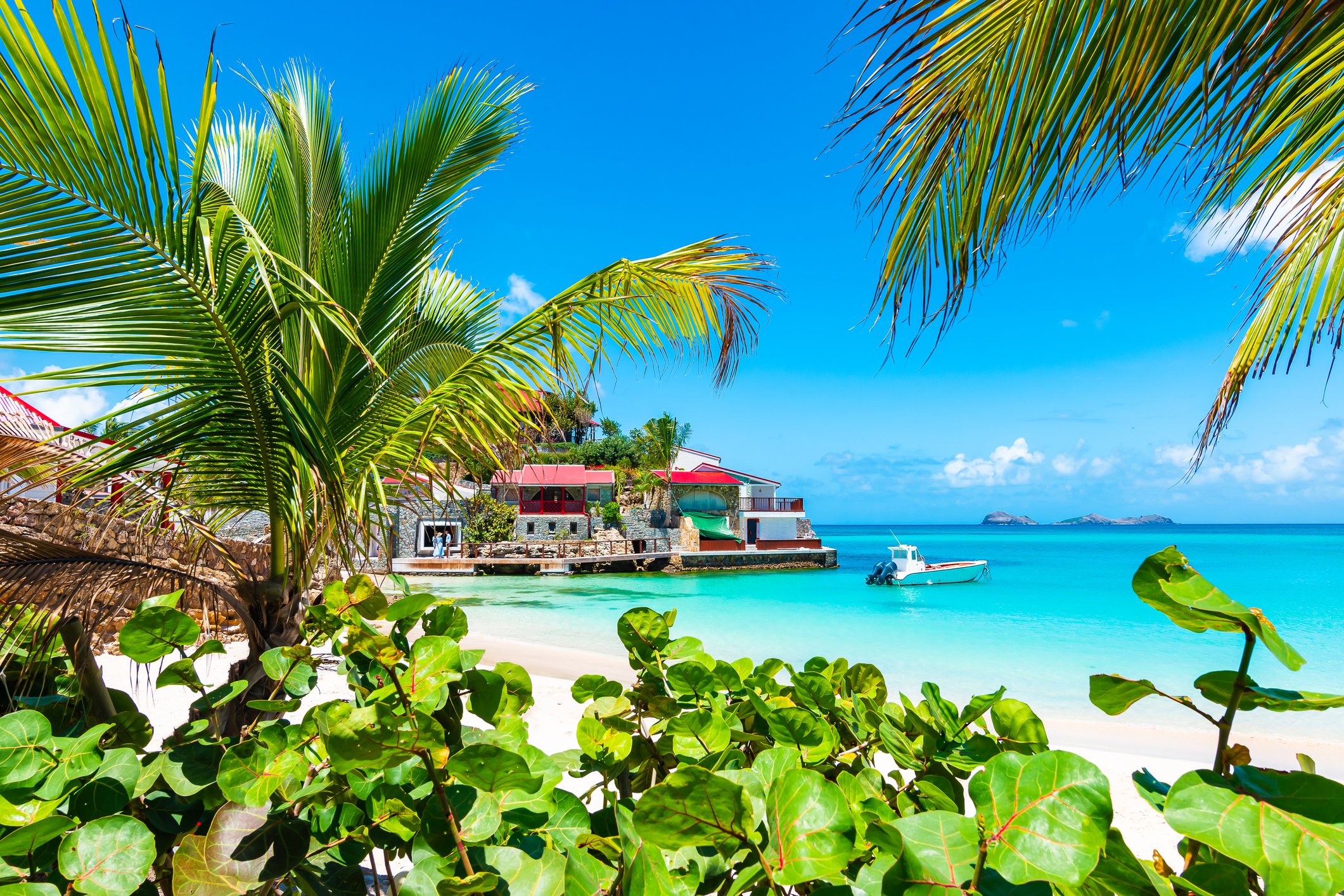
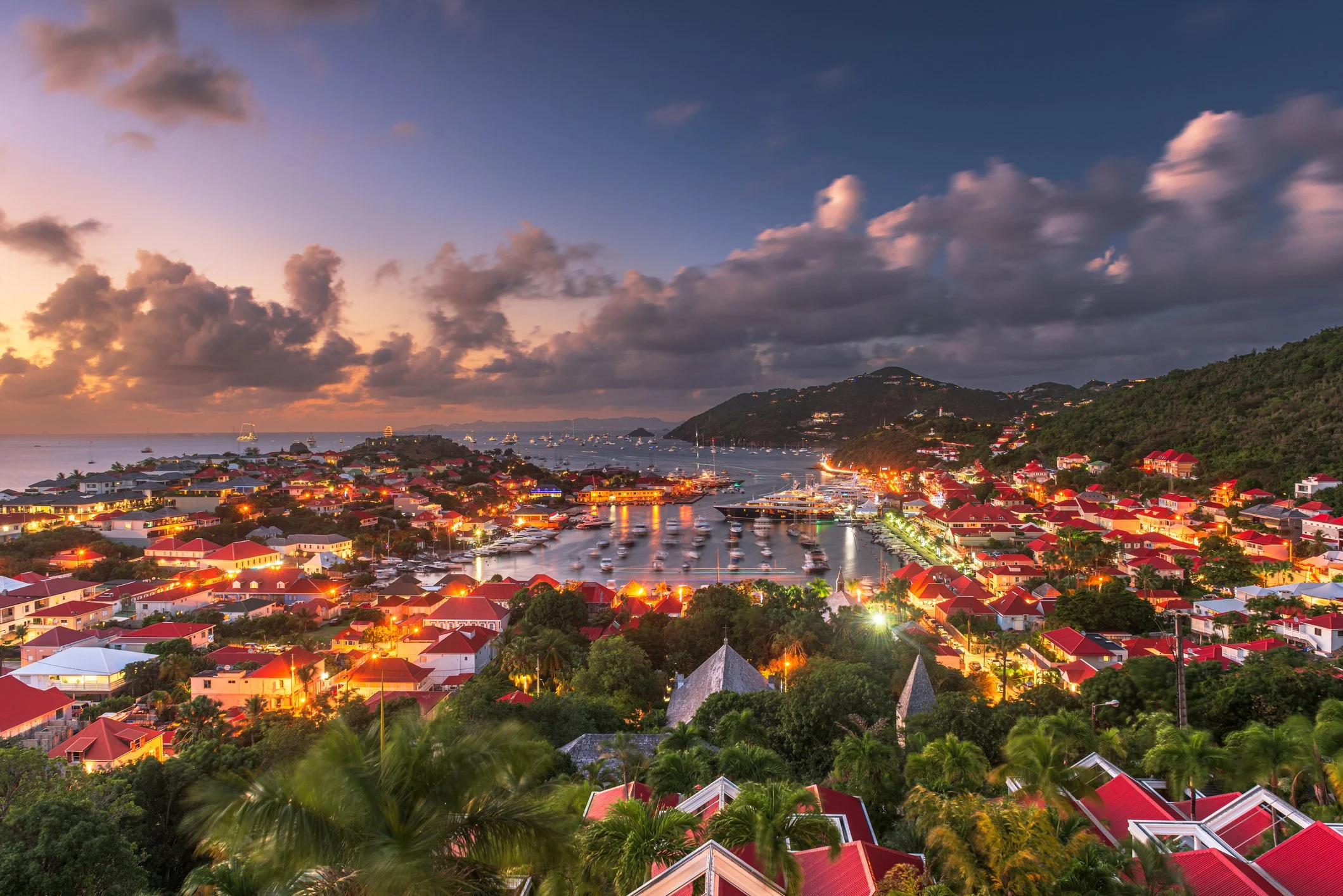
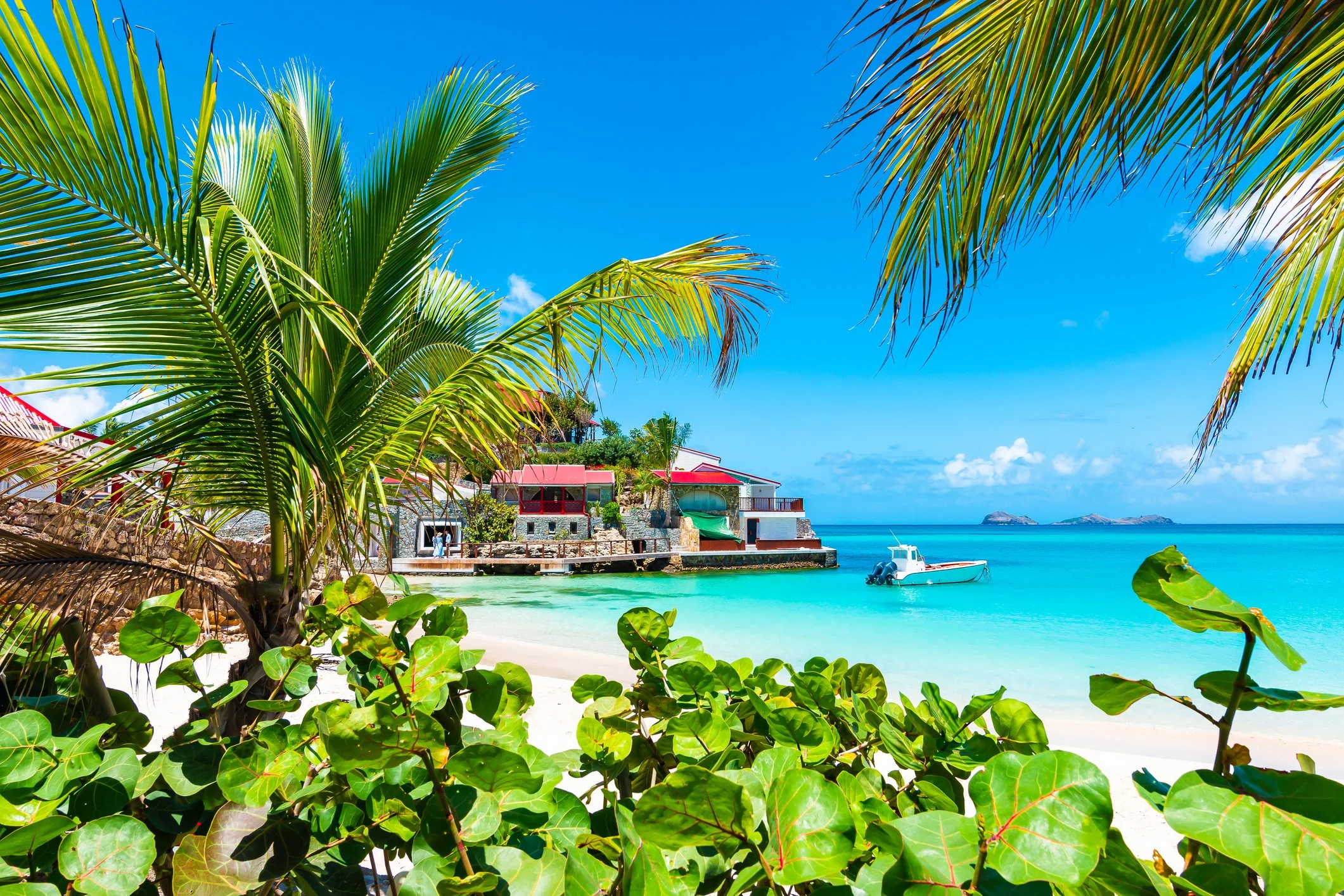
Hillside villas above turquoise bays, the runway cutting straight to St. Jean's sand, and a second harbor drawn in superyachts against the horizon.
Part of the Greater Caribbean Collection on TheTripThread — a destination reference system built for travelers deciding where they'll feel right, not just where to go. St. Barts is for travelers who value polish, presence, and the Caribbean's most concentrated dose of French elegance.
Common Experience Patterns

St. Barts runs on a villa-first rhythm: late breakfast, long beach-club lunch, Gustavia errands, a dinner booked weeks out. The island is only eight square miles but terrain is steep and serpentine — nearly every visitor needs a rental car, not a scooter.
The light is sharper than on most Caribbean islands; the palette is terracotta roofs over turquoise water over white sand. A beach day is not interchangeable. St. Jean is reef-protected and calm, Gouverneur and Flamand are dramatic and swim-friendly, Toiny is a surf break — and residents track the difference closely.
St. Barts is often booked as quiet luxury; the high-season reality is closer to the Mediterranean in July. Gustavia is parked solid, beach clubs require advance booking, and the velocity rewards people who know where they're going. Travelers expecting a default of serenity may find a more restful week elsewhere.
Locals Know — Gustavia harbor parking is time-limited and actively enforced. Plan visits with an exit window in mind, and do not treat the harbor like an overflow lot — residents do not, and they notice when outsiders do.
Where we eat: Gustavia concentrates the most celebrated dining — fine-dining tasting menus, French bistro standards, and a long-running cabaret dinner-show tradition. Peak-season reservations require booking weeks out; walk-in expectations do not hold, even at casual spots. Casual French-Creole spots, pizzerias, and grocery-counter takeaway cover the lighter end of the range.
Where we go: Days concentrate at St. Jean and Flamand for beach-club access, Gouverneur and Saline for lower-volume beauty, and Gustavia for the evening rhythm. The drive from one coast to the other is fifteen minutes on a map and closer to thirty once the road turns. Toiny and the windward coast stay empty because the swimming is not casual.
Travelers consistently praise the food density, the clear water at public beaches, and the short-runway arrival that becomes part of the trip's memory. What surprises people is the real cost of a peak-season week, and how completely the scene dominates daily rhythm. Locals and repeat visitors alike describe St. Barts as exquisitely beautiful and socially performative in the same breath — especially for travelers who enjoy being polished and present at once, while those who prefer their Caribbean luxury quiet and private tend to choose a different island within a trip or two.
What we love:
The concentration of world-class dining on an eight-square-mile island has no equivalent in the Caribbean. The beaches are all public by French law, the water is among the clearest in the region, and the sense of a genuinely authored place — hillside villas, narrow harbor, the runway cutting to the sand — is specific to St. Barts, not a generic tropical aesthetic.
About this section:
This section is built from publicly shared traveler perspectives and credible regional reporting. We treat it as sentiment and cross-check factual claims where possible. We intentionally limit dependence on review marketplaces where paid, promotional, or otherwise unrepresentative input can blur the picture.
Identity
Vibe Descriptors
Glamorous · Chic · Sophisticated · Lively · Refined
……….
Core Audience
Style-minded couples and honeymooners who want the Caribbean at its most polished — chic beach clubs, world-class dining, and a yacht-forward scene chosen over Anguilla's quieter elegance.
……….
Best For (Trip Types)
Honeymoons · Fine Dining · Yacht & Sailing Culture · Beach-Club Days
……….
Known For
The Caribbean's most concentrated yacht-and-dining scene, set against white-sand beaches, hillside villas, and French-Caribbean polish on eight square miles.
……….
Trip Thread Theme(s)
Friction & Tradeoffs (Read This Before You Book)
Cost Pressure Peak-week rates at the island's ultra-luxury hotels run $2,000–$5,000 per night; boutique hotels rarely drop below $900 in winter, and a three-bedroom villa at festive season reaches $50,000 and up. Dinner for two at a recognized restaurant runs €200–€400 with wine; beach clubs operate on kitchen minimums of €150–€300 per person rather than published day passes. The cost structure is Mediterranean rather than Caribbean — travelers who try to scale the trip's ambition back typically find the budget harder to flex than expected.
Mobility / Getting Around A rental car is required, not optional — the island's terrain is steep and serpentine, there is no ride-share, and taxi service is limited and expensive. Residents strongly discourage scooters: narrow roads, frequent accidents, and an explicit advisory from Canada's federal travel guidance. Gustavia is walkable once parked, but harbor parking is time-limited, actively enforced, and a recurring source of trip friction in high season.
Autonomy vs Structure St. Barts rewards planners over wanderers. Peak-season restaurant reservations require booking weeks ahead, beach-club beds depend on kitchen-minimum reservations, and spontaneous evenings in Gustavia are rarely spontaneous in practice. Travelers who prefer to let a day shape itself, rather than arrive onto a pre-booked schedule, will find the rhythm more prescriptive than a Caribbean villa week typically is.
Crowd Texture Saturation is bimodal rather than flat. Dec–Apr — with holiday spikes at NYE, the Bucket Regatta in March, and Les Voiles in April — is the island at full volume, with Gustavia parked solid, Saint-Jean and Shell Beach busy all day, and beach-club sound systems audible from neighboring villas. Sept–Oct is genuinely quiet, with many closures. Cruise traffic is limited to small luxury and expedition ships; no mass-market cruise presence.
Culture Access Culture is French first, Creole second, and the layer available to visitors is mostly the French first layer — haute cuisine, boutique retail, and beach-club service standards that are genuinely excellent. Living local culture (Corossol straw weaving, the August Fête de St-Barthélemy, village life in Lorient) exists but sits outside the typical visitor track unless specifically sought. A traveler who wants meaningful cultural immersion is buying the wrong island, rather than missing an amenity.
Variety Ceiling On eight square miles, repetition is inevitable by the fourth or fifth day. Dining variety is the island's strongest asset — genuinely no Caribbean peer — but beach rotation is finite, and the beach-club loop runs a recognizable circuit of four or five venues across Saint-Jean and the south coast. Five to seven days is the sweet spot; longer stays reward travelers using St. Barts as a villa base with day-trip context (boat charter to Île Fourchue, ferry to St. Martin) rather than as a self-contained island week.
Sand & Sea Character
Sand on St. Barts is uniformly white and finely powdered — coral and shell composition, firm enough to jog on at the tideline, cool underfoot because the color never turns heat back up the way darker beaches do. There is no volcanic zone: the palette is consistent from St. Jean through Gouverneur to Grand Cul-de-Sac. What varies is the behavior of the bay behind it. Base at St. Jean or Grand Cul-de-Sac for a reef-protected, swim-first beach day with direct beach-club lunch access. Base at Flamand or Gouverneur for dramatic scale, fewer loungers, and the kind of open-water presence that reads in photographs.
Water clarity is genuinely excellent across all public beaches — visibility runs to five meters on calm mornings and rarely drops below three. Color is where variation lives. St. Jean, Shell Beach, and Grand Cul-de-Sac read pale turquoise because the seabed is white sand at swimmable depth; Gouverneur and Flamand shift to deeper teal because the bay drops off quickly; Saline reads almost cobalt when the north swell runs. Wave behavior divides similarly. St. Jean and Grand Cul-de-Sac are reef-protected and genuinely calm — casual swimming, easy floating, the turquoise travelers come for. Gouverneur and Flamand are swim-friendly in good weather but open to south swell, so conditions change by day. Toiny on the windward coast is a surf break with strong undertow; residents do not recommend swimming there. For snorkeling, Colombier (boat or 20-minute hike) and Petit Cul-de-Sac are honest picks — the Lorient reef has declined, and the marquee experience is a boat day to Île Fourchue inside the Réserve Naturelle. Bright swim-easy turquoise travelers should base near St. Jean or Grand Cul-de-Sac; open-coast drama seekers should base near Flamand or Gouverneur; snorkel travelers should plan a Fourchue boat day rather than expect reef at the doorstep.
Explore St. Barts — Map & Highlights
St. Barts is small — eight square miles, shaped like an irregular starfish, with a single town and more named beaches per square mile than any other Caribbean island in this collection — and the way you experience it is largely the way you choose to move. Almost every visitor rents a car, not a scooter, because the hills are steep and the roads are tight. Distances on the map are minutes in real driving time, but the drives turn and climb, and the island rewards travelers who commit to a base and orbit out. This map is intentionally curated — not a checklist, not a venue directory, and not a best-of. It's designed to help you decide where to base yourself, and what St. Barts will actually feel like from there.
Beaches
St. Barts has more named beaches per square mile than any Caribbean island in this collection. Most are white sand (Corossol's brown and Marigot's dark are the exceptions), and every one is public by French law. The character splits sharply: Plage de Saint-Jean and Anse de Grand Cul-de-Sac are reef-protected and calm; Anse du Gouverneur and Anse des Flamands are dramatic and quieter; Anse de Toiny and Plage de Grand Fond are not swim beaches at all. Base near Saint-Jean for beach-club rhythm, near Flamands or Gouverneur for open-coast drama.
Food & Drink
Dining concentrates in Gustavia harbor — the island's fine-dining core — and along Saint-Jean's beach-club row, where lunch runs into DJ-led afternoon scenes. Pointe Milou anchors a clifftop dinner-cabaret tradition; smaller clusters sit at Lorient (casual / local Creole), Grand Cul-de-Sac (lagoon-side hotel restaurants), Flamands (refined hotel cluster), and Toiny (a single-property fine-dining destination). Peak-season reservations required weeks out at every recognized restaurant.
Activities
St. Barts is not an activity-dense island — it's a base, eat, swim, repeat rhythm — but the real anchors are a hike to Colombier Beach (20 minutes on foot, worth the walk), a boat day to Île Fourchue inside the Réserve Naturelle for the island's best snorkeling, a Gustavia harbor walk past the superyachts, and festival anchors (Bucket Regatta in March, Les Voiles in April, Cata Cup in November). Most activity planning works from a villa or hotel base — no region-stacking needed.
Where to Stay in St. Barts
St. Barts is only eight square miles, but where you base yourself materially shapes the trip — a Gustavia stay feels nothing like a Grand Cul-de-Sac stay. Villa rentals dominate; hotel options are boutique and finite. Below, The Trip Thread has listed the best areas to stay in St. Barts — each offering a different balance of privacy, scenery, and local character. Each area is located on the above map for easy exploration.
Gustavia — Harbor Town Base
Gustavia is the island's only true town and the one base where you do not need to drive to dinner, drinks, or the evening scene. The harbor is walkable, the architecture is white-and-terracotta Swedish-colonial, and restaurants, boutiques, and bars sit within the same few blocks. Travelers who want in-season social energy, who plan to eat out every night, and who do not want the daily choreography of narrow-road driving end up here for good reason. The trade-off is beach proximity — Shell Beach is walkable but small, and St. Jean is a ten-minute drive away — so a Gustavia stay prioritizes town rhythm over beach-day-as-default.
Why stay: Walkable town life with the best in-season dining and evening rhythm within steps of the door.
Why not: Not the base for travelers who want a beach-day default, since swim-friendly beaches require a short drive.
Saint-Jean — Beach-Club Core
Saint-Jean sits at the center of the island's daytime social life — beach clubs anchor a short, reef-protected bay (Plage de Saint-Jean) with calm swimming water on the east side, gentle surf on the west, and a rocky promontory bisecting the two. Basing here means waking up walking distance from a beach-club-led day, with the airport terminal a hundred meters behind the sand (more novelty than nuisance). Travelers who want peak in-season rhythm, who plan to structure days around beach-club lunch and DJs, and who value immediate amenity density choose Saint-Jean. What it trades away is quiet — the scene is the point, and so is its sound.
Why stay: Immediate beach-club access, calm swimming, and the island's most concentrated daytime social energy.
Why not: Not for travelers who want a quiet villa week; Saint-Jean is designed around in-season scene volume.
Flamands / Anse des Cayes — Quieter West Coast
The Flamands and Anse des Cayes bays run along the island's northwest corner, dominated by Anse des Flamands (the longest, widest beach on the island) and a lower density of hotels and villas than Gustavia or Saint-Jean. The stretch includes the trailhead to Anse de Colombier and the quiet, refined end of the island's luxury spectrum — broad open beach and hillside villas rather than walkable village. Couples who want proximity to dining and the Gustavia scene without basing inside it, and travelers who prefer the cadence of a large, open beach morning over the beach-club lunch structure, end up here. The trade-off is walkability: you will drive to every meal.
Why stay: Broad, quieter beaches and a refined hotel-and-villa density close to — but outside of — the island's social core.
Why not: No walkable dining; every evening requires a short drive.
Grand Cul-de-Sac — Calm-Water Lagoon Base
Anse de Grand Cul-de-Sac is a reef-protected lagoon on the northeast coast where the water is shallow, consistently calm, and friendly to children, beginner swimmers, and wind sports. The area feels more self-contained than Gustavia or Saint-Jean — a villa-and-water stay rather than a town-and-scene stay, anchored by a small cluster of lagoon-side hotels. Families, couples who prioritize peaceful mornings, and kitesurfers or windsurfers who use the lagoon's reliable breeze come here intentionally. The lagoon also hosts a resident green-turtle population inside the Marine Reserve. The trade-off is distance from the Gustavia dining concentration; in-season nights out require a fifteen-minute drive each way.
Why stay: Calm, reef-protected lagoon swimming and a quieter, more self-contained villa rhythm than the Gustavia or Saint-Jean scenes.
Why not: Driving to most meals; not the base for travelers who want walkable evenings.
Pointe Milou — Clifftop View Base
Pointe Milou is the rocky north-coast headland between Lorient and Marigot, dominated by clifftop villas with panoramic ocean views. There is no walkable swim beach — Plage de Lorient is the closest, five to ten minutes by car — but the pay-off is altitude, sunset light, and a long-running cabaret dinner-show within steps. Best for couples and travelers who want dramatic, view-first villa stays and don't mind driving to the sand. Trades sand-at-the-door for the clifftop perspective.
Why stay: Clifftop villa drama, sunset views, and a long-running cabaret dinner-show on doorstep.
Why not: No walkable swim beach; every beach day requires a short drive.
Practical Snapshot
1. Best time to visit
December through May is the season — dry, breezy, and at the heart of the social calendar. November and late April–early May are the best-value windows with nearly identical weather. September and October are genuinely quiet, with many restaurants and hotels closed and active hurricane risk; if you're considering an off-season trip, those two months are the two to avoid.
2. Currency
The euro is the official currency, and US dollars are widely accepted at a posted exchange rate around 1.16–1.17 USD to the euro. Credit cards work nearly everywhere, but the self-service gas pumps reject foreign chip cards — fuel up during cashier hours. Some restaurants now charge no-show fees on peak-season reservations.
3. Language
French is the working language, and English is widely spoken in tourism contexts (hotels, beach clubs, most restaurants). A French-Creole influence runs through older village speech in Corossol and Lorient. A few French phrases — "bonjour" on entering a shop, "au revoir" on leaving — go a long way; the island is unforgiving of being treated as a generic Caribbean destination.
4. Getting there
There are no direct flights from North America. Most travelers fly into St. Martin (SXM) and connect via a 15-minute hop on a small turboprop or single-engine aircraft, or take the 45-minute ferry from Philipsburg or Marigot. Seasonal direct flights also run from Antigua. The airport closes at dusk — no flights after sunset, which shapes arrival planning.
5. Cost range
St. Barts is at the top of the Caribbean cost ladder — Mediterranean, not Caribbean, in pricing. Casual lunches = 💲💲, dinners at recognized restaurants = 💲💲💲, beachfront villas and ultra-luxury hotels = 💲💲💲💲. Peak-week stays at top properties routinely exceed five figures; a week's villa rental in festive season can clear $50,000.
6. Nightlife
Nightlife in season is concentrated and scene-driven — beach-club afternoons sliding into late-night dance floors, harbor-front bars in Gustavia, and a long-running cabaret dinner-show on the north coast. Off-season (September–October) is genuinely quiet, with most venues closed. Pacing matters: peak weeks reward booking nights ahead and dressing the part.
7. Getting around
A rental car is essentially required — the terrain is steep and serpentine, distances are short on a map but longer on the road, and there is no ride-share. Most visitors choose a small open-top vehicle over a scooter; residents and Canada's federal travel advisory both flag scooter accidents as a serious risk. Two gas stations on the island, both closed Sundays.
8. Safety
The general environment is exceptionally good — Level 1 US travel advisory, essentially no violent crime. Solo travelers report no concerns; the two recurring patterns are car break-ins at trail-access parking lots (Saline, Colombier — keep valuables with you) and scooter accidents. For LGBTQ+ travelers, French national law applies — same-sex marriage legal since 2013, full anti-discrimination protections — and the on-the-ground social climate is openly welcoming, with no documented incidents in recent years.
9. Good to know
Tap water is potable. Electrical outlets are European (220V, two-pin); bring an adapter. Dress is unspoken but enforced socially — underdressed and overdressed both read as not understanding the room. Sundays are quieter; many smaller restaurants close. Mosquitoes are a real factor August through November, especially at dusk — pack DEET.
10. Eco note
The Réserve Naturelle de Saint-Barthélemy protects roughly 1,200 hectares across five sectors, including all four offshore rocks and the marine zones at Colombier, Petit Cul-de-Sac, Petite Anse, Marigot, and Grand Cul-de-Sac. Anchoring is prohibited inside the reserve; all moorings use installed buoys. The lagoon at Grand Cul-de-Sac hosts a resident green-turtle population — give them space.
Compare Similar Caribbean Destinations
Thinking about St. Barts, Anguilla, or Turks & Caicos? Here’s how these greater Caribbean destinations differ in rhythm and culture.
ST BARTS
Vibe & Energy: Polished, performative, scene-forward — yacht culture and beach-club rhythm at full volume in season.
Dining & Culture: French haute cuisine concentrated on eight square miles — genuinely no Caribbean peer for fine-dining density. Culture is French Riviera transplanted, with thin local-Creole texture.
Cost & Crowds: Top of the Caribbean ladder — Mediterranean pricing, with bimodal crowds (peak Dec–Apr, near-empty Sept–Oct).
Accessibility: Indirect — fly into St. Martin and connect via short-hop or ferry; airport closes at dusk.
Nightlife / Social Scene: In-season beach-club afternoons and harbor-front evenings; off-season effectively silent.
Best For: Couples and style-minded travelers who want polish, presence, and the Caribbean's most concentrated yacht-and-dining scene.
ANGUILLA
Vibe & Energy: Quiet, refined, slow — a stay-still kind of luxury that resists scene and prizes intimacy.
Dining & Culture: A surprising fine-dining concentration anchored by chef-owned restaurants and a strong local-Anguillian food culture, beach barbecues included. Culture is rooted in Anguillian identity, music, and family-owned hospitality.
Cost & Crowds: Expensive at the top end but lower base than St. Barts, with consistently low-density crowds even in season.
Accessibility: Indirect — fly into St. Martin and ferry across the channel; reliable daily service.
Nightlife / Social Scene: Genuinely quiet — small bar scenes, live-music nights, and resort-bar cocktails, with no scene to speak of.
Best For: Travelers who want quiet refinement, beach-first days, and a luxurious low-key rhythm.
TURKS & CAICOS
Vibe & Energy: Calm, expansive, bright — beach-first ease at a polished but lower-pulse register.
Dining & Culture: Resort and waterfront dining in Grace Bay's central corridor; the food scene is good but not the trip's reason. Culture is light — these islands are flat, beach-first, and recently developed.
Cost & Crowds: Mid-to-high end pricing across the major resorts, with steady high-season Grace Bay traffic and few real lows.
Accessibility: Direct flights from major US and Canadian hubs into Providenciales (PLS) — the easiest of the three.
Nightlife / Social Scene: Resort-driven and social rather than scene-driven; quiet, polished evenings rather than late-night energy.
Best For: Travelers who want easy access, dependable beach quality, and resort-anchored ease.
Pick St. Barts if you want polish and presence — French haute cuisine and the yacht scene at full volume.
Pick Anguillaif you want refined quiet — beach-first and intentionally undeveloped.
Pick Turks & Caicos if you want the easiest trip — direct flights, dependable beach, low effort.
Tie-breaker: how visible do you want to be on vacation?
Local Truths
Getting to St. Barts is part of the island's filtering mechanism. The short-runway approach to Saint-Jean is famous for a reason, and the ferry from St. Martin is a sensible choice for travelers who'd rather not do the small-plane hop. The friction is part of how the island stays scaled.
~~~~~
Gustavia parking rules matter more than visitors expect. Daytime spaces are time-limited and actively enforced, and the harbor is not an overflow lot. Locals routinely steer visitors away from a casual peak-time drop-in to Gustavia altogether.
~~~~~
Luxury here does not cancel traffic and stress. Eight square miles of narrow, hilly road absorbs traffic the way a bigger island would not, and an in-season Friday afternoon in Gustavia rewards visitors who plan around it rather than against it.
~~~~~
Not every beautiful beach is a casual swim beach. Residents distinguish between beach-going and beach-looking more readily than first-timers do — a habit travelers tend to learn after a windy afternoon on the wrong south-coast cove.
~~~~~
The dress code is unspoken but real. Underdressed and overdressed can both read as not understanding the room — most visitors figure out the calibration by the second night, but the calibration exists.
~~~~~
Car break-ins at trail-access parking lots (Saline, Colombier) are the only recurring local-crime pattern. Take valuables with you; never leave anything in the car. Locals do not, and they're explicit about why visitors shouldn't either.
~~~~~
Self-service gas pumps reject foreign chip cards. There are two stations on the island, both closed Sundays, and one has a 24-hour card pump that takes only French chip cards. Fuel up during cashier hours.
~~~~~
The natural-pool destinations are not interchangeable. Piscines Naturelles de Grand Fond is the standard hike — the one to do. The natural pool at Petit Cul-de-Sac is dangerous and locals have closed certain access points after accidents. If you only go to one, go to Grand Fond.
Jamaica Travel Questions, Answered
Jamaica rewards the travelers who come in with clear expectations — these answers are meant to help you arrive with exactly that.
St. Barts — Travel Questions, Answered
A few of the questions travelers ask most about St. Barts, answered plainly — to help you decide before you book and to right-size expectations.
1. How do I actually get to St. Barts?
There are no direct flights from North America. Most travelers fly into St. Martin (SXM) and connect via a 15-minute hop on a small turboprop or single-engine plane, or take the 45-minute ferry from Philipsburg or Marigot. Seasonal direct flights also run from Antigua. The airport closes at dusk and the runway is famously short — pilots are specially certified, and visitor accounts say the landing is less alarming than the photos suggest. If you'd rather skip the small plane, the ferry is a sensible alternative.
2. What's the dress code?
The dress-code anxiety on St. Barts runs in both directions — first-timers pack too formally, then find locals barefoot at lunch, while others underestimate dinner expectations and feel out of place. The reality sits in the middle: nice shorts and a polo are acceptable almost everywhere (the last hold-out for required long pants closed years ago), but flip-flops and tank tops at dinner read as not understanding the room. Bring less than you think; the calibration is informal-elegance rather than formal.
3. Is St. Barts expensive?
Yes — St. Barts is among the most expensive Caribbean destinations, priced more like the Mediterranean than the Caribbean. But the most-discussed traveler question on St. Barts forums isn't whether you can afford the top end; it's whether you can do the trip without being ultra-rich, and the answer is yes. Shoulder-season timing (May, June, November), villa rentals over hotels, picnics from grocery stores and bakeries, and skipping the festive holiday weeks brings the cost into range with a high-end Caribbean trip elsewhere.
4. When's the best time to visit?
December through May is the high season on St. Barts — dry, breezy, and the heart of the social calendar. November and late April–early May are the best-value windows with nearly the same weather, fewer crowds, and lower prices; many returning travelers prefer those months over peak December. Avoid September and October if possible: hurricane risk is highest, many restaurants and hotels close, and the closures are broader than "shoulder season" usually implies. The Bucket Regatta (March) and Les Voiles (April) anchor the peak-week scene; quieter weeks bracket those.
5. Which area or coast should I stay on?
It depends on what you want from the trip. Gustavia is the walkable town base — best for travelers who don't want to drive to dinner. Saint-Jean is the daytime scene, beach-club-anchored. Flamands and Anse des Cayes are quieter and beach-fronted. Grand Cul-de-Sac is the calm-water lagoon, family-friendly. Lorient is the quieter local-village base. Pointe Milou is the clifftop view base with no walkable beach. First-timers usually pick hotels in Gustavia or Saint-Jean; repeat visitors often pivot to villas in quieter quartiers.
6. Do I need a car?
Yes. A rental car is essentially required — the terrain is steep and serpentine, and there is no ride-share. Most visitors choose a small open-top vehicle or a compact 4WD; skip the largest 4x4 rentals (too big for local parking) and skip the scooter (accidents are a documented risk on these narrow hills). The drive feels intimidating on day one and routine by day three. Two gas stations on the island, both closed Sundays; foreign chip cards reject at the 24-hour pumps.
7. Is it safe for solo or LGBTQ+ travelers?
Yes — St. Barts holds the lowest US travel advisory level and has essentially no violent crime (zero homicides reported in 2023 and 2024). Solo travelers report no concerns. The two recurring patterns to know: car break-ins at trail-access parking lots (Saline, Colombier — keep valuables with you) and scooter accidents. For LGBTQ+ travelers, French national law applies: same-sex marriage has been legal since 2013, full anti-discrimination protections cover employment and services, and the social climate is openly welcoming with no documented incidents.
8. How does it compare to nearby islands?
St. Barts is the highest-end, most concentrated version of Caribbean luxury, with French haute cuisine packed into eight square miles. Anguilla offers similar refinement at a quieter register — slower pace, low-density crowds, and a stronger local-food culture. Turks & Caicos is the easier-access option with direct US flights, a beach-first product centered on Grace Bay, and a calmer rather than late-night evening rhythm. Pick St. Barts if visibility and concentration are the point; the other two if quiet or convenience are.
Why This Guide Changes With the Island
St. Barts never stays still — restaurants open and shutter between seasons, beach clubs reinvent themselves over the summer break, and the island's storm-shaped coast resets its sand and pebbles year by year. This guide evolves with it. Locals share updates, travelers add discoveries, and we keep refining what you see here so every detail reflects the island as it is now — not a memory of what it used to be.
Travelers drawn to St. Barts often consider Anguilla for the same beach-first refinement at a quieter, less-visible pace. Others lean toward Turks & Caicos for an easier-to-reach, beach-anchored take on Caribbean luxury — without the scene.
Each one tells its story differently, but they all share that rare, unhurried rhythm that defines the Greater Caribbean.
Find Your Thread
Every traveler reads an island differently — maybe St. Barts is the match, maybe your rhythm lives somewhere quieter or easier to reach. Either way, this is what The Trip Thread exists to do: rediscover the joy of travel and the element of discovery that should accompany it. Explore more islands across the Greater Caribbean and see how your travel vibe connects through TheTripThread.Guided by locals. Designed for discovery.