By Kelly McAtee | TheTripThread | Last Updated March 2026
St. Thomas
The USVI's most connected island — where harbor views, duty-free streets, and turquoise bays meet the ease of home.
Urban Island Energy | Easy Access
Best for: Best for travelers who want Caribbean energy and convenience over seclusion, drawn to lively harbors and easy island-hopping over quiet coves.
Not for: Not for travelers who want a nature-first, off-grid, or unhurried Caribbean experience — St. Thomas moves fast and rewards those who lean into it.
☀️ Best months: December–April · 💲 Average cost: $$–$$$ · 🕶️ Vibe: Lively & Social
Reality Check (Read This Before You Book)
St. Thomas is a hub-and-daytrip island — most visits organize around ferry connections, beach drives, and Charlotte Amalie, rather than a single settled base.
The biggest misconception: travelers expecting unspoiled Caribbean calm find a working port town with real cruise traffic and urban energy that doesn't switch off.
If you need your island to feel genuinely off-grid or undiscovered… St. Thomas is the wrong choice. If cruise ship crowds in a downtown area would frustrate you… plan carefully around port days or avoid Charlotte Amalie on heavy ship days. If nightlife and a full party scene are the priority… St. Thomas has energy but isn't built for that at the level some travelers expect.
A quieter, less developed island with slower pace and no commercial port infrastructure would be a better fit.
Why You’ll Love It
St. Thomas works because it removes the friction that makes Caribbean travel feel complicated. No passport required for US travelers, direct flights from most major cities, English everywhere, and an infrastructure that doesn't ask you to figure anything out before you can enjoy yourself — the island is designed to be easy, and it delivers on that in a way that very few Caribbean destinations can match.
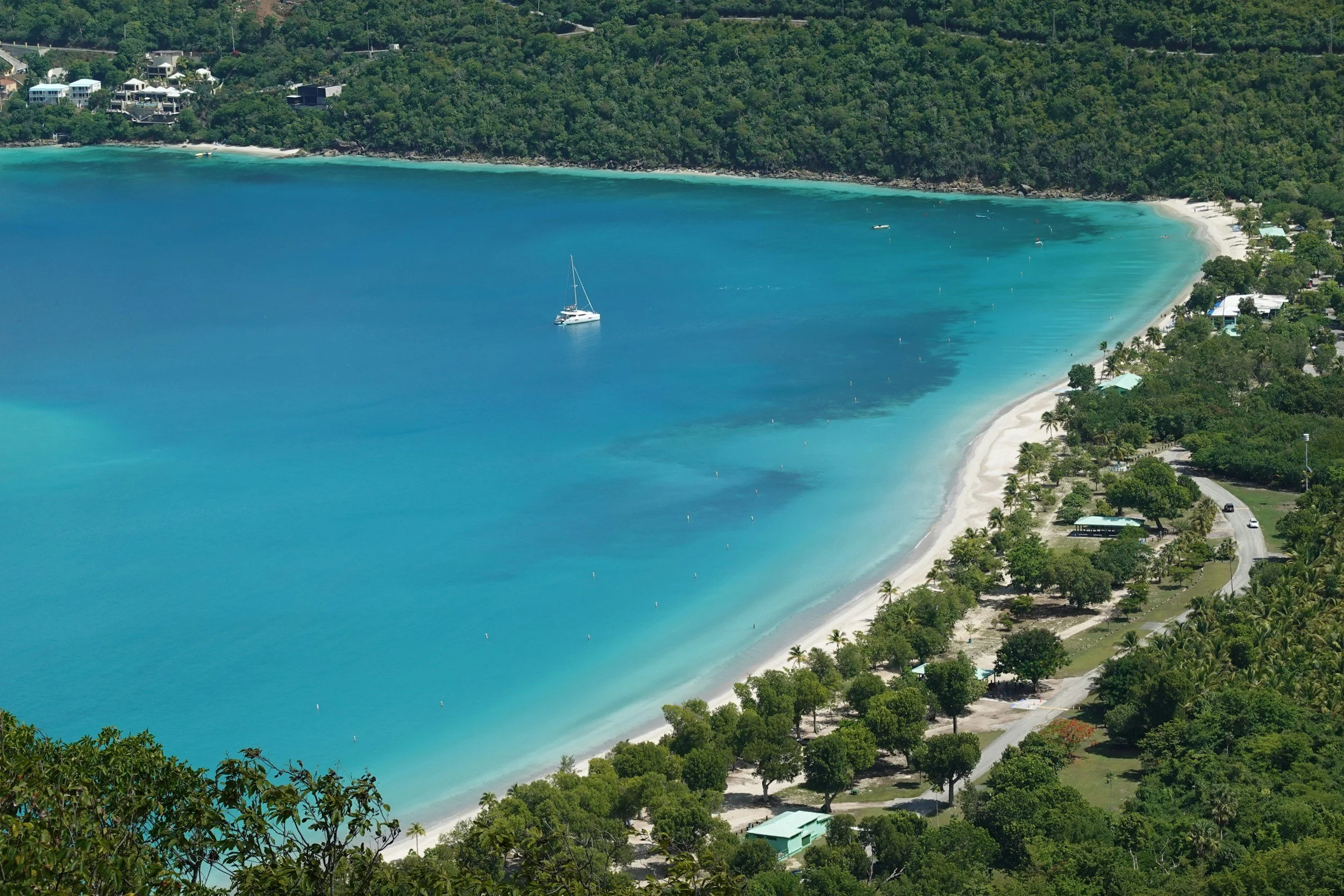
The physical setting does its part. Charlotte Amalie's harbor holds a particular kind of beauty — layered hillsides dropping toward the water, historic stone warehouses painted in pastels, the whole thing bracketed by turquoise bays that turn cobalt in the afternoon light. Magens Bay on the north shore is long, protected, and calm enough that the water barely moves on most mornings. The eastern end of the island is quieter than it looks on a map — Coki Point's reef snorkeling, the calm coves behind Sapphire Beach, and the ferry departures out of Red Hook all give the day genuine texture without requiring much planning.
What St. Thomas is not is undiscovered. Cruise ships arrive regularly at Charlotte Amalie, the duty-free streets fill on port days, and the island's urban energy — real traffic, real commercial density, real nightlife — doesn't let you forget you're somewhere with significant tourist infrastructure. This isn't a flaw for the traveler who chooses St. Thomas intentionally. It is a flaw for the traveler who arrives expecting the wild, unhurried Caribbean and finds instead an island that moves at a different speed and rewards engagement over escape.
Best for travelers who want the ease of a US territory alongside genuine Caribbean beauty — who value connectivity and the freedom to move between islands over the seclusion of a single quiet destination. St. Thomas is often recommended for first-time Caribbean travelers, families, and groups seeking an accessible, socially engaging base with built-in connections to the broader Virgin Islands.
This is St. Thomas
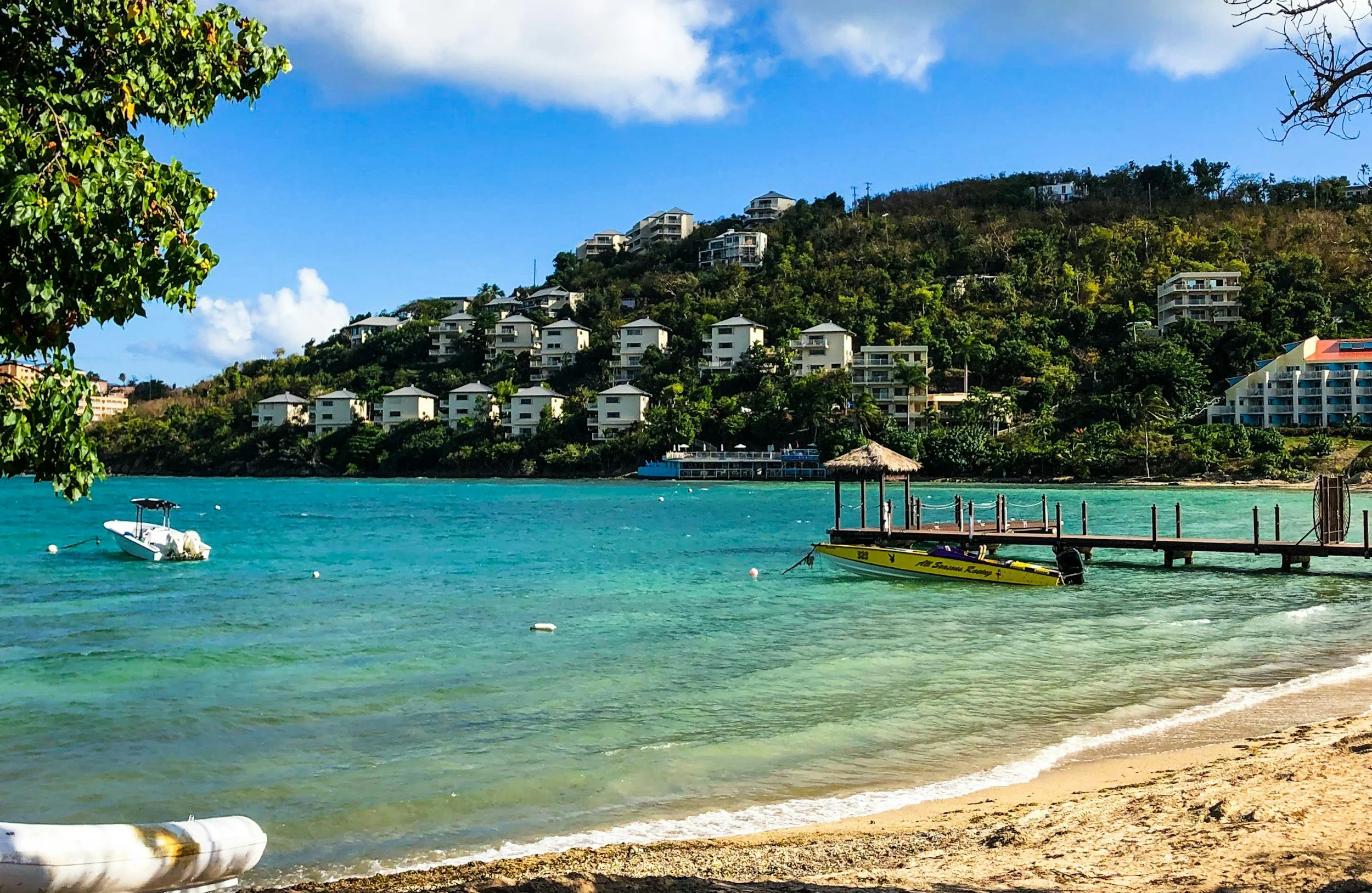
Colorful hillsides stacked above a working harbor, duty-free streets humming between historic stone walls, and turquoise water that holds its color all the way out to the cruise ships anchored in the bay.
Part of the Greater Caribbean Collection on TheTripThread — a destination reference system built for travelers deciding where they'll feel right, not just where to go. St. Thomas is for travelers who value ease of access and social energy, and who want a base that opens up the broader Virgin Islands rather than closes everything else out.

Common Experience Patterns

St. Thomas runs on a port schedule as much as a sun schedule. Cruise days reshape Charlotte Amalie — traffic stacks, downtown fills, and the waterfront shifts register entirely. Residents plan errands around ship arrivals the way people elsewhere plan around rush hour. Knowing which mode a given day will be changes how to use the island.
The beaches tell the day differently. Magens Bay holds its calm regardless — the ridge between it and Charlotte Amalie insulates it from port-day energy. Coki Point on the northeast is louder and more local: snorkeling, food vendors, reggae, and a scene that runs on its own logic. Red Hook in the east is the evening center — marina bars, ferry lines, and social energy that winds down late without becoming aggressive.
St. Thomas is not a quiet island and makes no claim to be one. The roads are steep, narrow, and left-side — a genuine adjustment for US visitors, particularly after dark. The commercial energy of the duty-free district is constant. Travelers expecting the unhurried pace that other USVI islands deliver will need to recalibrate.
Locals Know — The safari bus is real local transport, not a scenic tour. Flag it down, pay cash, and move with the flow rather than waiting for a stop system that doesn't exist. Visitors who treat it as infrastructure get more out of it.
Locals and repeat visitors alike describe St. Thomas as genuinely easy and socially rewarding — consistently praised for its beaches, ferry access to the broader USVI, and dining range from beachside fish shacks to harbor-view restaurants — especially for travelers who want Caribbean beauty within US-territory ease, while those who prefer solitude or a nature-first experience tend to find the cruise traffic and commercial density work against what they came for.
Where we eat:
Dining on St. Thomas spans a real range — Red Hook's marina area anchors the most reliable evening scene, with casual options alongside waterfront restaurants that don't require reservations most nights. Charlotte Amalie has the broadest concentration but skews tourist-facing on cruise days; timing a dinner there on a ship-free evening produces a noticeably different experience.
Where we go:
Most movement on St. Thomas organizes around a morning beach decision and an afternoon call on ferries or exploring the east end. A rental car or reliable taxi plan is necessary — the island is hilly and spread out, and no base is within walking distance of everything worth seeing.
What we love:
The combination of American infrastructure and Caribbean scenery is St. Thomas's defining offer — and the hillside views above Charlotte Amalie, particularly at dusk when the harbor lights up, are the kind of moment that lands differently than a beach sunset. The ferry to St. John being a 20-minute commute rather than a logistics exercise is something repeat visitors consistently mention as underrated.
About this section:
This section is built from publicly shared traveler perspectives and credible regional reporting. We treat it as sentiment and cross-check factual claims where possible. We intentionally limit dependence on review marketplaces where paid, promotional, or otherwise unrepresentative input can blur the picture.
Identity
Vibe Descriptors
Lively · Urban · Nautical · Social · Welcoming
……….
Core Audience
Travelers who want the Caribbean's easiest entry point — US-territory logistics, direct flights, and a social, well-connected base for exploring the broader Virgin Islands
……….
Best For (Trip Types)
Romantic & Couples · Family Friendly · Nightlife & Party · Adventure & Exploration
……….
Known For
Duty-free shopping in Charlotte Amalie, Magens Bay's celebrated north-shore beach, ferry connections to St. John and the BVI, and the USVI's most complete dining and nightlife scene
……….
Trip Thread Theme(s)
Friction & Tradeoffs (Read This Before You Book)
Cost Pressure: St. Thomas sits firmly in the mid-range for the Caribbean, but costs add up faster than the $$–$$$ tier suggests. Taxis between areas are the most consistent friction point — the island is spread out, and multiple taxi runs in a day can rival a car rental. Dining and activities skew tourist-facing in the main corridors, with few genuinely cheap options outside local spots like Coki Point.
Mobility / Getting Around: Charlotte Amalie is walkable within its own footprint, but getting anywhere else requires a car or taxi — a rental is the better value for travelers planning to move around rather than stay put. Left-side driving in left-hand-drive cars is the single most consistently mentioned adjustment for US visitors, particularly after dark on steep, narrow roads. The safari bus covers main routes cheaply, but it runs on its own schedule rather than yours.
Autonomy vs Structure: St. Thomas rewards spontaneous movement more than most Caribbean islands — the taxi network, ferry options, and beach variety mean a day can be decided over morning coffee rather than planned in advance. The exception is cruise port days in Charlotte Amalie, where the commercial energy and crowds reduce rather than support that flexibility.
Crowd Texture: Overstimulation is the primary friction risk on St. Thomas — and it is not evenly distributed across the island or the week. Charlotte Amalie on a heavy cruise day is a materially different environment than Charlotte Amalie on a ship-free Thursday: the streets, the prices, and the atmosphere all shift. Travelers who time their downtown visits around the port schedule find a noticeably calmer version of the same place; travelers who don't may feel the island's commercial intensity works against them.
Culture Access: English throughout and American infrastructure make St. Thomas the most culturally accessible island in the USVI for US travelers — there is no language barrier, no currency adjustment, and no unfamiliar systems to navigate. The gap between resort experience and local reality shows up most in Charlotte Amalie's duty-free corridor, which serves cruise visitors rather than residents, and is best crossed by heading east to Red Hook or northeast to Coki Point instead.
Variety Ceiling: St. Thomas holds up well across three to five days — the beach range, the dining variety, and the ferry connections to St. John extend the experience meaningfully. Travelers who treat it as a single-island stay rather than a base for the broader USVI tend to find it starts repeating sooner; those who use the Red Hook ferries and explore the east end alongside the north shore consistently report they could have stayed longer.
Sand & Sea Character
St. Thomas beaches divide by coast, and the difference matters for where to base. Magens Bay on the north shore is the island's signature — a long, protected arc of fine white sand, firm underfoot, bright from the shallow sandy bottom that extends well offshore. The south and east coasts shift in character: Sapphire Beach and Secret Harbour offer coarser white sand with reef structure closer to shore, producing a different visual and tactile experience than Magens Bay's open sweep. Coki Point on the northeast is rougher — mixed sand and coral rubble at the waterline — but the snorkeling directly off the beach is among the island's best. Base near Magens Bay for the classic long-beach north-shore experience; base east near Sapphire or Red Hook for reef access and ferry proximity.
Water around St. Thomas reads turquoise to blue-green depending on depth and bottom. At Magens Bay the shallow sandy floor keeps the water a consistent pale turquoise — bright and warm-toned in calm conditions, though clarity drops when strong trade winds stir the surface or after heavy rain. The east-coast coves hold clarity better in variable conditions; Sapphire and Secret Harbour are reliable for snorkeling visibility even when the north shore runs choppy. Coki Point's water reads deeper-toned — blue-green rather than turquoise — because of the reef structure beneath, but visibility is typically strong and marine life density is high. Hull Bay on the northwest faces open Atlantic exposure and runs rough when trades are up, better for surf watching than swimming. Travelers chasing bright turquoise and easy swimming should base north. Snorkel and reef seekers get more consistent conditions and better terrain on the east end. The northwest shore suits travelers who want dramatic open-coast energy over calm water.
Explore St. Thomas — Map & Highlights
St. Thomas anchors the western end of the US Virgin Islands, positioned as the USVI's main arrival point and connection hub. Exploring it means driving — the island is hilly, roughly 13 miles long, and no base puts everything within walking distance. Days tend to organize around a morning beach choice followed by an afternoon decision about staying put, heading to another beach, or catching a ferry east. Unlike most Caribbean islands where exploration is concentrated in a single area, St. Thomas rewards deliberate movement between its north shore, its eastern corridor, and its downtown waterfront. The map below is a geographic orientation tool — not a checklist to conquer, and not meant to capture every beach, restaurant, or landmark worth finding.
Beaches
St. Thomas beaches span the island's coasts and serve different purposes. Magens Bay on the north shore is the classic beach destination — long, calm, and protected. The east end offers Sapphire Beach, Secret Harbour, and Coki Point, each with reef access and a more active coastal character. Hull Bay on the northwest faces open Atlantic conditions and suits travelers who want dramatic scenery over easy swimming. The north shore is the base-choice for classic beach days; the east end suits travelers combining beach time with snorkeling and ferry access to St. John.
Food & Drink
Dining on St. Thomas concentrates in two distinct zones. Charlotte Amalie's waterfront and side streets hold the broadest range — from casual lunch spots to upscale harbor-view restaurants — but the experience shifts on cruise days when the tourist overlay is heaviest. Red Hook's marina area is the more reliably local evening scene, with casual options, waterfront bars, and restaurants that don't require planning ahead. Food-driven travelers who want variety and evening energy without cruise-ship crowds should base in or near Red Hook rather than downtown.
Activities
Activity density on St. Thomas concentrates in the east end and the harbor. Red Hook is the departure point for St. John ferries, BVI day trips, and water sports charters — the most activity-rich base on the island. Snorkeling at Coki Point requires no boat. Mountain Top in the island's interior provides the best panoramic views. Travelers who want to stack activities — ferries, snorkeling, boat trips, and beach days — should base east, where logistics are shortest and movement feels least effortful.
Where to Stay in St. Thomas
St. Thomas varies more by base location than its small size suggests — the north shore, the east end, and downtown each deliver a meaningfully different trip. Options range from full-service resort properties to boutique hotels, guesthouses, and vacation villas. Below, The Trip Thread has listed the best areas to stay in St. Thomas — each offering a different balance of privacy, scenery, and local character. Each area is located on the above map for easy exploration.
Charlotte Amalie — Historic Hub & Harbor Views
Charlotte Amalie is the island's commercial and historic center — colorful Danish colonial buildings, duty-free shopping streets, and a working harbor that gives the waterfront a genuinely alive quality that no other base on the island matches. It suits travelers who want to feel the island's urban character and history, with walkable access to restaurants and the harbor directly outside. Port-day intensity is the primary trade-off — on heavy cruise days, the streets fill and the atmosphere shifts register entirely. Travelers who time downtown visits around the ship schedule find a noticeably different, quieter version of the same place.
Why stay: Best walkable base on the island for travelers who want harbor character, history, and the broadest concentration of dining within easy reach.
Why not: Cruise-port proximity creates heavy crowd and commercial pressure on busy ship days — not the right base for beach-first or quiet-seeking travelers.
~~~~~
Red Hook — Ferry Hub & Evening Scene
Red Hook sits on the island's eastern tip and anchors the USVI's inter-island logistics — ferries to St. John depart regularly, BVI day trips leave from nearby marinas, and the marina bar scene makes it the island's most reliable evening zone. It's the practical base for travelers who want to combine St. Thomas days with St. John excursions, with the eastern beaches a short drive away and the broadest concentration of casual dining and nightlife outside Charlotte Amalie. What it trades away is scenic character — Red Hook is functional and lively rather than visually striking, and the marina setting feels workaday rather than evocative as a base.
Why stay: Best base for multi-island movement, evening energy, and east-end beach access without cruise-ship overlay.
Why not: Less scenic and less walkable for sightseeing than Charlotte Amalie; the marina setting feels practical rather than evocative.
~~~~~
Magens Bay Area — North Shore Calm
The north shore sits behind a ridge that physically separates it from the harbor side, giving the Magens Bay area a quieter, more residential feel than either Charlotte Amalie or Red Hook. Staying here means immediate access to one of the Caribbean's most consistently beautiful beaches, with minimal commercial overlay and a pace that suits travelers whose primary goal is uncomplicated beach days. The trade-off is real distance from the rest of the island's activity — getting to the ferry, the airport, or the east-end beaches means driving over the ridge, and the north shore has limited dining and almost no evening options.
Why stay: Immediate access to Magens Bay and a quiet residential character suited to travelers whose priority is uncomplicated beach days.
Why not: Isolated from the rest of the island's activity — driving over the ridge to ferries, airport, and other beaches adds meaningful time to every outing.
~~~~~
East End Resort Corridor — Beach & Water Sports Base
The east end's resort corridor runs along the calmer southern coast between Red Hook and Sapphire Beach, anchored by full-service resort properties with direct beach access, water sports, and on-property dining. It's the most self-contained base on the island — snorkeling at Coki Point and Secret Harbour is a short drive away, and Red Hook's ferry dock is close enough to make St. John day trips easy. What it trades away is local character — the resort corridor can feel insulated from St. Thomas's actual personality, and travelers who don't make the effort to explore beyond it may finish the trip feeling they visited a resort rather than an island.
Why stay: Most complete resort infrastructure on the island with strong beach and snorkeling proximity and short logistics to Red Hook ferries.
Why not: Risks feeling like a resort bubble — insulated from the island's actual personality if you don't actively explore beyond the property.
Practical Snapshot
-
December through April is the dry season and the most reliably pleasant window — lower humidity, consistent trade winds, and the island at its most socially active. November and May offer good conditions with fewer crowds and lower accommodation rates. Hurricane season runs June through November, with peak risk in August and September. Cruise traffic is heaviest December through April, so port days are most frequent in that window.
-
The US dollar is the official currency — no exchange needed for American travelers. Card acceptance is excellent at hotels, restaurants, and most shops. The safari bus and some local markets operate cash-only, so keeping small bills on hand smooths daily movement.
-
English is spoken everywhere on St. Thomas — it's a US territory with American-standard communication infrastructure throughout. Visitors won't encounter a language barrier at any point. Some communities speak Spanish and a Creole-influenced dialect, though this doesn't affect tourist interactions.
-
Cyril E. King Airport (STT) receives direct flights from most major US cities — New York, Miami, Atlanta, and Charlotte among them — with flight times ranging from two and a half to four hours. No passport is required for US citizens. The ferry from Red Hook or Charlotte Amalie to Cruz Bay, St. John takes 20 to 45 minutes depending on the terminal.
-
St. Thomas sits comfortably in the mid-range for the Caribbean, with room to stretch in either direction. Local lunches = 💲, mid-range guesthouses and hotels = 💲💲, beachfront resort rooms = 💲💲💲. Taxi fares add up across a full stay — travelers who rent a car typically find it costs less than multiple daily taxi runs.
-
Red Hook anchors the island's evening scene — marina bars, waterfront restaurants, and a social energy that stays active without becoming aggressive. Charlotte Amalie has more mixed evening character, livelier on cruise days and quieter without them. The island's pace score reflects genuine after-dark options rather than a full party scene.
-
A rental car or reliable taxi plan is necessary for most of the island — Charlotte Amalie and Red Hook are walkable within their own footprints, but beaches and the airport require transport. Left-hand driving in left-hand-drive cars is the most consistently cited adjustment for US visitors, particularly after dark on steep, narrow roads. The safari bus covers main routes cheaply and runs on local rhythm rather than a fixed schedule.
-
St. Thomas carries a moderate concern rating — petty theft is the most common issue, particularly at beach parking areas. Don't leave anything visible in parked cars, and apply standard awareness in nightlife zones after dark. For solo travelers, English throughout and familiar US infrastructure make it one of the more forgiving islands in the collection. For LGBTQ+ travelers, full US federal legal protections apply and the island is genuinely welcoming — no discretion required.
-
Tap water is safe to drink — St. Thomas has a reliable desalination system. The island drives on the left in left-hand-drive cars, which catches many US visitors off guard at intersections and after dark. Tipping follows US mainland norms — 18 to 20 percent at restaurants and for taxi drivers is standard. Magens Bay charges a small entry fee; bring cash.
-
Reef-safe sunscreen is required by territory law across the USVI — oxybenzone, octinoxate, and octocrylene are banned due to documented harm to near-shore coral reefs. Standard mainland sunscreens often contain one or more of these compounds, so check before packing. The waters around St. Thomas include protected reef systems, and compliance is taken seriously by locals and park staff.
Compare Similar Caribbean Destinations
Thinking about St. Thomas, St. John, or St. Maarten? Here’s how these greater Caribbean destinations differ in rhythm and culture.
ST. THOMAS
Vibe & Energy: Connected and social — a hub island that hums with ferry traffic, marina energy, and the commercial pulse of a working Caribbean port town.
Dining & Culture: A broad range from beachside fish shacks to harbor-view restaurants, anchored by American ease and Caribbean flavor — Coki Point and Red Hook define the island's dining personality more honestly than Charlotte Amalie's duty-free strip.
Cost & Crowds: Mid-range Caribbean pricing with real crowd variability — cruise port days transform Charlotte Amalie, while the eastern beaches and north shore hold their character.
Accessibility: Direct flights from most US cities, no passport required, and ferry connections to St. John and the BVI make St. Thomas the easiest USVI entry point.
Nightlife / Social Scene: Active marina bars in Red Hook and a mixed evening scene in Charlotte Amalie — enough options to feel social without committing to a full party island.
Best For: First-timers, families, and travelers who want Caribbean beauty with American logistics and the freedom to move between islands.
ST. JOHN
Vibe & Energy: Quiet and nature-first — two-thirds national park, with a pace that makes St. Thomas feel like a city by comparison.
Dining & Culture: Limited but good — Cruz Bay has a handful of reliable spots, and the island's culture expresses itself through its landscape rather than its restaurant scene.
Cost & Crowds: Expensive for what it offers — villa rentals and scarce accommodation drive costs up, with few mid-range options. Low tourism saturation keeps beaches genuinely uncrowded.
Accessibility: Requires a 20 to 45-minute ferry from St. Thomas — no airport on the island, which adds a planning layer that St. Thomas doesn't require.
Nightlife / Social Scene: Minimal — Cruz Bay has bars, but the island quiets down early and the social energy is gentle rather than active.
Best For: Nature travelers, snorkelers, and hikers who want US-territory ease without commercial energy — and who don't need restaurants or nightlife to feel satisfied.
ST. MAARTEN
Vibe & Energy: Lively and cosmopolitan — the Caribbean's most social hub, built around casinos, nightlife, and a Dutch-Caribbean commercial energy that stays active well past midnight.
Dining & Culture: International and varied, reflecting the island's two-flag character — Dutch, French, Caribbean, and international options concentrated in Simpson Bay and Philipsburg.
Cost & Crowds: Similar pricing to St. Thomas but with heavier cruise impact — Philipsburg on port days is one of the Caribbean's most congested tourist environments.
Accessibility: Requires a US passport — Princess Juliana Airport has direct US connections and is known for its dramatic beach approach over Maho Beach.
Nightlife / Social Scene: The strongest nightlife in this comparison by a clear margin — clubs, casino floors, beach bars, and a party culture that extends across both sides of the island.
Best For: Groups, social travelers, and anyone who wants maximum nightlife and international flavor — those who choose St. Maarten over St. Thomas are trading American-ease logistics for more after-dark energy.
Bottom Line Decision (If You're Torn)
Pick St. Thomas if: you want no passport, direct flights, and a well-rounded Caribbean base with built-in connections to the rest of the USVI.
Pick St. John if: nature, hiking, and genuine quiet are the priority — and ferry logistics and limited dining feel like features rather than friction.
Pick St. Maarten if: nightlife, casinos, and a fully social international trip are the main event — and you have a passport.
Tie-breaker: passport and nightlife needs. No passport points to St. Thomas or St. John automatically; the choice between them is almost always about how much quiet and how many ferries you'll accept.
Local Truths
You clear US Customs at departure from STT, not on arrival — the process adds significant time, and flights cluster in the morning, creating long queues. Every local source gives the same advice: arrive three hours before your flight, without exception.
~~~~~
St. Thomas has no standardized street address system, which means GPS navigation regularly fails or routes incorrectly on mountain roads. Get a physical map from your rental car company and ask your accommodation for landmark-based directions before you go anywhere unfamiliar.
~~~~~
Chemical sunscreen is banned territory-wide and carries a $1,000 fine for first offense. Oxybenzone, octinoxate, and octocrylene are prohibited — and many products labeled "reef-safe" still contain them. Only zinc oxide and titanium dioxide are compliant. Buy before you leave the mainland; the same product costs significantly more on island.
~~~~~
"Good Morning" before any transaction is not optional — locals treat skipping the greeting and immediately asking a question as genuinely rude, and may ignore you or give cold service as a result. The evening greeting is "Good Night," not "Good Evening." Saying "Good Evening" marks you immediately as a visitor.
~~~~~
Taxis charge per person, not per ride, and rates are fixed by the USVI Taxicab Commission. For groups of four or more, a rental car is often significantly cheaper than repeated taxi runs across the island.
~~~~~
The drinking age in the USVI is 18, but 18-year-olds cannot transport alcohol through US Customs at STT departure. Legally purchased bottles will be confiscated at the airport checkpoint — a distinction that surprises even well-traveled visitors.
~~~~~
Left-side driving in left-hand-drive cars is unlike anything else under US jurisdiction — inherited from Danish colonial practice at the 1917 territory transfer. The combination puts the driver on the wrong side relative to their lane, which makes blind curves on steep mountain roads genuinely more dangerous than visitors expect. Locals use engine braking on long downhill grades rather than riding the brakes.
~~~~~
Cruise ship days affect the entire road network between Charlotte Amalie and the beaches, not just the beaches themselves. The full cruise schedule is publicly available at vinow.com — locals and repeat visitors plan their days around it. On days with no ships, some Havensight shops close; one ship in port is often the sweet spot for shopping without crowds.
~~~~~
Magens Bay is most crowded during cruise peak hours (11am–3pm) and Sunday afternoons when local families gather. Hull Bay on the northwest coast and Brewers Bay near the airport are the local alternatives — fishing boats, almost no cruise traffic, and a version of the island most visitors never find.
~~~~~
WAPA power outages are a chronic, ongoing infrastructure problem that locals have lived with for decades. Most established hotels and restaurants have backup generators or solar. Ask any vacation rental host specifically whether the property has backup power before booking — not all do.

St. Thomas Travel Questions, Answered
A few honest answers to the questions that come up most — so you can plan with confidence and fewer surprises.
1. Is St. Thomas expensive?
St. Thomas sits in the mid-range for the Caribbean — not the most expensive, but not budget-friendly either. Accommodation ranges from guesthouses to full-service resorts, and dining spans casual fish shacks to upscale waterfront restaurants. Taxi fares across a full stay add up faster than most visitors expect; a rental car often costs less for travelers planning to move around. The duty-free shopping the island is known for creates its own spending pressure — easy to avoid if you're aware of it going in.
2. When's the best time to visit St. Thomas?
December through April is the most reliable window — dry conditions, steady trade winds, and the island at its most active. November and May are quieter and less expensive with mostly good weather. Hurricane season runs June through November, with the highest risk in August and September. Cruise traffic peaks December through April, so port days are most frequent then — worth checking the schedule before planning beach or shopping days.
3. Which area of St. Thomas should I stay in?
Where you stay on St. Thomas shapes the trip significantly. Charlotte Amalie suits travelers who want walkable history and harbor character. Red Hook is the best base for multi-island movement and evening energy. The Magens Bay area suits travelers whose priority is immediate north-shore beach access with a quieter residential feel. The East End Resort Corridor offers the most self-contained resort experience with strong snorkeling proximity. No base is more than a 20-minute drive from any other area.
4. Do I need a car in St. Thomas?
A rental car or reliable taxi plan is necessary for most of St. Thomas — the island is hilly and spread out, and only Charlotte Amalie and Red Hook are walkable within their own footprints. Left-hand driving in left-hand-drive cars is the main adjustment for US visitors, and it's more challenging than it sounds on steep, narrow mountain roads after dark. The safari bus covers main routes at low cost but runs on its own schedule rather than yours.
5. Is St. Thomas safe for solo or LGBTQ+ travelers?
St. Thomas is generally safe for solo travelers — English throughout, US-territory infrastructure, and a social scene that integrates visitors naturally. Standard awareness applies at beach parking areas, where petty theft is the most commonly cited issue, and in nightlife zones after dark. For LGBTQ+ travelers, St. Thomas operates under full US federal legal protections and is genuinely welcoming — the island has an established LGBTQ+ visitor base and no discretion is required beyond personal preference.
6. How does St. Thomas compare to nearby islands?
St. Thomas is the most connected and socially active of the three USVI islands most visitors consider. St. John, a 20-minute ferry away, offers a completely different experience — nature-first, quiet, and deliberately undeveloped, with limited dining and no airport. St. Maarten, which requires a passport, is the more international and nightlife-forward option — louder, more commercially intense, and built around a party energy that St. Thomas doesn't match. The choice usually comes down to how much quiet, how many ferries, and whether a passport is in hand.
Why This Guide Changes With the Island
St. Thomas never stays still — Red Hook's restaurant and bar scene turns over regularly, cruise schedules shift and reshape which days feel like two different islands, and the ferry connections that make this a gateway destination expand and contract with demand. This guide evolves with it. Locals share updates, travelers add discoveries, and we keep refining what you see here so every detail reflects the island as it is now — not a memory of what it used to be.
If St. Thomas resonates but you want to see how it compares across the USVI spectrum, St. John and St. Maarten each offer a meaningfully different version of what the Virgin Islands can be — one quieter and wilder, one louder and more international. Both are worth reading before you book.
Find Your Thread
Every traveler connects differently — St. Thomas might be exactly right, or your rhythm might point somewhere else entirely, and that's what this is for. TheTripThread exists to help you find the place that fits, not just the place that's popular. Explore more islands across the Greater Caribbean Collection and see where your travel instincts lead.Guided by locals. Designed for discovery.