By Kelly McAtee | The Trip Thread | Last Updated March 2026
Puerto Rico
Colonial streets, rainforest roads, surf towns, and a food scene that's genuinely one of the Caribbean's best — Puerto Rico moves at its own confident pace.
Culture & Rhythm | Adventure & Nature | Urban Island Energy | Affordable Paradise | Culinary Caribbean
Best for travelers who want variety without friction, drawn to Old San Juan nights and El Yunque mornings over a single generic island experience.
Not for travelers who want one predictable resort bubble or small-feeling island, or for those who expect every beach to feel the same without moving around.
☀️ Best months: December–April 💲 Average cost: $$—$$$ 🕶️ Vibe: Layered & Alive
Reality Check (Read This Before You Book)
Puerto Rico is a large, multi-region island where base choice shapes everything — it is not a single-resort or beach-contained destination, and the best version of it usually involves a rental car and some deliberate planning.
The biggest misconception: travelers expect a laid-back Caribbean escape and arrive to find a real, functioning island with city traffic, working neighborhoods, and very different coastline personalities by region. That lived-in quality is the appeal for many — and a genuine mismatch for others.
If you want a true "no passport needed" destination, note that the no-passport benefit applies to U.S. citizens only — it is not a universal advantage.
If you're looking for a single, predictable resort zone to anchor your week, Puerto Rico will feel more complicated than expected.
If you expect every beach to be calm and swimmable without moving around, the Atlantic-facing north shore can be rough and less clear depending on swell — and sargassum is a beach-by-beach, seasonal reality worth checking before you book.
If you want fully walkable island life without a car, you'll get it in Old San Juan but lose most of what makes Puerto Rico distinct.
For a quieter, more contained experience without navigating a large island, a smaller Eastern Caribbean destination or a protected cay in the Bahamas may be a better fit.
Why You’ll Love It
Puerto Rico resonates because it gives you real Caribbean texture with unusually low friction — for many travelers, it’s a simple flight, familiar logistics, and then you’re immediately inside a place with its own language, music, and daily life.
You feel it in the first day’s rhythm: coffee and warm bread early, the sound of Spanish carrying across a plaza, afternoon light bouncing off pastel walls in Old San Juan, then sea breeze turning cooler as people drift into the streets for dinner. Even the nature doesn’t feel “staged” — El Yunque is wet-green, loud with frogs, and close enough to pair with a beach day if you plan your timing.
What Puerto Rico is not is a single-scene resort island where every traveler has the same week. It’s a whole island with strong regional personalities — city energy in and around San Juan, rainforest and north-coast day trips, and outer islands that trade convenience for quiet. The upside is range and authenticity; the trade-off is that you get the best version of Puerto Rico by choosing your base (or splitting stays) instead of expecting one neighborhood to deliver everything.
Best for travelers who want culture and variety with easy logistics, and who’d rather move between distinct regions than stay put in one location all week.
This is Puerto Rico
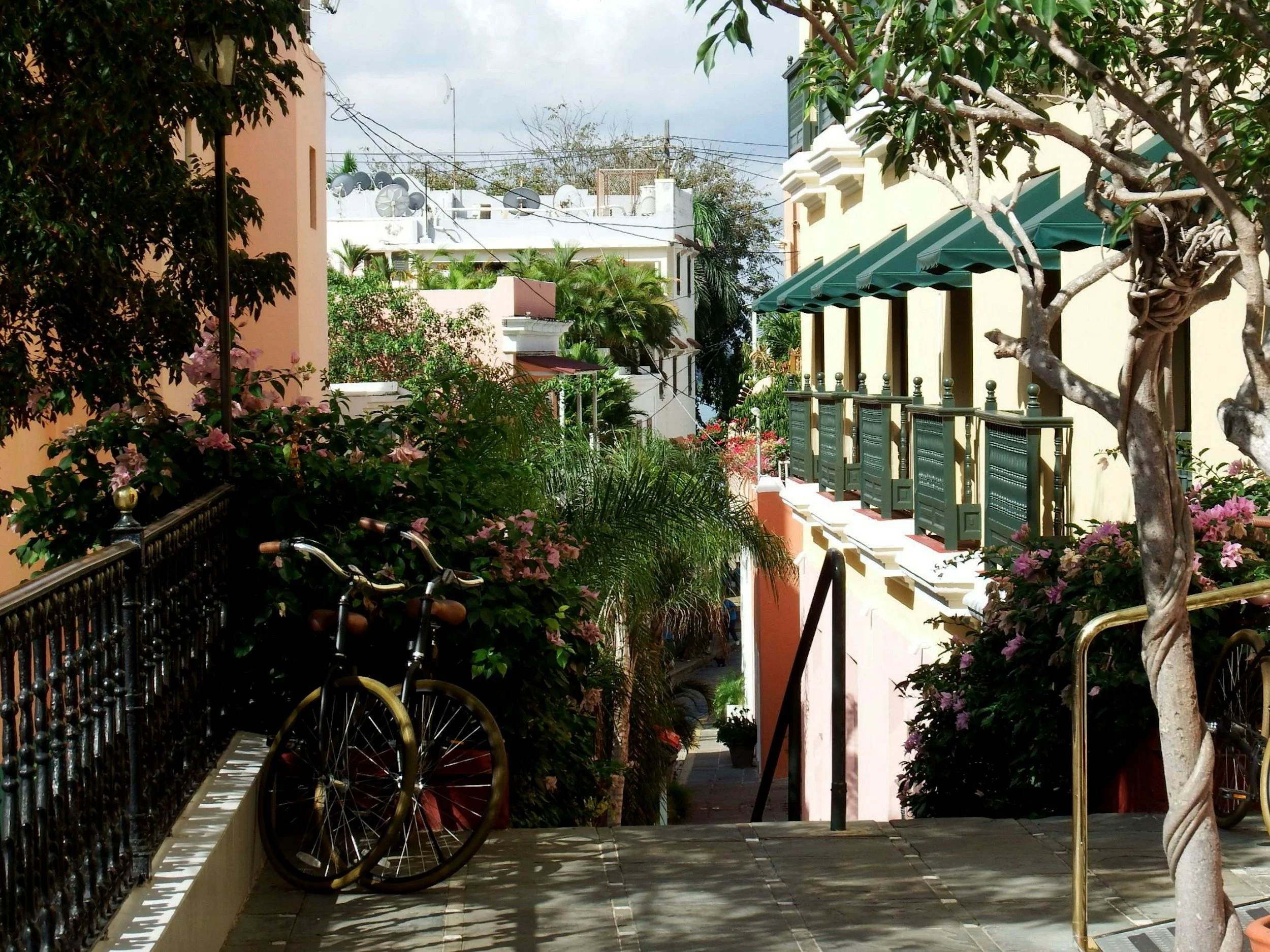
Sun-washed Spanish-colonial streets and coastal high-rises set against rainforest green, with beaches that shift from calm bays to wind-brushed Atlantic edges.
Part of the Greater Caribbean Collection on TheTripThread — a destination reference system built for travelers deciding where they'll feel right, not just where to go. Puerto Rico is for travelers who value cultural depth, range, and the confidence of knowing they can move between a historic city, a rainforest, and a surf town without leaving the island.


Common Experience Patterns

Puerto Rico runs on a real-island rhythm that doesn't adjust for visitors — mornings move early, afternoons slow under the heat, and evenings come alive again in plazas and restaurants well after dark. One practical truth shapes most good trips here: outside a few walkable pockets, getting the best version of Puerto Rico usually means planning around distance, traffic, and timing rather than assuming the island will deliver itself to you.
The texture shifts fast by region. San Juan holds the late-dinner energy, bright sidewalks, and the easiest "walk out and do something" nights. Beach days can mean protected, swim-easy water on the east coast — or windier, Atlantic-exposed stretches that look dramatic from shore but aren't always swimmable. Rain bursts are common enough that flexible timing matters more than a rigid daily schedule.
Puerto Rico is not a single-scene, beach-first destination where one hotel zone covers the whole week. It's varied, lived-in, and genuinely imperfect in places — roads, infrastructure gaps, and the occasional planning friction can add texture that surprises travelers expecting a polished product. That trade is also precisely why it feels like a real place rather than a package.
Where we eat:
San Juan's food scene — particularly Santurce and Old San Juan — is the most concentrated and varied dining environment in the Greater Caribbean Collection. The range runs from street-level lunch counters and kiosk strips to chef-driven restaurants with serious regional credentials. Outside the city, the quality stays solid but the options thin out; roadside lechoneras in Guavate and the kiosk strip at Luquillo are the clearest examples of food that rewards leaving San Juan behind. Reservations matter at popular spots during peak season — walkup availability at well-known restaurants in Old San Juan can be limited on weekend evenings.
Where we go:
Movement on Puerto Rico is region-by-region rather than spontaneous and island-wide — the distances and traffic patterns mean that day-tripping across multiple coasts in a single outing usually creates more friction than reward. Travelers who get the most out of the island tend to pick a base, build routines around it for a few days, then shift if the trip is long enough. El Yunque pairs naturally with a Fajardo or east-coast base; Rincón, Aguadilla, and the west coast work as their own chapter; Old San Juan and Santurce anchor a city-and-culture trip without requiring a car. Renting a car outside of Old San Juan isn't just recommended — outside the metro area, it's effectively the only way to reach most of what makes the island worth visiting.
What we love:
What travelers consistently come back to is the combination of range and accessibility — the ability to move between a colonial city, a tropical rainforest, a surf town, and a bioluminescent bay without leaving the island or clearing customs. The food culture is a consistent standout, particularly the depth of the local scene outside tourist corridors. The island also rewards repeat visitors in a way that fewer Caribbean destinations do: there is genuinely more to find on a second or third trip than most people expect from a single week.
Locals and repeat visitors alike describe Puerto Rico as layered and deeply rewarding for travelers who arrive with curiosity and some flexibility, especially those willing to move between regions and eat their way off the tourist corridor — while those who come expecting a seamless, resort-contained escape tend to feel the gap between what Puerto Rico is and what they imagined most.
About this section
This section is built from publicly shared traveler perspectives and credible regional reporting. We treat it as sentiment and cross-check factual claims where possible. We intentionally limit dependence on review marketplaces where paid, promotional, or otherwise unrepresentative input can blur the picture.
Identity
Vibe Descriptors
Rhythmic · Lively · Layered · Warm · Grounded
……….
Core Audience
Suits travelers who want culture-first Caribbean travel with city energy plus nature access, and who are comfortable choosing regions intentionally
……….
Best For (Trip Types)
Culture & History | Food & Drink | Adventure & Exploration | Family-Friendly
……….
Known For
Known for Old San Juan, a rainforest interior, and coastlines that change by region, rewarding travelers who plan for variety over uniformity
……….
Trip Thread Theme(s)
Friction & Tradeoffs (Read This Before You Book)
Cost Pressure Puerto Rico's price range spans a wide band depending on how you travel. Old San Juan and Condado hotels, beachfront restaurants, and tourist-zone activity operators skew toward $$–$$$, while local lunch spots, roadside kiosks, and inland lechoneras can bring daily costs down meaningfully. The biggest cost friction tends to show up in lodging — beachfront and boutique options fill quickly and price up during peak season (December–April) — rather than in food or transport, where budget-conscious choices are genuinely available.
Mobility / Getting Around Old San Juan is the one base where not renting a car makes clear sense — parking is genuinely frustrating, streets are narrow, and Ubers are reliable within that zone. Everywhere else on the island, a car is the practical choice. Ubers will take you out of San Juan but often won't pick you up for the return trip outside the metro area. North-coast and mountain roads can be rough after rain, and potholes in standing water are a real hazard — locals are consistent on this point. Plan driving time carefully, especially between the east coast, mountains, and west.
Autonomy vs. Structure Puerto Rico rewards travelers who plan intentionally rather than those who expect to wander freely and have everything work out. The island feels open and explorable, but the best experiences — El Yunque, bioluminescent bays, outer island ferries, west-coast surf beaches — almost all require timing, transport decisions, or advance booking. Unlike a small walkable island where spontaneity is built in, Puerto Rico's range is an asset only if the trip is structured around it.
Crowd Texture San Juan is a heavy cruise port and one of the most visited destinations in the Caribbean — Old San Juan in particular can feel very crowded during peak hours and cruise days. Tourism saturation is high across the north coast. The social texture shifts significantly by region: resort-facing in Condado and Isla Verde, walkable and neighborhood-led in Old San Juan, quieter and surf-town casual in Rincón and Boquerón. Travelers seeking a less-toured experience typically find it in the southwest, the mountains, or by timing visits to popular sites early.
Culture Access Local culture is genuinely accessible here, rather than something filtered through a resort layer — but it takes some navigation. Spanish is the dominant language in daily life, and outside tourist zones, English fluency varies. The food scene is one of the clearest entry points: roadside lechoneras in Guavate, market kiosks in Luquillo, and neighborhood spots in Santurce all offer direct cultural texture in a way that Old San Juan's tourist-facing restaurants don't fully replicate. Travelers who stay only in hotel corridors will get a smaller version of what Puerto Rico offers.
Variety Ceiling Puerto Rico has effectively no variety ceiling for travelers willing to move between regions — the combination of city, rainforest, surf towns, bioluminescent bays, and outer islands gives it more range than almost any other single Caribbean destination. The ceiling becomes relevant only for travelers who stay in one area expecting a full island experience, or for those seeking a quiet, repetitive beach routine rather than an active, regionally varied trip.
Sand & Sea Character
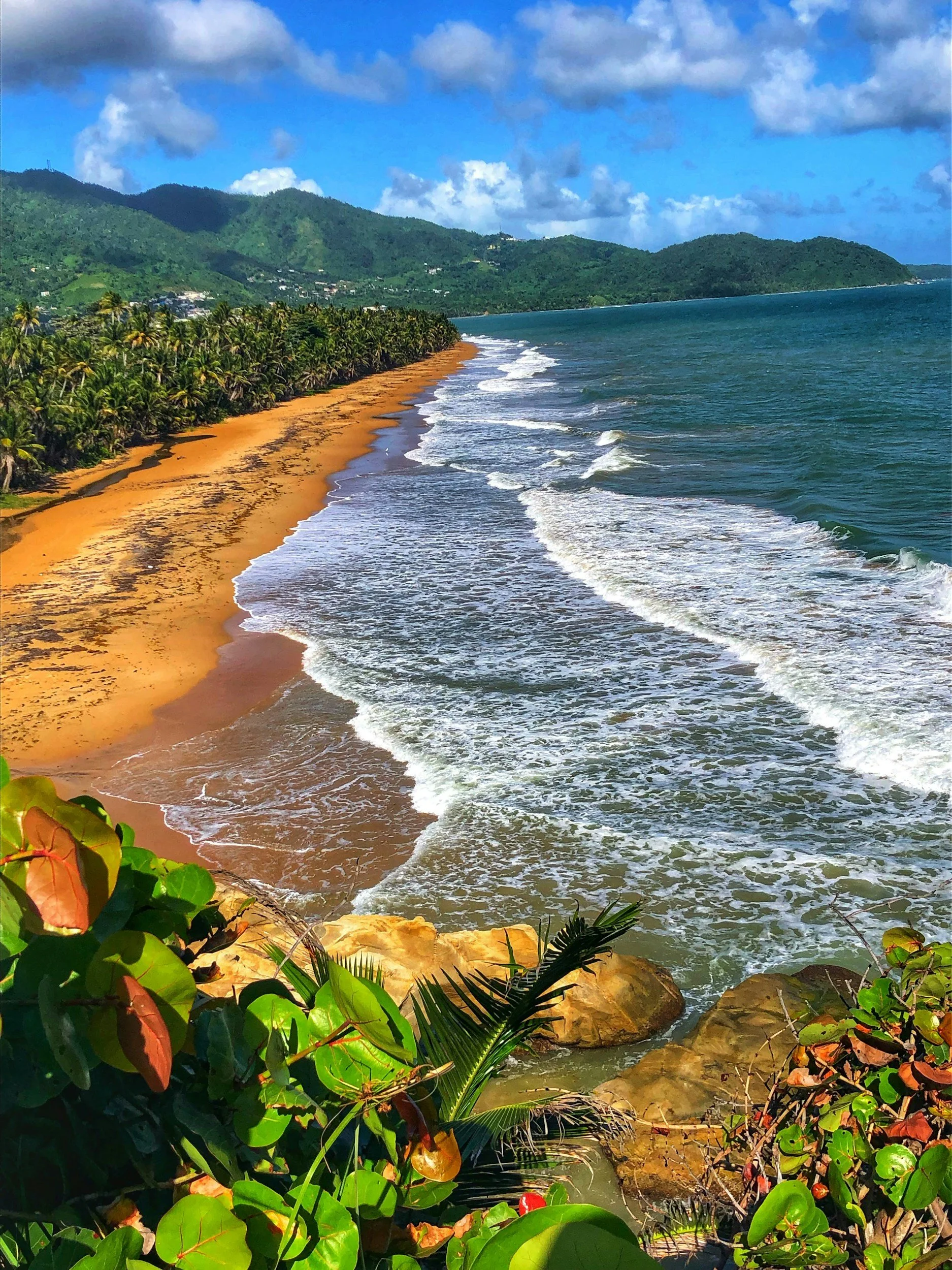
Puerto Rico’s sand isn’t one consistent “Caribbean powder”—it changes by region. In Condado and parts of Isla Verde (San Juan’s beach strip), the sand is typically light and fine, but the shoreline is more urban and the beach can feel busier and more wave-touched depending on swell. On the north coast around Dorado and Isabela, the sand often reads more golden and grainy, with pockets of beach broken up by rock and reef. Along the south coast near Ponce and La Parguera, beaches and cays can feel flatter and firmer underfoot, and darker seabed patches (reef, rock, seagrass) can make the water look deeper-toned even when visibility is still good.
Water clarity (visibility) is usually clearest in sheltered bays and offshore cays—especially around Fajardo (boat access) and the outer islands Culebra and Vieques, where protected coves often stay clearer when conditions are calm. By contrast, the Atlantic-facing north shore (including San Juan beaches and stretches toward Isabela) can look less clear after rain or during swell because surf keeps sand suspended. Water color shifts with bottom and depth: shallow white sand reads pale turquoise, while deeper shelves or darker bottoms read teal to cobalt even on clear days. That’s why “turquoise, swim-easy” travelers often base in Fajardo (for quick access to calm-water day trips) or split time with Culebra/Vieques, while surf-and-drama travelers base in Rincón/Aguadilla, trading easy floating for wave action; San Juan works best for travelers who want city evenings and don’t mind day-tripping for their clearest water and sand.
Explore Puerto Rico — Map & Highlights
Puerto Rico sits in the northeastern Caribbean, and exploring it feels less like “one island week” and more like moving through a few different worlds—city sidewalks, rainforest roads, then coastlines that change personality by the hour. It’s a destination where distances and traffic can quietly shape the day, so the best trips are built around choosing a base (or two) and repeating a few familiar routes rather than trying to crisscross constantly. Unlike many Caribbean trips that stay beach-first and hotel-contained, Puerto Rico’s best moments often happen in neighborhoods, roadside stops, and region-specific shorelines. This map is intentionally curated, not comprehensive—it is not meant to capture every beach, restaurant, or landmark on the island. Rather, it is intended to help you determine which area would fit you best.
Beaches
Puerto Rico’s beaches vary a lot by region, so “beach day” means different things depending on where someone stays. San Juan and the north coast are convenient but can be rougher or less clear after swell and rain. The east (Fajardo area) is better for boat access to calmer, clearer water on Culebra/Vieques. The west (Rincón/Aguadilla) is stronger for surf and sunset beaches than easy floating. Base east for calm-water day trips, west for surf and beach-town rhythm, or San Juan for convenience with day trips.
Food & Drink
If food variety is a priority, San Juan metro (Old San Juan, Santurce, Condado) is the easiest base by far. It has the highest concentration of restaurants, from casual local spots to more polished dinner options, and the most walkable clusters for nights out. In the east (Fajardo/Luquillo), dining is more spread out but still very workable, with solid local seafood, casual spots, and kiosk-style options—especially useful for travelers prioritizing boat days, ferries, or El Yunque over city-style restaurant hopping. Outside metro San Juan, dining generally becomes more driving-dependent, with beach-town casual options dominating in many areas. Base in San Juan for dense dining and easy nights, base east for water-access convenience with good casual food, or base west if beach-town meals matter more than range.
Activities
Puerto Rico’s activities are spread across regions, which is why base choice matters more than many travelers expect. San Juan anchors historic walking and city culture, the northeast anchors El Yunque and east-coast water departures, and the west/interior anchor surf towns, caves, and mountain adventure. Trying to stack multiple regions into one day usually creates long drives and timing stress. Base near the activities you care about most, or split stays if the trip includes both city/culture and west- or east-coast nature days.
Where to Stay on Puerto Rico
Where travelers stay in Puerto Rico quietly determines what the trip becomes. The island does not move at one pace, and the same week can feel urban, surf-town, or slow-coastal depending on the base. These areas are less about amenities than rhythm, access, and what kind of friction (or ease) travelers are willing to accept.
Old San Juan — Historic walkable core
Old San Juan sits on the north coast inside a compact historic district, and staying here feels street-led: cobblestones, plazas, fort views, and evenings that happen on foot. Travelers who choose it usually want culture, architecture, and dinner-and-drinks nights without relying on a car every time they leave the room. It suits short stays, first visits, and travelers who care more about atmosphere than beach time directly outside the door. Compared with Isla Verde or Rincón Pueblo, it offers more history and walkability but less beach-first ease and less room to spread out.
Why stay: Walkable, atmospheric, and culture-forward — ideal for travelers who want Puerto Rico’s historic core to shape the trip
Why not: Beach days usually require planning or day trips, and the area can feel busier and louder than quieter coastal bases
Condado — Polished city-beach convenience
Condado is a north-coast urban beach district where the days feel easy to organize: restaurants nearby, quick transport options, and a steady social rhythm after dark. Travelers often choose it for convenience and range, especially when they want beach access plus city nights without committing to a fully historic or fully resort-style stay. It tends to suit couples, friend trips, and first-timers who want low-friction evenings and a familiar pace. Compared with Old San Juan it feels more modern and hotel-adjacent; compared with Rincón Pueblo it offers less local surf-town character and less separation from city energy.
Why stay: Easy, central-feeling, and dinner-friendly — strong for travelers who want beach access and city movement in the same base
Why not: It can feel more polished and tourist-facing, with less of the old-city atmosphere or west-coast beach-town personality
Isla Verde — Beach-forward metro edge
Isla Verde, on the metro area’s eastern side near the airport, feels more shoreline-driven than Old San Juan while still keeping city access within reach. Travelers choose it when they want a wider beach strip, easier arrival logistics, and a base that supports shorter stays or early departures without giving up evening options. It works well for travelers who prioritize beach time first and use San Juan selectively for dining or sightseeing. Compared with Condado, it often feels more beach-strip and less neighborhood-like; compared with Boquerón or Rincón Pueblo, it is easier logistically but less distinct in local rhythm.
Why stay: Beach-first and practical — ideal for travelers who want easy arrivals, shoreline time, and simple access to metro San Juan
Why not: It offers less historic character and can feel less rooted than bases where daily life is more visible
Rincón Pueblo — Sunset surf-town base
Rincón Pueblo, on the west coast, runs on a beach-town rhythm shaped by sunset, surf conditions, and slower evenings. Travelers base here for west-side access, a more relaxed social pace, and a trip that feels less urban and less scheduled than San Juan-area stays. It suits travelers who are comfortable driving between beaches and coastal pockets and who value atmosphere over maximum convenience. Compared with Condado or Isla Verde, it offers more breathing room and local surf-town character, but the trade-off is fewer dense dining clusters and more planning for island-wide sightseeing.
Why stay: Relaxed west-coast rhythm with strong beach-town identity — ideal for travelers who prefer sunsets, surf culture, and slower evenings
Why not: It is farther from major east-side and metro anchors, so cross-island day plans add time and driving friction
Boquerón — Casual southwest social coast
Boquerón, in the southwest, feels warm, casual, and social in a way that is different from both metro San Juan and surf-led Rincón Pueblo. Travelers often choose it for mellow beach-town evenings, nearby coastal access, and a more local-facing pace that still has nightlife energy on the right nights. It suits travelers who like short walks, simple routines, and a base that feels communal rather than polished. Compared with Rincón Pueblo it is less surf-centered; compared with Condado it feels less curated and less convenience-heavy, with fewer upscale options and more driving for broader variety.
Why stay: Friendly southwest base with easy evening energy — great for travelers who want a casual coastal routine without metro intensity
Why not: Dining and activity variety are more limited than San Juan, and the southwest location is less efficient for island-wide sightseeing
Practical Snapshot
-
December through April is the dry season and the most reliably comfortable window — low humidity, consistent sunshine, and the island's busiest social calendar, including the San Sebastián Street Festival in January. Shoulder season (May, November) offers a reasonable balance of lower prices and workable weather. Hurricane season runs June through November, with the highest risk in August and September; most travelers avoid those months, though October and November can be genuinely pleasant with some flexibility.
-
The U.S. dollar is the currency — no exchange needed for American travelers. Card acceptance is excellent in San Juan, Condado, and most tourist-facing businesses. Outside urban areas and at roadside or rural spots, cash is more useful than many visitors expect; it's worth carrying some before heading inland or to beach kiosk areas.
-
Spanish is the primary language of daily life, and most residents speak it as their first language despite Puerto Rico's U.S. territory status. English is widely spoken in tourism-facing contexts — hotels, restaurants, and Old San Juan — but a few words of Spanish go a long way outside those zones and are genuinely appreciated by locals.
-
Luis Muñoz Marín International Airport (SJU) in San Juan receives direct flights from most major U.S. cities and many Canadian ones, making arrival unusually straightforward for a Caribbean destination. No customs or immigration for U.S. travelers. Getting from the airport to most visitor bases takes 20–45 minutes depending on traffic; Isla Verde is the closest, Old San Juan the longest. Ferries to Culebra and Vieques depart from Ceiba on the northeast coast.
-
Puerto Rico sits in the moderate-to-upscale range for the Caribbean, though the spread is wider than most islands. Local lunches = 💲, inland guesthouses and casual stays = 💲💲, beachfront hotels and polished restaurants in Condado or Old San Juan = 💲💲💲. The biggest variable is lodging — peak-season prices in San Juan can feel more Miami than Caribbean. Traveling outside the city and eating local brings costs down significantly.
-
Puerto Rico has the most developed nightlife of any destination in the Greater Caribbean Collection — Old San Juan and Santurce stay active well into the early hours, with a mix of salsa bars, rooftop venues, and neighborhood street scenes. La Placita in Santurce is the most locally textured option; Condado skews more hotel-bar polished. Rincón and the southwest run quieter — beach bars, early evenings, and a social scene shaped by surf culture rather than late-night energy.
-
A rental car is the practical choice for most travelers who want to experience more than one area of the island. Old San Juan is the clear exception — parking is genuinely frustrating there, and Ubers are reliable within the metro zone. Outside San Juan, Uber availability drops off; the app will take you out of the city but pickups for the return trip are unreliable. Roads can be rough in rural and mountain areas, and potholes filled with standing water after rain are a local caution worth taking seriously.
-
Puerto Rico's tourist zones — Old San Juan, Condado, Isla Verde, Rincón — are generally safe and well-traveled with a strong visitor presence. Standard urban awareness applies in San Juan as it would in any city; some neighborhoods adjacent to the tourist corridor warrant the same common-sense caution you'd apply anywhere. The safety note most consistently repeated by locals concerns the ocean, not crime: rip currents on the north coast are a real hazard at beaches that can look calm from shore. Puerto Rico has a visible and active LGBTQ+ community, particularly in San Juan, and is one of the most genuinely welcoming destinations in the Caribbean for LGBTQ+ travelers. Same-sex relations are fully legal, and the social environment in tourist-facing and urban areas is openly accepting.
-
Tap water is safe to drink. Voltage is standard U.S. (120V), so no adapter needed. Sunday rhythms are real — some smaller businesses and roadside spots close or keep limited hours. The island runs on a genuinely warm, social culture; a greeting goes a long way. Sargassum affects some beaches seasonally and is beach-specific — worth checking current conditions for your intended coast before arrival.
-
Puerto Rico's natural systems — coral reefs, mangroves, rainforest, and bioluminescent bays — are under active conservation pressure. Mosquito Bay in Vieques is one of the world's brightest bioluminescent bays and is sensitive to environmental changes; tour operators are strictly regulated to protect it. El Yunque is a federally managed forest; staying on marked trails matters. Reef-safe sunscreen is the standard ask at snorkeling and dive sites across the island.
Compare Similar Caribbean Destinations
Thinking about Puerto Rico, Jamaica, or Dominican Republic? Here’s how these greater Caribbean destinations differ in rhythm and culture.
PUERTO RICO
Vibe & Energy: Layered and fast-moving — city energy in San Juan gives way to surf-town calm in Rincón and rainforest quiet in the east, all on the same island.
Dining & Culture: One of the most exciting food scenes in the Caribbean right now, rooted in Spanish colonial history and shaped by a creative local generation. Old San Juan's cobblestone streets and Santurce's murals define the visual character.
Cost & Crowds: Moderate to upscale; San Juan tourist zones are genuinely busy, and popular beaches draw real crowds in peak season.
Accessibility: Direct flights from most U.S. cities; no passport for American travelers; car essential for full island experience.
Nightlife / Social Scene: The most developed nightlife in the Greater Caribbean Collection — Santurce and Old San Juan stay active late, with a mix of salsa bars, rooftop venues, and neighborhood street life.
Best For: Travelers who want cultural depth, variety, and city energy alongside nature access — and who are willing to move between regions to get it.
JAMAICA
Vibe & Energy: Soulful and unapologetically itself — reggae, color, and a pulse that feels organic rather than performed, with regional personalities from Negril's beach ease to Kingston's urban energy.
Dining & Culture: Defined by one of the Caribbean's most distinctive food identities — jerk, fresh seafood, and roadside cooking that rewards travelers who eat beyond the resort. Music is culture here in a way it isn't anywhere else in the region.
Cost & Crowds: Wide range from budget guesthouses to luxury resorts; tourist hubs like Montego Bay and Ocho Rios are heavily visited and vendor-active.
Accessibility: Direct flights from the U.S., Canada, UK, and Europe; car not needed for resort stays but essential for real exploration.
Nightlife / Social Scene: High-energy and musically alive — street parties, beach bars, and a nightlife rooted in local culture rather than hotel-corridor polish.
Best For: Travelers who want maximum personality and cultural immersion, and who engage with a destination rather than just observe it.
DOMINICAN REPUBLIC
Vibe & Energy: Festive and varied — the all-inclusive coast (Punta Cana) and the boutique north (Las Terrenas, Cabarete) are almost different countries in feel, connected by a warm, lively national character.
Dining & Culture: Strong on value and variety; resort dining is reliable but the most interesting food and culture live in towns like Santo Domingo and Samaná, away from the all-inclusive corridor.
Cost & Crowds: The most budget-accessible of the three; all-inclusive options deliver strong value for families and groups, though popular resort zones can feel dense and vendor-heavy.
Accessibility: Direct flights from major U.S. and European cities; Spanish-only outside resort zones; car or guide needed for real exploration.
Nightlife / Social Scene: Festive and social, particularly in resort towns and Santo Domingo — merengue and bachata are the soundtrack, and the energy runs warm and communal.
Best For: Travelers who want maximum value, all-inclusive comfort, or a first large-island Caribbean experience with clear resort structure and manageable logistics.
Pick Puerto Rico if: you want cultural depth, a world-class food scene, city nightlife, and nature access — all without leaving a U.S. territory or exchanging currency.
Pick Jamaica if: you want the most personality-driven island in the Caribbean, with music, food, and culture that feel genuinely irreplaceable.
Pick the Dominican Republic if: value, resort ease, and maximum variety within a single country are the priority — especially for families or groups traveling together.
Tie-breaker: How much independence do you want? Puerto Rico rewards intentional regional exploration; Jamaica rewards cultural engagement beyond the resort; the Dominican Republic rewards staying put and letting the resort deliver.
Local Truths
Rip-current warnings on Puerto Rico's north coast are not a formality. Locals repeat this specifically because tourists drown every year at beaches that looked calm from shore — the Atlantic-facing coastline can be deceptive, and surface conditions don't always reflect what's happening in the water.
~~~~~
Beach-specific knowledge matters here more than on most islands. Locals quickly distinguish safe swimming beaches from risky ones — Luquillo's Balneario Monserrate and Seven Seas are consistently named as reliable east-coast choices, while La Pared in Luquillo gets pointed out repeatedly as the stretch visitors underestimate and locals actively steer people away from.
~~~~~
Old San Juan is the one part of Puerto Rico where locals actively tell visitors not to rent a car. Parking is genuinely difficult, the street layout creates friction, and the neighborhood is built for walking. The car advice that applies island-wide reverses inside the historic district.
~~~~~
The "no passport needed" framing is a marketing hook, not a local identity. Residents think of Puerto Rico as a real place — a functioning island with city traffic, working neighborhoods, different rules by beach and road — not simply an easy entry point for U.S. travelers.
~~~~~
Guavate and the lechonera strip on Route 184 are not a tourist attraction that locals tolerate — they're a genuine cultural institution that residents point to because roadside roast pork in the mountains is one of the clearest ways to understand what Puerto Rico actually eats, and it pulls people out of the San Juan bubble in a way few day trips do.
~~~~~
Sargassum is a beach-by-beach and season-by-season issue on Puerto Rico, not a blanket island condition. Locals don't write off the whole coastline for it — they distinguish which beaches are currently affected and which aren't, and visitors who check conditions before committing to a beach day fare significantly better than those who don't.
~~~~~
Sunday rhythms are real. Smaller businesses, roadside spots, and some town-based restaurants operate on reduced hours or close entirely on Sundays — particularly outside San Juan. Planning a Sunday drive without accounting for this can mean fewer options than expected, especially in rural and mountain areas.
~~~~~
The Ruta Panorámica is a local recommendation that rarely shows up in standard travel guides. This mountain road crossing the island's interior is how residents describe seeing the real Puerto Rico — not just the coastal strip — and it's most rewarding with a full day, an early start, and no fixed itinerary.

Puerto Rico Travel Questions, Answered
Here are the questions travelers ask most before booking Puerto Rico — answered plainly, with fit in mind rather than hype.
1. Is Puerto Rico expensive?
Puerto Rico sits in the moderate-to-upscale range for the Caribbean, though the spread is wider than most islands. Eating local — roadside kiosks, lunch counters, mountain lechoneras — keeps costs genuinely manageable. The biggest variable is lodging: beachfront hotels and boutique stays in Old San Juan or Condado price up quickly during peak season. Traveling regionally and staying outside the tourist corridor brings the cost of a Puerto Rico trip down significantly compared to a fully hotel-and-restaurant stay in San Juan.
2. When's the best time to visit?
December through April is the most reliable window — dry, warm, and socially active, with the San Sebastián Street Festival in January as a genuine cultural highlight worth timing a trip around. Shoulder months like May and November offer a reasonable balance of lower prices and workable weather. The summer months bring higher humidity and hurricane risk, with August and September carrying the most exposure; October and November can surprise travelers with pleasant conditions and significantly smaller crowds.
3. Which area or coast should I stay on?
Where you stay shapes the whole trip. Old San Juan suits travelers who want history, walkability, and atmosphere as the daily backdrop. Condado and Isla Verde offer city-beach convenience with easy evenings and good transport. Rincón is the choice for west-coast surf-town rhythm and slower evenings. Fajardo anchors east-coast trips built around boat days, El Yunque, and outer island access. Each area trades something — base where the activities you care about most are actually located, rather than expecting to day-trip across the island constantly.
4. Do I need a car?
In Old San Juan, no — and locals actively advise against one there. Parking is genuinely frustrating, streets are narrow, and the neighborhood is built for walking. Everywhere else on Puerto Rico, a car is the practical choice. Outside the metro area, Uber availability drops off considerably — the app will take you out of San Juan but pickups for the return are unreliable. If the trip includes El Yunque, Rincón, Guavate, the southwest, or any outer-coast exploration, a rental car isn't optional.
5. Is it safe for solo or LGBTQ+ travelers?
Puerto Rico's tourist zones — Old San Juan, Condado, Isla Verde, Rincón — are generally safe and well-traveled. Standard urban awareness applies in San Juan as it would in any city of its size. Puerto Rico has a visible and active LGBTQ+ community, particularly in San Juan, and solo and LGBTQ+ travelers consistently report a warm welcome across the island. The safety note locals repeat most has nothing to do with crime: rip currents on the north coast are a genuine hazard at beaches that can look calm from shore.
6. How does it compare to nearby islands?
Puerto Rico is most often compared to Jamaica and the Dominican Republic — all three are large, culture-forward islands with serious food scenes, real nightlife, and enough regional variety to fill multiple trips. Puerto Rico's distinction is accessibility for U.S. travelers (no passport, no currency exchange) combined with a city-and-nature range that neither Jamaica nor the Dominican Republic quite replicates in the same compact package. Jamaica edges it on raw personality and musical identity; the Dominican Republic edges it on all-inclusive value and resort ease. Puerto Rico is the strongest choice when cultural depth, food, and logistical simplicity all matter in the same trip.
Why This Guide Changes With the Island
Puerto Rico never stays still — new restaurants open in Santurce, beach bar ownership shifts along the west coast, and ferry schedules to the outer islands change with seasons and demand.
This guide evolves with it. Locals share updates, travelers add discoveries, and we keep refining what you see here so every detail reflects the island as it is now — not a memory of what it used to be.
Explore nearby destinations that share Puerto Rico's scale and cultural energy — from the music-forward personality of Jamaica to the resort flexibility and variety of the Dominican Republic. Each delivers variety, but through its own distinct identity.
Find Your Thread
Every traveler connects differently. Maybe Puerto Rico is the match — the city energy, the rainforest morning, the food, the ease of getting here. Maybe the right island is still out there. Either way, this is what The Trip Thread is about: rediscovering the joy of travel, and the element of discovery that should accompany it. Explore more islands across the Greater Caribbean Collection and see how your travel vibe connects through TheTripThread.Guided by locals. Designed for discovery.