By Kelly McAtee | TheTripThread | Last Updated March 2026
Paradise Island
Where the Bahamas Turns Up the Volume
Urban Island Energy | Romance & Connection | Culinary Caribbean
Best for travelers who want everything in one place — waterparks, casinos, beaches, and nightlife all within walking distance — drawn to polished resort energy over quiet island solitude.
Not for travelers who want authentic Bahamian culture, small independent hotels, or a destination that feels like anything other than a resort.
☀️ Best months: December–April · 💲 Average cost: $$$–$$$$ · 🕶️ Vibe: Glitzy · Lively · Polished
Reality Check (Read This Before You Book)
This is a resort-anchored destination — the trip is shaped almost entirely around Atlantis and its constellation of pools, waterparks, restaurants, and casinos, not around a town or an island to explore. The biggest misconception is that Paradise Island is a Bahamian island experience; it's a resort bubble that happens to be in the Bahamas. If you need authentic local culture, independent restaurants, or a destination that rewards wandering, this will feel like the wrong country emotionally. If you're cost-sensitive beyond the room rate, know that dining, activities, and extras can significantly inflate the total bill. If you want polished Caribbean ease without the resort seal, look at a walkable luxury island instead.
Why You’ll Love It
Paradise Island works because it removes every barrier between you and a good time. The logistics disappear — beaches, pools, waterparks, restaurants, and nightlife are all within a few minutes' walk, everything is safe and well-lit, and the hardest decision most travelers face is which pool to try next. For families especially, and for couples who want energy over solitude, the convenience is the product.
The days here have a specific rhythm: bright mornings on Cabbage Beach where the sand is fine and white and the water shifts from pale turquoise to deep blue as the shelf drops away, afternoons drifting between waterslides and marine exhibits, evenings that start at a celebrity-chef restaurant and end somewhere near the casino floor. The light is Bahamian — relentless and warm — but the setting is engineered, and that's by design. Atlantis doesn't pretend to be the real Bahamas; it's a fantasy version with the friction removed.
What separates Paradise Island from other Caribbean resort destinations is the sheer density of what's available in one place. This isn't a single beachfront hotel with a pool and a restaurant — it's a self-contained district with over 40 dining outlets, a 154-acre waterpark, a marine habitat housing 65,000 animals, and a casino floor that runs 24 hours. The trade-off is real: you're inside a bubble, and travelers who cross the bridge to Nassau often describe the contrast as jarring. But for the traveler who came for the bubble — who wants everything polished, walkable, and abundant — Paradise Island delivers that at a scale the rest of the Caribbean doesn't attempt.
Best for travelers who want maximum entertainment, dining, and beach access with zero logistics — families, couples, and groups who choose curated abundance over authentic island discovery. Paradise Island is often recommended for first-time Caribbean visitors and families seeking a safe, all-in-one resort experience.
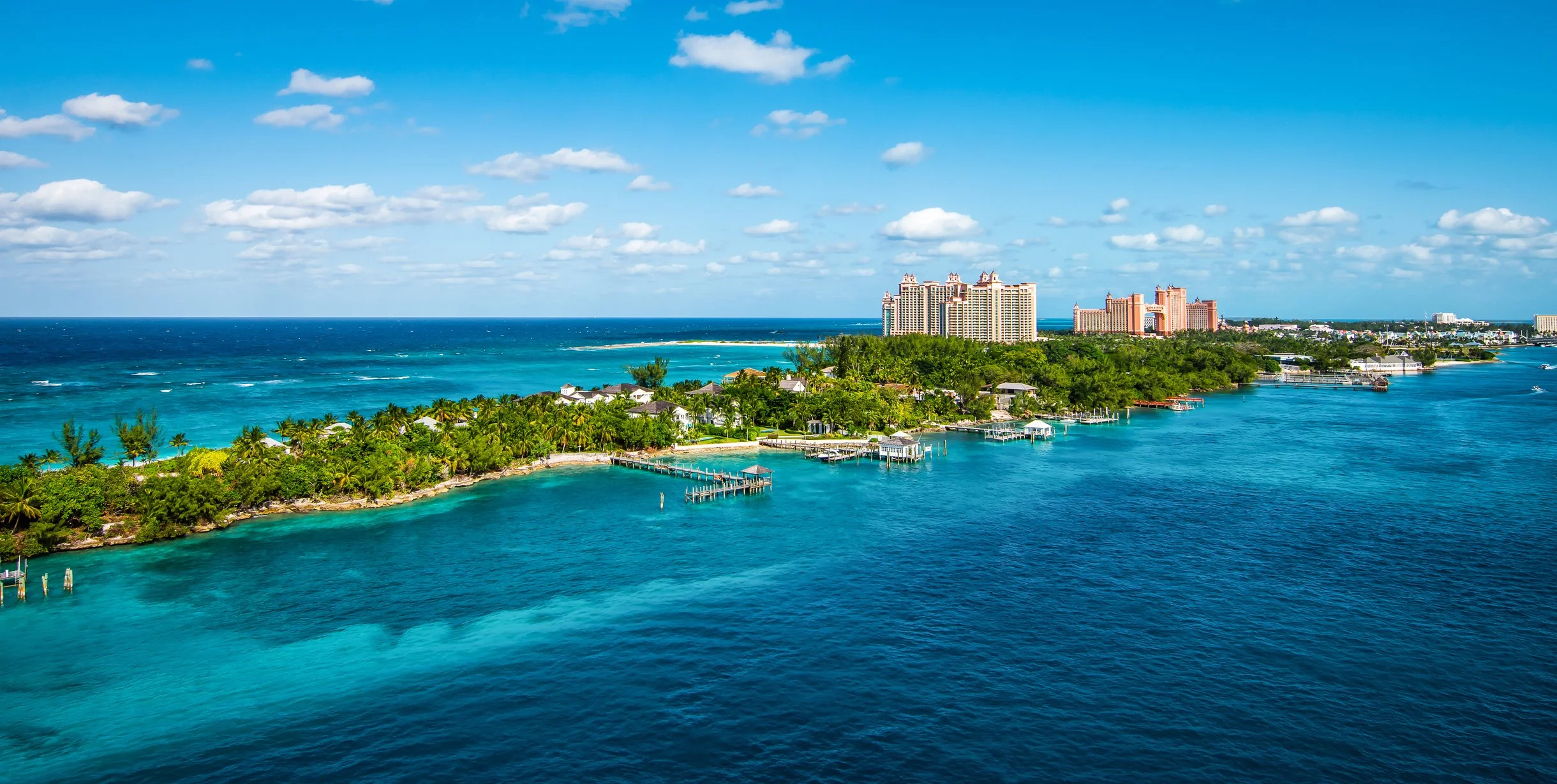
This is Paradise Island
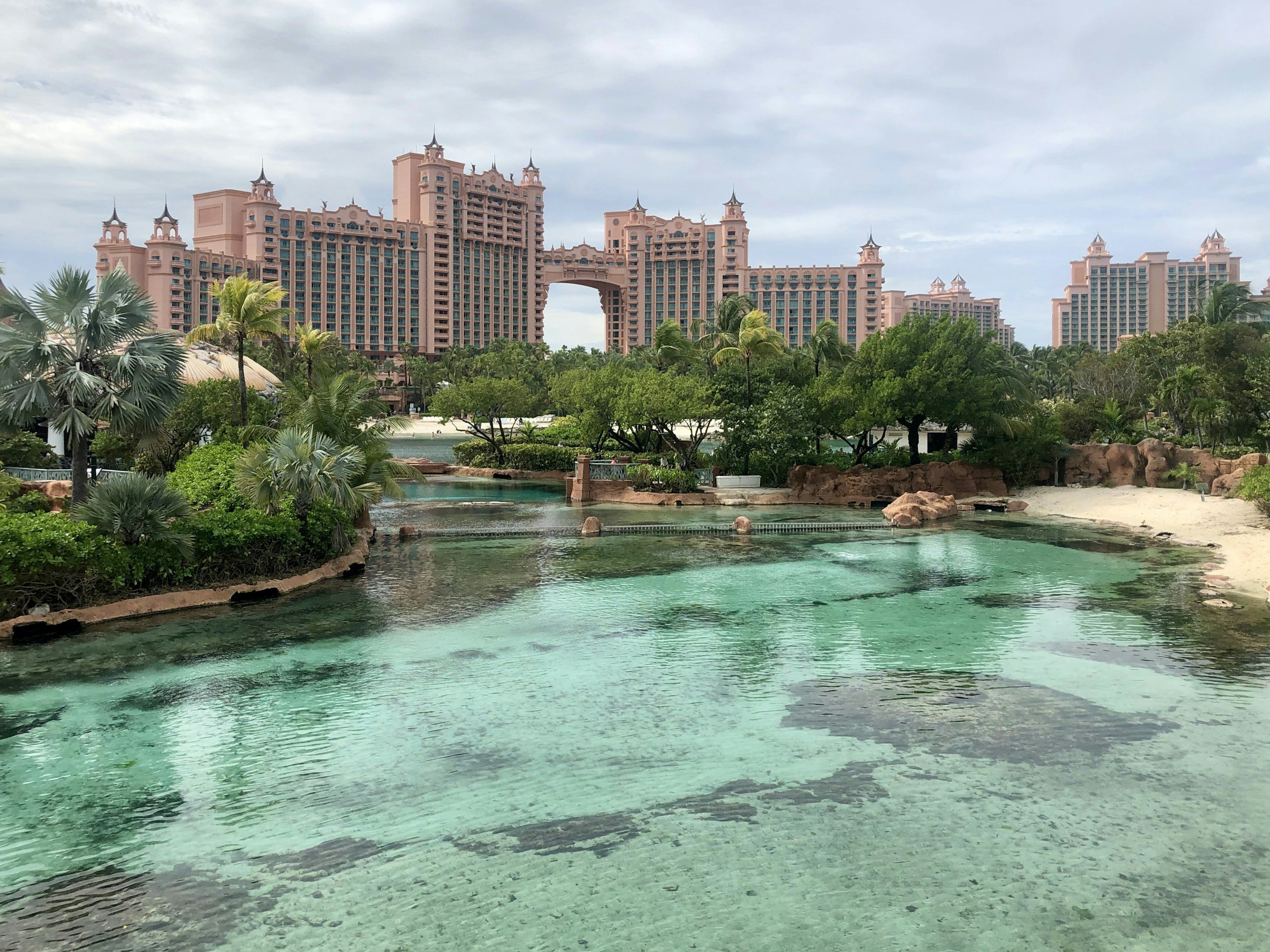
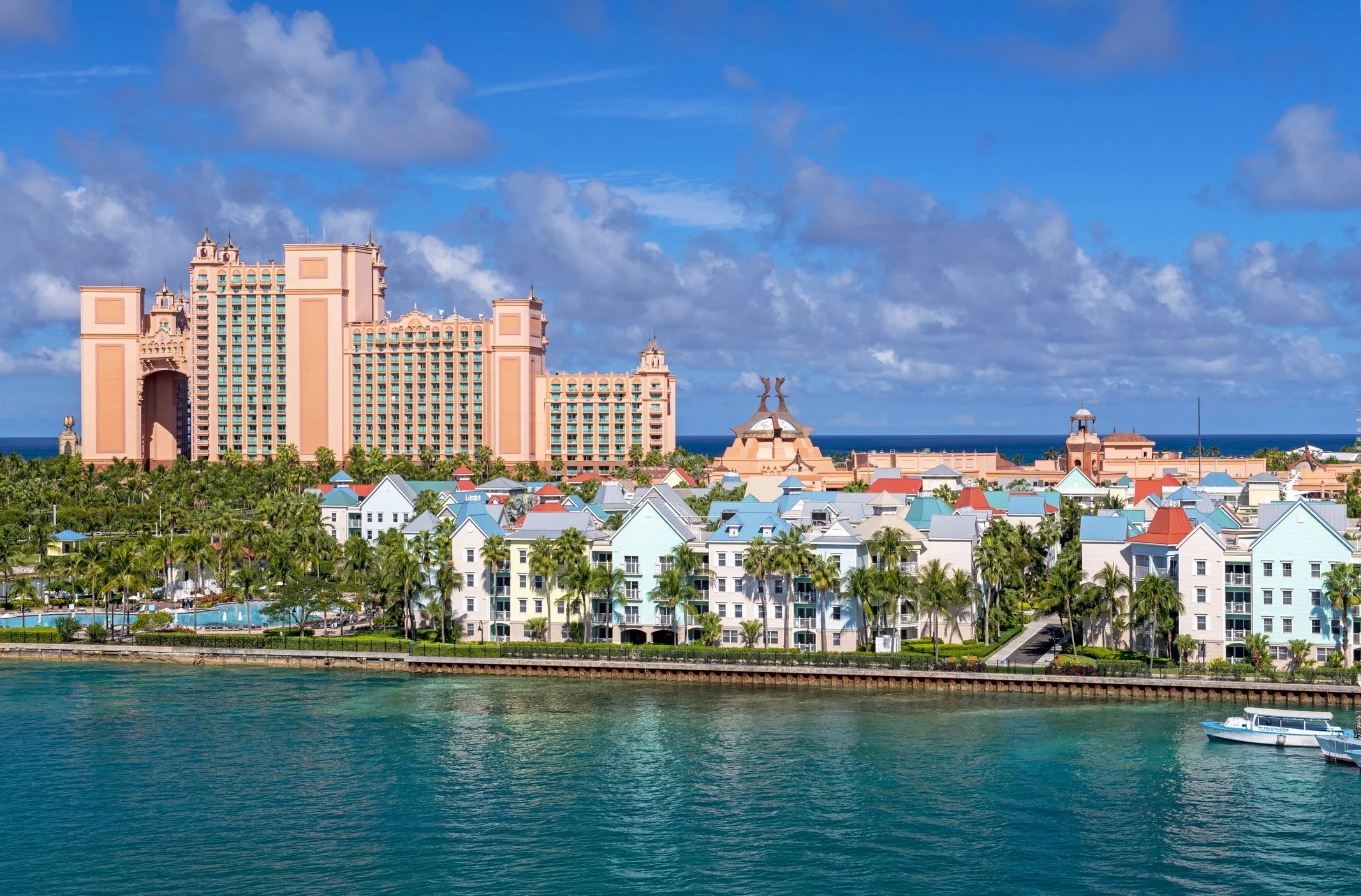
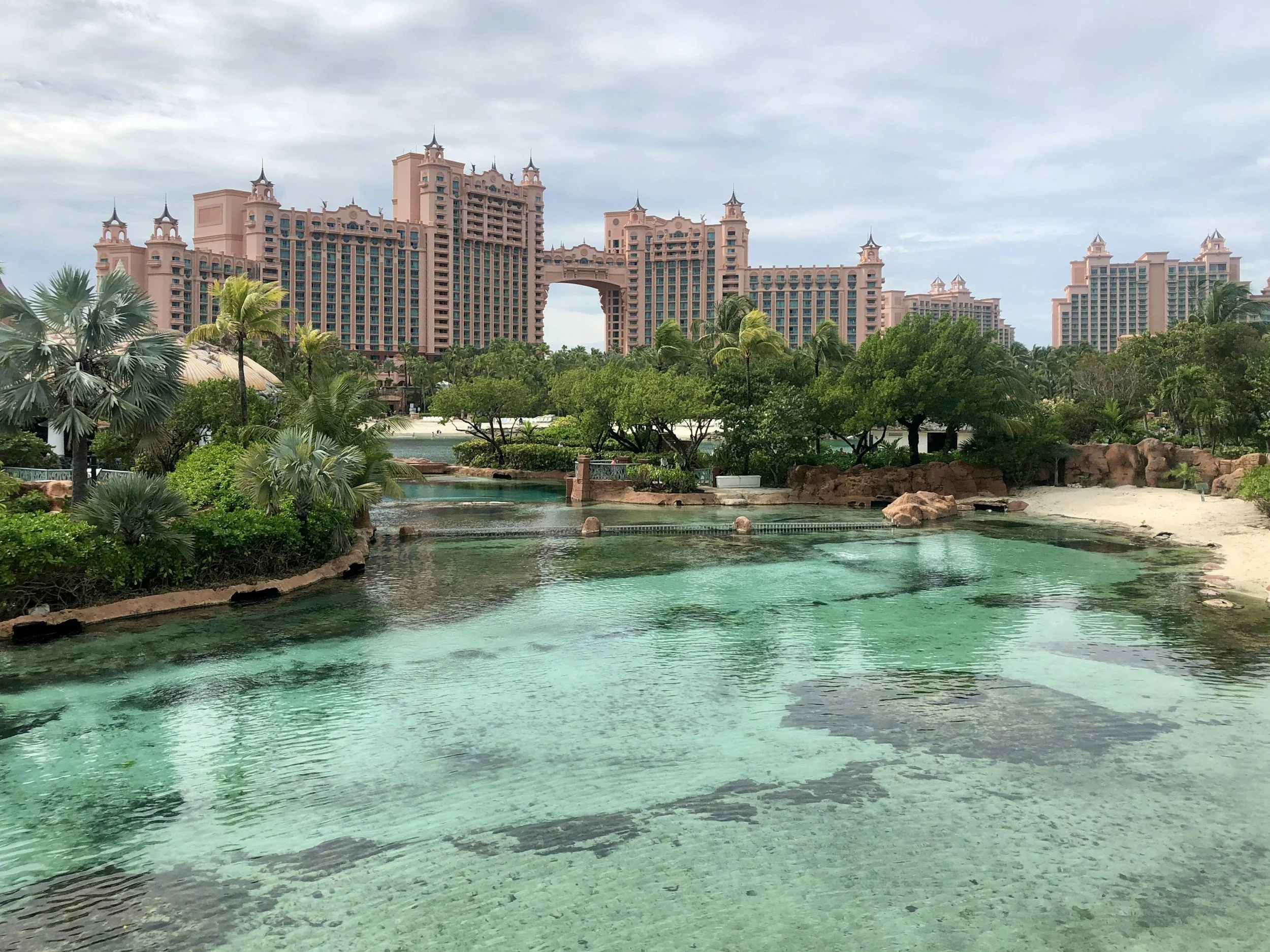
Palatial towers and palm-lined pools frame a coastline where the turquoise runs bright against white sand — everything here is designed to feel effortless, glossy, and just a little larger than life.
Part of the Greater Caribbean Collection on TheTripThread — a destination reference system built for travelers deciding where they'll feel right, not just where to go. Paradise Island is for travelers who value convenience, energy, and curated abundance.
Common Experience Patterns

Paradise Island runs on resort time, not island time. The bridge from Nassau delivers you into a world organized entirely around Atlantis — waterparks, pools, restaurants, casinos — and the infrastructure exists to keep you inside it. Travelers who arrive expecting to explore a Bahamian island often feel disoriented by how self-contained and sealed-off the experience is, even when they're enjoying it. Taxi logistics matter here: Uber and Lyft do not operate on Paradise Island, so saving a local driver's number in WhatsApp before arrival is the standard local advice for getting around.
The sensory texture is polished and bright. Mornings on Cabbage Beach start with a race for lounge chairs that can be over by 8:30am during peak season; by midday the waterpark is at full volume and the pools are social. Evenings shift to Marina Village for open-air waterfront dining or the casino floor, which runs 24 hours and anchors the island's nightlife. The light is pure Bahamas — flat, warm, relentless — but the backdrop is resort architecture, not fishing villages.
This is not the Bahamas that locals experience, and the gap is more pronounced than at most Caribbean resort destinations. Atlantis functions as its own district — residents talk about it the way people talk about a neighborhood, with its own crowds, rhythms, and price logic. Independent dining on Paradise Island outside the resort complex is effectively nonexistent; travelers who want authentic Bahamian food at non-resort prices cross the bridge to Potter's Cay or Arawak Cay in Nassau, which is common and routinely done. The cost pressure surprises even prepared visitors — room rates are just the beginning, and dining, activities, and extras can meaningfully inflate the total bill.
Locals Know — Buy groceries and snacks in Nassau before settling into Paradise Island. Resort pricing shocks people who assumed they could just pick things up nearby. Residents point this out because the gap between resort prices and Nassau prices is significant, and crossing the bridge with a bag of basics is one of the most repeated pieces of local advice for softening the cost of staying in the Paradise Island bubble.
What we love:
Travelers describe the feeling of never needing to plan, never needing a car, never needing to leave — beaches, pools, waterparks, dining, and nightlife all within walking distance, all safe, all polished. For families with kids, it removes every logistical headache. For couples who want energy and options, it delivers more in one place than most Caribbean destinations offer across an entire island.
Travelers consistently praise the beaches as immaculate, the waterpark and marine exhibits as world-class, and the overall ease and safety as ideal for families and first-timers. What catches people off guard is the resort pricing that follows you everywhere, the holiday crowds that transform the island's energy, and the realization that you can spend an entire trip without feeling any contact with the Bahamas at all. Paradise Island tends to delight travelers who came for the resort product and planned their budget accordingly; it frustrates travelers who expected an island vacation with local character. Locals and repeat visitors alike describe Paradise Island as the Bahamas at full volume — bright, polished, and indulgent — especially for travelers who want everything in one place, while those who prefer authenticity, quiet, or cultural immersion tend to feel sealed inside a very expensive bubble.
Where we eat:
Dining is abundant but expensive and almost entirely resort-controlled. Marina Village is the most accessible zone — open to the public, waterfront, slightly less expensive than the towers. Inside Atlantis, the post-2024 renovation brought celebrity-chef restaurants including Fish by José Andrés and Nobu. For non-resort food, travelers cross the bridge to Potter's Cay for local conch shacks or Arawak Cay's Fish Fry for authentic Bahamian seafood.
Where we go:
Paradise Island is compact and walkable within the resort grounds — most travelers move on foot between towers, pools, the waterpark, and Marina Village. Beyond Atlantis, movement is by taxi only (no rideshare). The island's eastern end — the Four Seasons Ocean Club and Versailles Gardens — feels like a different destination entirely from the Atlantis complex.
About this section:
This section is built from publicly shared traveler perspectives and credible regional reporting. We treat it as sentiment and cross-check factual claims where possible. We intentionally limit dependence on review marketplaces where paid, promotional, or otherwise unrepresentative input can blur the picture.
Identity
Vibe Descriptors
Glitzy · Lively · Polished · Playful · Safe
……….
Core Audience
Families, couples, and first-time Caribbean visitors who want a self-contained resort experience with beaches, waterparks, dining, and nightlife all walkable and well-organized — and who prioritize convenience and entertainment over authentic island culture.
……….
Best For (Trip Types)
Family Fun · Romantic Getaways · Luxury & Indulgence · Nightlife & Party
……….
Known For
The Atlantis mega-resort — a self-contained district of waterparks, casinos, marine exhibits, celebrity-chef restaurants, and white-sand beaches connected to Nassau by bridge, delivering the Caribbean's most concentrated resort experience.
……….
Trip Thread Theme(s)
Friction & Tradeoffs (Read This Before You Book)
Cost Pressure: Paradise Island is expensive in layers. The room rate is just the entry point — dining at Atlantis runs high across all tiers, specialty restaurants enforce a $50 no-show fee, waterpark extras and marine encounters add up fast, and even basic snacks and drinks carry resort markup. Travelers who cross the bridge to Nassau for meals at Potter's Cay or Arawak Cay describe the price difference as startling. Budget-conscious travelers who choose Paradise Island over a more moderately priced Caribbean destination will feel the friction at every meal.
Mobility / Getting Around: Within the Atlantis complex, everything is walkable — towers, pools, waterpark, Marina Village, and beaches are all connected by paved paths. Beyond the resort, movement is by taxi only; Uber and Lyft do not operate on Paradise Island. The bridge to Nassau is walkable, and many travelers cross it on foot for dining or errands. Taxis prefer cash and do not use meters consistently — saving a local driver's WhatsApp number before arrival is standard advice. Rather than the open-road freedom of a rental car island, this is a destination where you walk inside the resort and taxi everywhere else.
Autonomy vs Structure: Paradise Island is one of the most structured destinations in the collection. The trip orbits Atlantis — its schedule, its dining reservations, its activity windows. Spontaneous wandering doesn't produce much here; the island outside the resort has no independent restaurant row, no town center, no stumble-upon discoveries. Travelers who thrive on roam-anywhere freedom will find the resort perimeter surprisingly hard to escape, unlike destinations where the island itself is the attraction.
Crowd Texture: Heavy cruise traffic flows through Nassau daily, and a meaningful share of those visitors come over to Paradise Island — particularly Cabbage Beach and Marina Village. During holiday periods, the island's energy shifts noticeably: pool chairs disappear early, restaurant waits lengthen, and the waterpark operates at capacity. Residents describe holiday weeks in terms of crowd density, not atmosphere. Outside peak periods, the resort grounds absorb volume well, but this is never a quiet destination — the baseline energy is high and social.
Culture Access: The gap between the resort experience and Bahamian culture is wider on Paradise Island than almost anywhere else in the collection. Atlantis functions as its own operating environment — many travelers complete an entire trip without meaningful contact with the Bahamas beyond the airport taxi ride. Local food, local rhythms, and local perspectives exist across the bridge in Nassau, but accessing them requires initiative. English is universal and the resort staff are warm, but the cultural experience inside the bubble is international-generic rather than Bahamian.
Variety Ceiling: Paradise Island offers enormous variety within the resort — dozens of restaurants, multiple pool zones, waterpark, casino, marine exhibits, nightclub. But it's all one ecosystem, and travelers staying five or more days sometimes describe the feeling of having "done everything" by day three. Nightlife centers on the casino floor and a handful of bars; there is no independent nightlife district. Travelers who need evolving novelty — new neighborhoods, new discoveries each day — will feel the repetition before their stay ends, unlike destinations where the island itself keeps revealing new layers.
Sand & Sea Character
The sand on Paradise Island is fine-grained, bright white, and soft underfoot — coral-based and powdery in the way that photographs well and feels warm without burning. Cabbage Beach is the island's defining stretch: roughly two miles of open Atlantic-facing coastline running from the Atlantis towers east toward the Paradise Island Golf Course. The western end, directly in front of Atlantis's Royal and Coral towers, is busiest — lounge chairs claimed by early morning, jet ski and banana boat activity offshore, and a social energy that never fully quiets. Moving east, the beach opens up: crowds thin past the midpoint, and the far eastern stretch fronting the Four Seasons Ocean Club feels like a different beach entirely — quieter, lower-volume, naturally elegant. Base near Atlantis for full access to the resort's beach infrastructure and waterpark. Base at the Ocean Club end for calm, space, and a more private coastal experience.
The water along Cabbage Beach reads bright turquoise in the shallows where white sand reflects the light, deepening to blue as the shelf drops away. Clarity is generally good but not pristine — wave action is real on this north-facing coast, and erosion has introduced some turbidity and rip current conditions that locals take seriously. This is not a calm-water, float-all-day beach; the surf rolls and the current pulls, and there are no lifeguards on duty. For calmer, clearer swimming, Paradise Beach on the island's sheltered western side — accessible to Cove and Reef tower guests — sits in a protected cove with gentler water and reliable shore snorkeling along the reef edge. Cove Beach, adjacent to The Cove tower, offers a quieter adults-skewing alternative with calmer conditions. Travelers chasing turquoise shallows and easy swimming should base at The Cove or Reef towers for protected-water access; those who want the classic long-beach experience with energy and activity should base central on Cabbage Beach; and travelers who value space and quiet over resort proximity should look east toward the Ocean Club stretch, where the sand is the same but the crowd isn't.
Explore Paradise Island — Map & Highlights
Paradise Island sits just off the northern shore of Nassau, connected by a pair of bridges and small enough to walk end to end in under an hour — though most travelers never leave the Atlantis complex that dominates its western half. Exploring here doesn't mean island-hopping or renting a car; it means understanding the zones within and around a single resort district, and deciding which parts of that district match the trip you're building. The eastern end of the island — the Four Seasons Ocean Club, Versailles Gardens, the quiet stretch of Cabbage Beach — operates at an entirely different register than the Atlantis towers, and travelers who never walk past the waterpark miss the contrast entirely. This map is intentionally curated to help you orient, not to catalog every pool bar and gift shop. It answers two questions: where do I base myself, and what does each zone of this small island actually feel like?
Beaches
Paradise Island's coastline splits into two distinct experiences. The north shore — Cabbage Beach — is a long, open, Atlantic-facing stretch with white sand, active surf, and resort energy concentrated at the western end near Atlantis. The western and southern shores are sheltered: Paradise Beach and Cove Beach sit in protected coves with calmer water, better snorkeling, and restricted access for resort guests. The eastern reach of Cabbage Beach, fronting the Four Seasons Ocean Club, is the island's quietest sand. Base near Atlantis for beach-and-waterpark convenience; base east for space and calm; choose The Cove or Reef towers for sheltered, swim-easy water.
Food & Drink
Dining on Paradise Island is concentrated almost entirely within the Atlantis complex. Marina Village is the island's most accessible food zone — waterfront, open to the public, and slightly less expensive than the tower restaurants. Inside the towers, the post-2024 renovation brought over 40 dining outlets including celebrity-chef restaurants at premium pricing. Independent dining on the island outside the resort is effectively nonexistent. Food-driven travelers who want authentic Bahamian cuisine or non-resort pricing should plan to cross the bridge to Nassau's Potter's Cay or Arawak Cay — both are routine dining extensions for Paradise Island visitors.
Activities
Activity density on Paradise Island is extraordinarily high within the Atlantis grounds and almost zero outside them. The waterpark, marine habitat, Dolphin Cay, and casino are all clustered within walking distance of each other in the resort's central zone. The eastern end of the island offers Versailles Gardens and the Ocean Club's grounds as a quieter, historic counterpoint. There is no activity infrastructure between these two poles — no independent tour operators, no town-based excursions, no trail system. Active travelers should base central at Atlantis for maximum access; those seeking a quieter pace should consider the Ocean Club end and plan Atlantis visits as day trips rather than a home base.
Where to Stay in Paradise Island
Paradise Island is small but not uniform — where you stay determines whether your trip feels like a high-energy resort vacation, a quiet luxury retreat, or a budget-smart base for exploring both the island and Nassau. The resort towers, the all-inclusive, and the budget-adjacent options all sit within a mile of each other, but the daily experience they produce is meaningfully different. Below, The Trip Thread has listed the best areas to stay in Paradise Island — each offering a different balance of privacy, scenery, and local character. Each area is located on the above map for easy exploration.
The Royal & Coral Towers — The Classic Atlantis Base
The Royal and Coral towers sit at the center of Atlantis, with the most direct access to the waterpark, casino, Marine Habitat, and Marina Village. The Royal underwent a full renovation in 2024 — rooms now feature Bahamian-inspired aesthetics, updated furnishings, and significantly improved finishes. The Coral is older and more dated but positioned closest to the main pool complex. This is where first-timers, families, and travelers who want to be in the middle of everything should base. The trade-off is volume: hallways are busy, pool chairs go early, and the energy never fully dials down.
Why stay: Maximum access to everything Atlantis offers — waterpark, casino, dining, pools — all steps from your room.
Why not: Older inventory in parts (especially Coral), high-traffic corridors, and no escape from the resort's peak-volume energy.
~~~~~
The Cove — Adults-Oriented Luxury Within the Resort
The Cove occupies the western end of the Atlantis complex, set apart from the family-heavy towers with its own adults-only pool, private beach access to the calmer Paradise Beach, and butler service. The atmosphere is quieter and more refined — this is where couples and luxury travelers base when they want Atlantis amenities without Atlantis crowds. The Cove still connects to the full resort, but the walk to Marina Village and the central waterpark zones is the longest of any Atlantis tower.
Why stay: The resort's most private, adults-focused experience — calm beach, dedicated pool, elevated service.
Why not: Premium pricing, farthest walk to the resort's central dining and entertainment, and still technically inside the Atlantis ecosystem.
~~~~~
Warwick Paradise Island — The All-Inclusive Alternative
The Warwick sits on Paradise Island's south shore facing the harbor — the only true all-inclusive property on the island. It's adults-only (16+), mid-sized, and positioned as a cost-predictable alternative to Atlantis's à la carte pricing model. The beach here faces the harbor rather than the open Atlantic, which means calmer water but less of the classic turquoise-and-white-sand experience. The property is walkable to Atlantis, though waterpark access is not included.
Why stay: Predictable pricing in an otherwise expensive destination — meals, drinks, and tips are covered, and the adults-only atmosphere is calm.
Why not: Harbor-facing beach rather than Atlantic beach, no waterpark access, and a smaller property that may feel limited after a few days.
~~~~~
Comfort Suites & Harborside — Budget-Smart Atlantis Access
Comfort Suites Paradise Island sits on the eastern edge of the resort zone and offers something no other non-Atlantis property does: complimentary access to Atlantis's waterpark, pools, and beach for all guests. It's a conventional hotel — not a resort — but the included Atlantis access makes it the island's best value play for families who want the waterpark experience without Atlantis room rates. Harborside Resort, an Atlantis vacation ownership property nearby, offers similar access in a condo-style format.
Why stay: Atlantis waterpark and pool access at a fraction of the tower room rates — the island's clearest budget-to-access value.
Why not: A conventional hotel room, not a resort experience; less convenient location with a longer walk to the central Atlantis zones; and the savings on the room may be offset by dining costs once you're inside the resort.
Practical Snapshot
-
December through April is the driest and most popular window, with warm days and low humidity. Holiday weeks — especially Christmas, New Year's, and spring break — bring peak crowds and peak pricing at Atlantis; shoulder months like November and early December offer the same weather with noticeably fewer people. Hurricane season runs June through November, but Paradise Island rarely sees direct hits, and the resort infrastructure handles rain days well with indoor marine exhibits and the casino.
-
The Bahamian dollar is pegged 1:1 to the U.S. dollar, and USD is accepted everywhere on Paradise Island — no need to exchange currency before arrival. Change is often given in a mix of both currencies; spend any Bahamian dollars before departing, as they're not accepted in the U.S. Credit cards work at all Atlantis venues, though taxis and Nassau-side conch shacks often prefer cash.
-
English is the primary and universal language across Paradise Island and Nassau. No language barrier for American, British, or Canadian visitors — communication is effortless everywhere from resort restaurants to taxi rides to Nassau market stalls.
-
Fly into Lynden Pindling International Airport (NAS) in Nassau — direct flights are available from most major U.S. cities, Toronto, and London. From the airport, it's a 30-minute taxi ride to Paradise Island, roughly $38–60 USD depending on party size, plus a $2 bridge toll. There's no rideshare on the island — taxis only. A water ferry from downtown Nassau to Paradise Island is also available and takes about 30 minutes.
-
Paradise Island sits firmly at the upper end of Caribbean pricing — this is not a destination where budget travelers feel comfortable. Atlantis room rates are the starting point, not the ceiling; dining, waterpark extras, marine encounters, and even basic poolside snacks carry resort markup that adds up fast. Local lunches at Potter's Cay = 💲, Marina Village casual dining = 💲💲💲, Atlantis specialty restaurants = 💲💲💲💲. Crossing the bridge to Nassau for meals is the most common cost-softening strategy.
-
Nightlife on Paradise Island centers on the Atlantis Casino — a 60,000 sq ft floor that runs 24 hours, with table games, slots, and the adjacent Aura Nightclub for late-night energy. Beyond the casino, evenings tend toward waterfront drinks at Marina Village, cocktails at Bar Sol, or quieter lounge settings at The Cove's Sea Glass Bar. There's no independent nightlife district and no late-night street scene; the energy is resort-contained and peaks between the casino and the clubs rather than spreading across the island.
-
Within the Atlantis complex, everything is walkable — towers, pools, waterpark, Marina Village, and beaches connect by paved paths. Beyond the resort, movement is taxi-only; Uber and Lyft do not operate on Paradise Island. Save a local driver's number in WhatsApp before you arrive — it's the standard way to arrange pickups. The bridge to Nassau is walkable for dining errands. A rental car is unnecessary and largely pointless; there's nowhere to drive that a taxi can't reach in minutes.
-
Paradise Island's resort area is very safe and well-secured — families, solo travelers, and first-timers consistently describe feeling comfortable at all hours within the Atlantis complex. Standard awareness applies when crossing the bridge to Nassau, particularly after dark; stick to well-lit, populated areas and take taxis back rather than walking the bridge late at night.
For LGBTQ+ travelers: same-sex activity has been legal in the Bahamas since 1991, but social attitudes remain conservative, particularly outside tourist-facing environments. Paradise Island's large international resorts — Atlantis in particular — attract a globally diverse guest base, and LGBTQ+ travelers consistently report no issues on resort grounds. Discretion is advisable in more local or conservative contexts when crossing to Nassau. There are no LGBTQ+-specific venues or events on the island.
-
Tap water is safe to drink on Paradise Island — it's desalinated and treated. Tipping follows U.S. norms (15–20%), but check your bill first; most Atlantis restaurants add an automatic 15% service charge, and doubling up is a common mistake. Some waterpark zones are cashless — room charge or card only. Sunscreen and basic supplies cost significantly more at the resort gift shops; stock up in Nassau or bring them from home. Atlantis is large enough that walking between towers takes real time — the Royal to The Cove is a 15-minute walk.
-
Atlantis operates one of the Caribbean's most substantial marine conservation programs through the Atlantis Blue Project Foundation, a 501(c)3 nonprofit with over 90 full-time marine scientists on staff. Documented work includes partnership with The Nature Conservancy and Bahamas National Trust to expand Andros marine park boundaries to 1.4 million acres, funding of the Bahamas' first Coral Gene Bank to combat Stony Coral Tissue Loss Disease, and on-property coral nurseries growing threatened species for reef transplanting. The marine habitat — housing over 65,000 animals in ocean-fed lagoons — generates revenue that directly funds this conservation work. The dolphin encounter program involves captive marine mammals, which some conservation-minded travelers weigh against the rehabilitation origins of the facility. No formal third-party sustainability certification has been confirmed for Atlantis as a property.
Compare Similar Caribbean Destinations
Thinking about Paradise Island, Grand Cayman, or Aruba? Here’s how these greater Caribbean destinations differ in rhythm and culture.
PARADISE ISLAND
Vibe & Energy: High-energy, polished, and resort-contained — the Caribbean's most concentrated entertainment destination, where everything happens within walking distance of Atlantis.
Dining & Culture: Over 40 restaurants spanning celebrity-chef fine dining to waterpark grab-and-go, but virtually no independent or locally owned options on the island; cultural access requires crossing the bridge to Nassau.
Cost & Crowds: Expensive in layers — room rates are just the entry point, and resort pricing follows you through every meal and activity. Heavy cruise traffic spills over from Nassau, and holiday weeks transform the island's crowd density.
Accessibility: Direct flights to Nassau from most major U.S. cities; 30-minute taxi from the airport. No car needed. Everything is walkable within the resort.
Nightlife / Social Scene: Casino-anchored — the 24-hour gaming floor and Aura Nightclub are the primary evening draws, supplemented by waterfront drinks at Marina Village and cocktail lounges at The Cove.
Best For: Families and couples who want a self-contained, zero-logistics vacation with maximum entertainment, dining, and beach access in one place.
GRAND CAYMAN
Vibe & Energy: Polished and professional, but spread across a real island rather than a single resort — Seven Mile Beach anchors a more distributed luxury experience with genuine town life in George Town.
Dining & Culture: The Caribbean's strongest food scene outside of Puerto Rico — from food trucks to Michelin-caliber restaurants, with a culinary depth that Paradise Island's resort dining can't match. Cultural texture is thin but present through the Cayman Turtle Centre and east-end local life.
Cost & Crowds: Equally expensive, but spending feels more varied — you can find moderate options alongside the high-end. Cruise ship crowds concentrate on George Town and Seven Mile Beach; the east end stays quiet.
Accessibility: Direct flights from U.S., UK, and Canada. A rental car is helpful for exploring beyond Seven Mile Beach — unlike Paradise Island, the island rewards driving.
Nightlife / Social Scene: Sunset cocktails and beach bar culture rather than casino energy — more refined and earlier-winding than Paradise Island's late-night casino floor.
Best For: Travelers who want polished Caribbean luxury with world-class diving, a real food scene, and an island that functions beyond a single resort — and who don't mind paying for it.
ARUBA
Vibe & Energy: Sunny, social, and reliably cheerful — a well-run resort island with more variety and spread than Paradise Island, where Palm Beach's high-rise strip and Eagle Beach's quieter stretch offer meaningfully different daily rhythms.
Dining & Culture: More diverse than Paradise Island, with genuine local flavor through Papiamento-speaking culture, independent restaurants in Oranjestad, and a food scene that mixes international resort dining with real island identity. Carnival season brings cultural energy that neither Paradise Island nor Grand Cayman can match.
Cost & Crowds: More moderately priced than both Paradise Island and Grand Cayman — all-inclusive options are widely available, and the cost floor is meaningfully lower. Cruise traffic is heavy but concentrated; the island absorbs volume better due to its larger geographic spread.
Accessibility: Direct flights from most major U.S. cities to Oranjestad (AUA). A rental car is recommended for Arikok National Park and the wilder east coast — more driving-dependent than Paradise Island but less so than Grand Cayman.
Nightlife / Social Scene: Livelier and more diverse than Grand Cayman, with Palm Beach strip bars, Oranjestad nightlife, and a social energy that runs later and looser than either comparison island — though still resort-shaped rather than locally driven.
Best For: Travelers who want reliable sun, a lively beach scene, and a more affordable, all-inclusive-friendly Caribbean destination with enough variety to fill a full week without feeling sealed inside a single resort.
Pick Paradise Island if: you want maximum entertainment density with zero logistics — waterparks, casino, celebrity dining, and beaches all walkable from your room.
Pick Grand Cayman if: you want polished luxury spread across a real island, with world-class diving and the Caribbean's best food scene.
Pick Aruba if: you want reliable sun, a friendlier price point, all-inclusive options, and an island that offers more variety and cultural texture without sacrificing ease.
Tie-breaker: how much you value being able to leave the resort and still have a great time — Paradise Island doesn't require it, Grand Cayman rewards it, and Aruba makes it easy.
Local Truths
Buying snacks or basics in Nassau before settling into Paradise Island is the most-repeated piece of local advice for the island. Resort pricing shocks people who assumed they could just pick things up nearby — the gap between what a bottle of water costs at Atlantis versus a Nassau convenience store is large enough to change how you budget the trip.
~~~~~
Residents think of Nassau and Paradise Island as one continuous place; visitors who talk about Paradise Island as if it's socially separate from Nassau usually sound brand-new. The bridge is not a boundary — it's a commute that locals and long-stay visitors cross routinely for food, errands, and a change of scenery.
~~~~~
Atlantis is not just a hotel here — it's an operating environment. Locals talk about it the way people talk about a district, with its own crowds, rhythms, and price logic. Understanding that Atlantis functions as its own ecosystem, not as a hotel within an island, recalibrates expectations about what "leaving the resort" actually means.
~~~~~
Junkanoo Beach in Nassau is where locals point people who want a more public, less sealed-off beach day than the resort product on Paradise Island. It's a short taxi ride from the bridge and offers a genuine contrast — local vendors, public access, and a social energy that has nothing to do with Atlantis.
~~~~~
Holiday periods change the island more than first-timers expect. Locals don't describe Christmas week or spring break in terms of "better atmosphere" — they describe them in terms of crowd density, pool chair availability, and restaurant wait times. If you're price-sensitive or crowd-averse, these are the weeks to avoid.
~~~~~
Uber and Lyft do not operate on Paradise Island — taxis are the only option outside walking distance. Save a local driver's number in WhatsApp before you arrive; it's the standard way to arrange pickups and avoid waiting at taxi stands, especially after dinner or late at night. Expect roughly $38–60 USD from the airport depending on party size, plus a $2 bridge toll each way.
~~~~~
Crossing the bridge on foot is normal and routinely done, especially by travelers trying to soften the cost of staying in the Paradise Island bubble. Potter's Cay — directly under the bridge on the Nassau side — has local conch shacks and fruit vendors at prices that make the walk worthwhile. It's also where locals actually eat, versus the more tourist-facing Arawak Cay Fish Fry further along Bay Street.
~~~~~
The automatic service charge on most Atlantis restaurant bills is 15% — and it's the single most common source of accidental double-tipping on the island. Locals and repeat visitors check the bill before adding a tip; if the charge is already there, a small additional cash tip for excellent service is appreciated but not expected.
Jamaica Travel Questions, Answered
Jamaica rewards the travelers who come in with clear expectations — these answers are meant to help you arrive with exactly that.
1. Is Paradise Island expensive?
Paradise Island is one of the more expensive destinations in the Greater Caribbean, and the costs extend well beyond the room rate. Dining at Atlantis runs high across all tiers — specialty restaurants require reservations and carry premium pricing, while even casual waterpark food starts around $40 per meal. Activities, marine encounters, and poolside extras add up quickly. The most common cost-softening strategy is crossing the bridge to Nassau for meals at Potter's Cay or Arawak Cay, where authentic Bahamian food runs a fraction of resort pricing. Budget-conscious travelers should factor in daily dining and activity spend, not just accommodation.
2. When's the best time to visit?
December through April offers the best weather — warm, dry, and consistently sunny. Holiday weeks (Christmas, New Year's, spring break) bring peak crowds and peak pricing at Atlantis, so shoulder months like November or early December deliver the same climate with fewer people and better rates. Hurricane season runs June through November but rarely produces direct hits; Paradise Island's resort infrastructure handles rain days well with indoor marine exhibits and the casino.
3. Which area or coast should I stay on?
Paradise Island is small, but where you stay shapes the trip. The Royal and Coral towers put you at the center of Atlantis — closest to the waterpark, casino, and Marina Village, with the most energy and the most foot traffic. The Cove is the adults-oriented, luxury end — quieter, private beach, farthest from the central noise. The Warwick is the island's only all-inclusive and suits travelers who want predictable pricing on a harbor-facing beach. Comfort Suites offers the best value play — complimentary Atlantis waterpark access at a fraction of the tower room rates.
4. Do I need a car?
No. Paradise Island is one of the few Caribbean destinations where a car is genuinely unnecessary and largely pointless. Everything within the Atlantis complex is walkable, and beyond the resort, taxis handle the short distances. Uber and Lyft do not operate on Paradise Island — save a local driver's number in WhatsApp before arrival. The bridge to Nassau is walkable for dining errands. There is nowhere to drive that a taxi can't reach in minutes.
5. Is it safe for solo or LGBTQ+ travelers?
For solo travelers, Paradise Island's resort area is very safe and well-secured at all hours. The Atlantis complex is well-lit, staffed, and patrolled, and solo visitors consistently describe feeling comfortable. Standard awareness applies when crossing to Nassau, particularly after dark — stick to populated areas and taxi back rather than walking the bridge late at night.
For LGBTQ+ travelers, same-sex activity has been legal in the Bahamas since 1991, but social attitudes remain conservative outside tourist-facing environments. Atlantis attracts a globally diverse guest base, and LGBTQ+ travelers consistently report no issues on resort grounds. Discretion is advisable in more local or conservative contexts when crossing to Nassau. There are no LGBTQ+-specific venues or events on Paradise Island.
6. How does it compare to nearby islands?
Paradise Island delivers the Caribbean's most concentrated resort experience — everything in one place, zero logistics. Grand Cayman offers a similar level of polish but spread across a real island, with world-class diving and the region's strongest food scene. Aruba provides reliable sun and a livelier beach strip at a friendlier price point, with all-inclusive options and more cultural texture. The core difference: Paradise Island is built for travelers who never want to leave the resort; Grand Cayman and Aruba reward travelers who do.
Why This Guide Changes With the Island
Paradise Island never stays still — Atlantis renovates towers, adds restaurants, and reshapes its entertainment lineup; new dining concepts open while others quietly close; and the bridge to Nassau connects two destinations that evolve together. This guide evolves with it. Locals share updates, travelers add discoveries, and we keep refining what you see here so every detail reflects the island as it is now — not a memory of what it used to be.
If Paradise Island's resort energy sounds like the right fit, you might also explore Grand Cayman for polished luxury with world-class diving and a standout food scene, or Aruba for reliable sun, a livelier beach strip, and a friendlier price point with all-inclusive ease.
Find Your Thread
Every traveler connects differently. Maybe Paradise Island is your match — maybe you'll find your rhythm somewhere else in the Greater Caribbean. Either way, this is what The Trip Thread is about: rediscovering the joy of travel, and the element of discovery that should accompany it. Explore more islands across the Greater Caribbean and see how your travel vibe connects through TheTripThread.Guided by locals. Designed for discovery.