By Kelly McAtee | TheTripThread | Last Updated March 2026
Aruba
Where desert meets the sea.
Tranquil Luxury | Adventure & Nature | Culture & Rhythm | Affordable Paradise | Sail & Sea Life
Best for travelers who trade seclusion for sunshine and spontaneity — beach-hoppers, wind-seekers, and social travelers drawn to lively shores and easy adventure over quiet retreat.
Not for travelers who crave rainforest-island lushness, true seclusion, or windless beach days — or who want to avoid developed resort energy and peak-season crowds.
☀️ Best Months: March–September 💲 Average Cost: $$—$$$ 🕶️ Vibe: Social, sunny, and safe year-round
Reality Check (Read This Before You Book)
Aruba is a resort-forward, beach-anchored island. Days here revolve around the water, a meal, and a bar at sunset — not sightseeing marathons, cultural exploration, or authentic local discovery. That's not a criticism; for the right traveler, it's exactly the point.
The biggest misconception: that Aruba offers the balance between resort ease and "real island life." The tourism infrastructure is excellent but dominant — outside the beaches and a few cultural pockets like San Nicolás, the island experience is shaped primarily by its resort corridor. Travelers who arrive expecting to find a lively local scene just beneath the surface often don't find it.
A few things worth knowing before you commit:
If you need a destination to feel authentically local or undiscovered, Aruba's polish will feel more like a product than a place.
If windless beach days are essential, note that Aruba's trade winds are consistent and strong — particularly December through March. The wind is part of the experience, not an inconvenience to plan around.
If cruise-port energy is a dealbreaker, Oranjestad sees heavy ship traffic and reflects that in its waterfront character on busy days.
If nightlife beyond beach bars and resort lounges is what you're after, Aruba's after-dark scene is social but not deep — there's limited authentic local nightlife beyond the tourism-facing venues.
Travelers who love Aruba arrive knowing exactly what it is and find it delivers reliably. Those who feel let down usually wanted something the island isn't trying to be.
Why You’ll Love It
Aruba works because it removes uncertainty from the equation. The weather is consistent year-round, the beaches are calm and easy to swim, the infrastructure is excellent, and the people are genuinely friendly — not in a transactional, resort-service way, but in a way that makes the island feel safe and welcoming from the first day. For travelers who want a Caribbean trip that simply delivers, without the planning friction or weather anxiety of other islands, Aruba is one of the most reliable choices in the region.
Days here have a steady, easy rhythm. Mornings start bright and breezy on the west coast — calm turquoise water, white sand, and a pace that settles quickly into beach time and unhurried coffee. Afternoons open up: snorkeling off Arashi, a drive through Arikok National Park's cactus-studded hills, or an early sunset drink as the light goes gold over Palm Beach. The island moves at a social but easygoing tempo — lively when you want it, quiet enough when you don't.
What Aruba is honest about is what it isn't. It doesn't offer the lush tropical scenery of St. Lucia, the deep cultural texture of Trinidad, or the sense of discovery that comes with a less-visited island. Its tourism infrastructure is excellent precisely because it's built to be tourism infrastructure — and that suits some travelers perfectly while leaving others feeling like the experience is more resort product than real place. The travelers who return to Aruba year after year aren't chasing discovery; they're chasing consistency, warmth, and a beach that always delivers.
Best for travelers who want the Caribbean at its most reliable — drawn to Aruba's year-round sunshine, safe and social atmosphere, and easy beach days over islands where the experience requires more planning, more effort, or more tolerance for unpredictability.
Aruba — Caribbean Island of Sunshine, Trade Winds, and Dutch-Caribbean Culture
This is Aruba
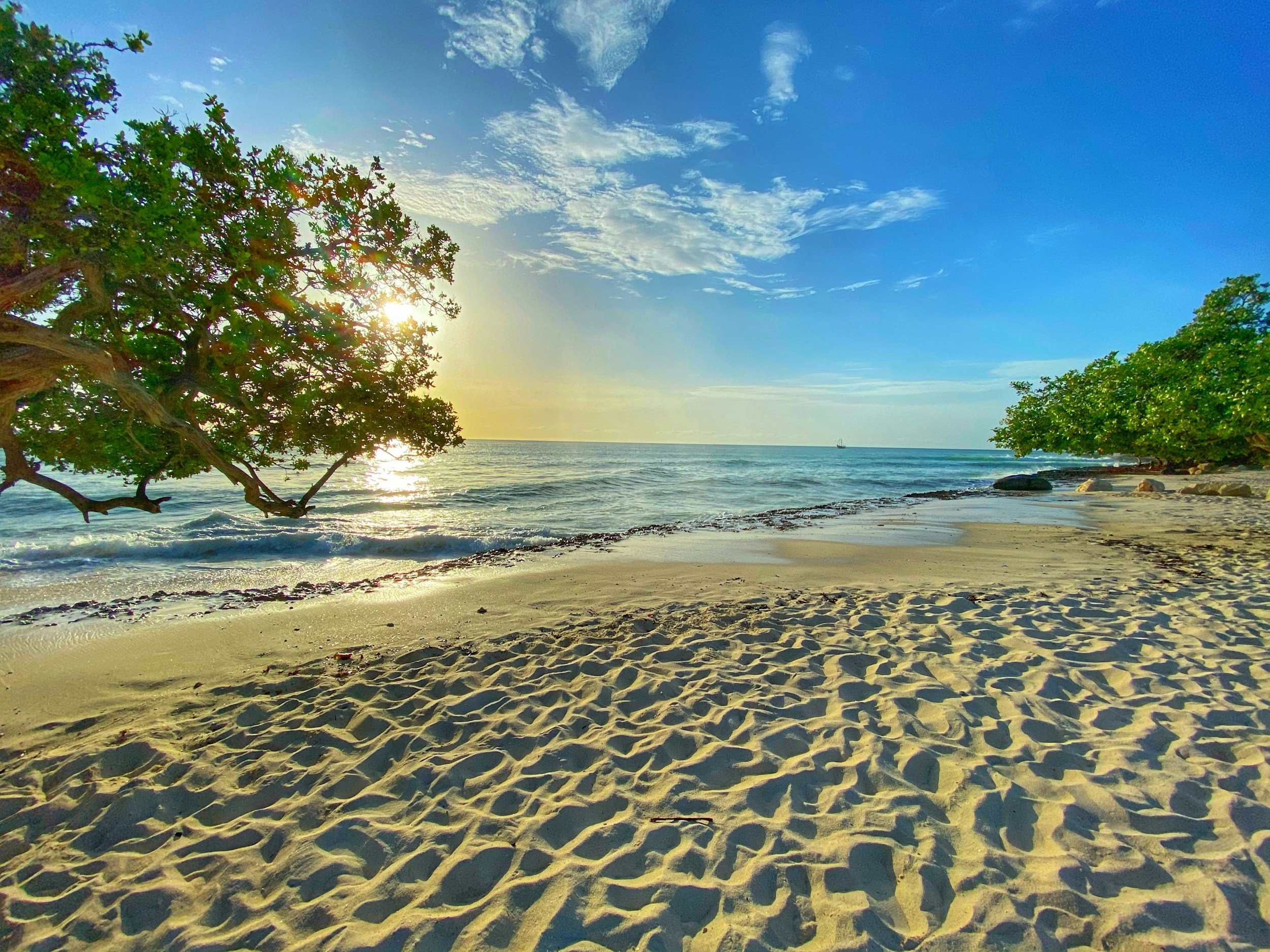
Trade winds bend the divi-divi trees in one direction, the water stays turquoise regardless of the season, and the island hums with a steady, uncomplicated ease that rarely disappoints.
Part of the Greater Caribbean Collection on TheTripThread — a destination reference system built for travelers deciding where they'll feel right, not just where to go. Aruba is for travelers who value consistency, warmth, and a beach trip that delivers exactly what it promises.
Common Experience Patterns

Aruba runs on reliability. The island is compact, well-organized, and genuinely easy to navigate — mornings rarely begin with logistical friction, and most days settle quickly into a beach-and-food rhythm that requires very little planning beyond knowing where you want to swim and where you want to eat dinner. The practical reality worth knowing early: a rental car unlocks the island's less-visited corners, but travelers staying along the Palm Beach or Eagle Beach corridor can manage comfortably without one for most of the trip.
The texture here is social but unhurried. West-coast mornings are calm and bright — shallow turquoise water, steady trade winds, long stretches of walkable sand. Afternoons shift based on energy: some days it's a snorkel off Arashi or a drive into Arikok, others it's a second beach and an early cocktail. Evenings concentrate around the resort corridor's dining and bar pockets, where the mood is open and easy rather than late-night-heavy. A "beach day" in Aruba is genuinely that — not a euphemism for sitting by a pool surrounded by other resorts.
What Aruba doesn't offer is easy to miss if you're not looking for it: deep local culture, a sense of discovery, or an island that feels meaningfully distinct from its tourism infrastructure. The most repeated friction in community discussions isn't crime or weather — it's the feeling, after several days, that the experience stays within a familiar band. Travelers who want to peel back a layer and find something unexpected tend to find the layer doesn't peel easily here.
Locals Know — Eagle Beach palapas (thatched shade structures) are first-come, first-served and fill up fast. Locals advise arriving by 7–8am if shade is important to your day, or returning after 5pm when the afternoon crowd thins. Leaving towels unattended to "claim" a palapa for hours is considered inconsiderate — the etiquette is to occupy the space you're actually using.
Repeat visitors and locals alike describe Aruba as the Caribbean's most dependable island — especially for travelers who want sun, safety, and a beach that earns the trip — while those seeking local texture, spontaneous discovery, or an island that feels like it belongs to its people rather than its resort corridor tend to find the polish more limiting than comforting.
Where we eat:
Dining on Aruba is concentrated along the west coast, with the heaviest density around Palm Beach and Eagle Beach and a second cluster in and around Oranjestad. The resort corridor covers everything from casual beach bars to polished coastal dining, but prices reflect the location. Travelers willing to drive south toward Savaneta or into San Nicolás find more local-facing kitchens and a noticeably different price point alongside genuine neighborhood character. Reservations matter at the more popular spots during peak season — don't assume walk-in availability on a Friday night in January.
Where we go:
Most travelers move west-coast first — Eagle Beach, Palm Beach, and Arashi form a natural day loop — and then branch out from there based on energy and interest. Arikok National Park rewards a half-day dedicated drive rather than a rushed stop; the natural pool on the windward coast is the kind of thing that appears on itineraries but requires realistic expectations about the terrain getting there. San Nicolás is worth at least one visit for the murals and the local rhythm, and it pairs naturally with Baby Beach just down the road.
What we love:
What Aruba consistently delivers that other islands don't is low-anxiety travel. The water is safe to swim, the roads are easy to navigate, English is widely spoken, the infrastructure works, and the people are warm without being performative about it. For travelers who have had a complicated or disappointing Caribbean trip elsewhere, Aruba often registers as a relief.
"Aruba is simply amazing. The island is clean. It is safe. The people are kind. It has such a different vibe than other northern Caribbean islands." — Redditor, r/aruba
About this section:
This section is built from publicly shared traveler perspectives and credible regional reporting. We treat it as sentiment and cross-check factual claims where possible. We intentionally limit dependence on review marketplaces where paid, promotional, or otherwise unrepresentative input can blur the picture.
Friction & Tradeoffs (Read This Before You Book)
Cost Pressure: Aruba sits in the mid-to-upper range for Caribbean pricing, with the main friction concentrated in accommodation and dining along the Palm Beach and Eagle Beach corridor. All-inclusives are widely available and often the most cost-predictable option; independent travelers who piece together stays and meals outside the resort strip find the cost more manageable. The island is not cheap, but it offers more pricing variety than Anguilla or St. Barts — the gap between resort-corridor prices and local-facing options is wide enough to matter.
Mobility / Getting Around: The west-coast resort corridor is walkable and well-serviced by taxis and buses, making a rental car optional for travelers who plan to stay close to Palm Beach or Eagle Beach. For exploring Arikok National Park, Baby Beach, or San Nicolás, a car changes what's possible rather than just what's convenient. Roads are well-maintained and driving is on the right — one of the lower-friction rental car experiences in the Caribbean. UTVs and scooters are popular for day exploration without a full rental.
Autonomy vs Structure: Aruba is more structured than it appears — the majority of the experience is shaped by the resort corridor, and stepping meaningfully outside it requires deliberate planning rather than spontaneous wandering. Unlike islands where local culture surfaces naturally as you move around, here it takes a specific drive to San Nicolás or a meal away from the tourist strip to find it. Travelers who prefer a destination to reveal itself organically will find Aruba's layout works against that.
Crowd Texture: Aruba sees heavy cruise ship traffic into Oranjestad, and the waterfront area reflects that on busy ship days. The beach corridor itself rarely feels overcrowded thanks to consistent year-round tourism flow spreading visitors across the season, but Palm Beach in peak season carries a noticeably resort-dense energy. The trade winds, particularly December through March, keep the beaches from feeling stagnant even when they're populated.
Culture Access: Aruba has genuine cultural depth — Papiamento language, Dutch-Caribbean architecture, a growing art scene in San Nicolás — but it sits at a remove from the main tourism experience rather than woven through it. Travelers who base themselves on the resort strip and don't make deliberate detours can spend a full week without encountering much of it. The gap between the tourism-facing island and the locally-lived island is wider here than on many smaller, less-developed Caribbean destinations.
Variety Ceiling: Aruba's appeal is consistency over variety, and the ceiling arrives faster for discovery-oriented travelers than for beach-first ones. A week of beach days, dining variety along the west coast, and one or two excursions fills comfortably. Beyond that, the experience can begin to repeat — the same beaches, the same restaurant corridor, the same bar-at-sunset rhythm. Travelers who need constant new stimulation tend to feel it by day five; those who came specifically for beach repetition rarely do.
Identity
Vibe Descriptors
Sunny • Sociable • Playful • Dependable • Inviting
……….
Core Audience
Couples, groups, and independent travelers who crave sunshine, easy spontaneity, and a social but safe island rhythm.
……….
Best For (Trip Types)
Food & Drink • Romantic & Couples • Beach & Relaxation • Culture & Nightlife
……….
Known For
Year-round sunshine, turquoise beaches shaped by trade winds, a distinctive Dutch-Caribbean culture, and the vibrant art scene of San Nicolás.
……….
Trip Thread Theme(s)
Sand & Sea Character
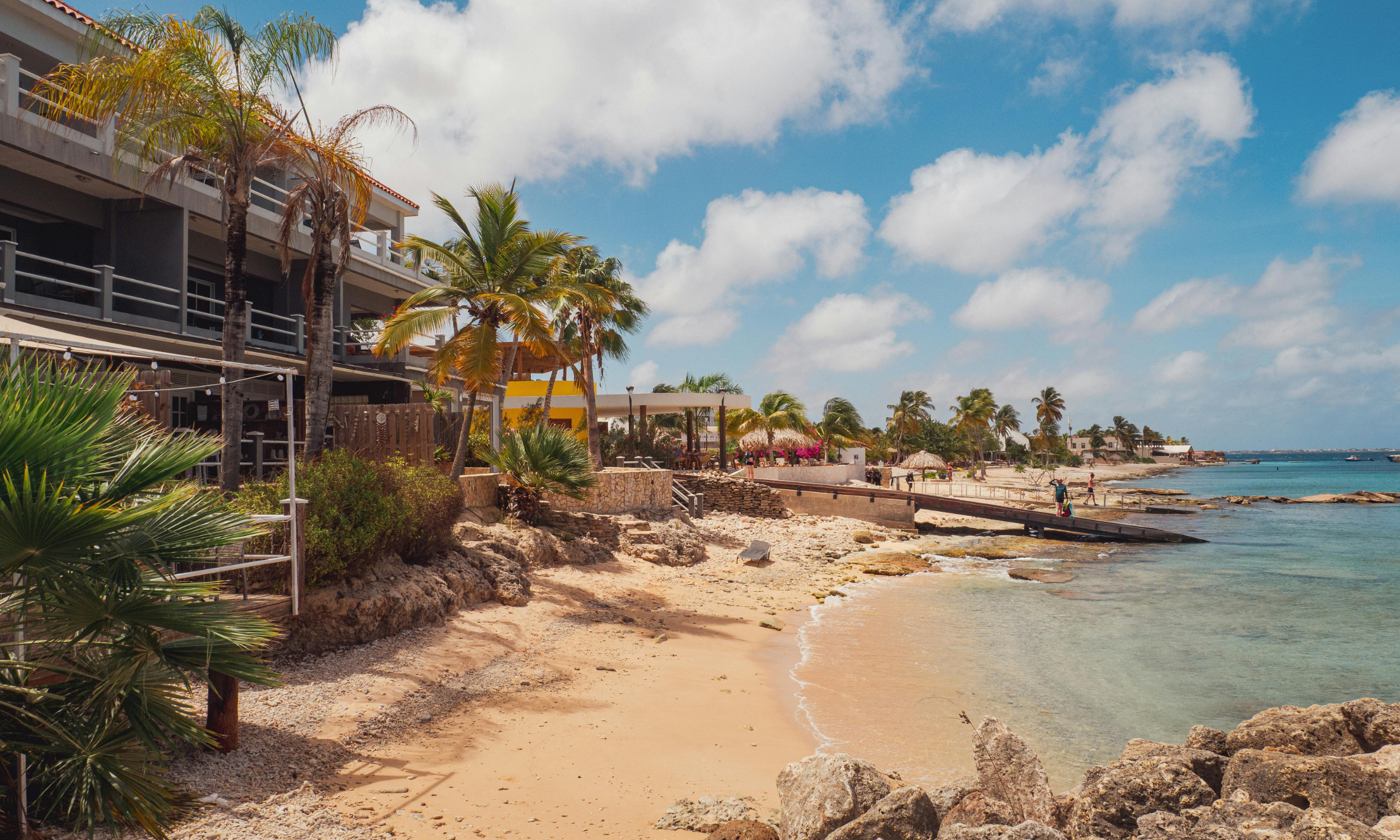
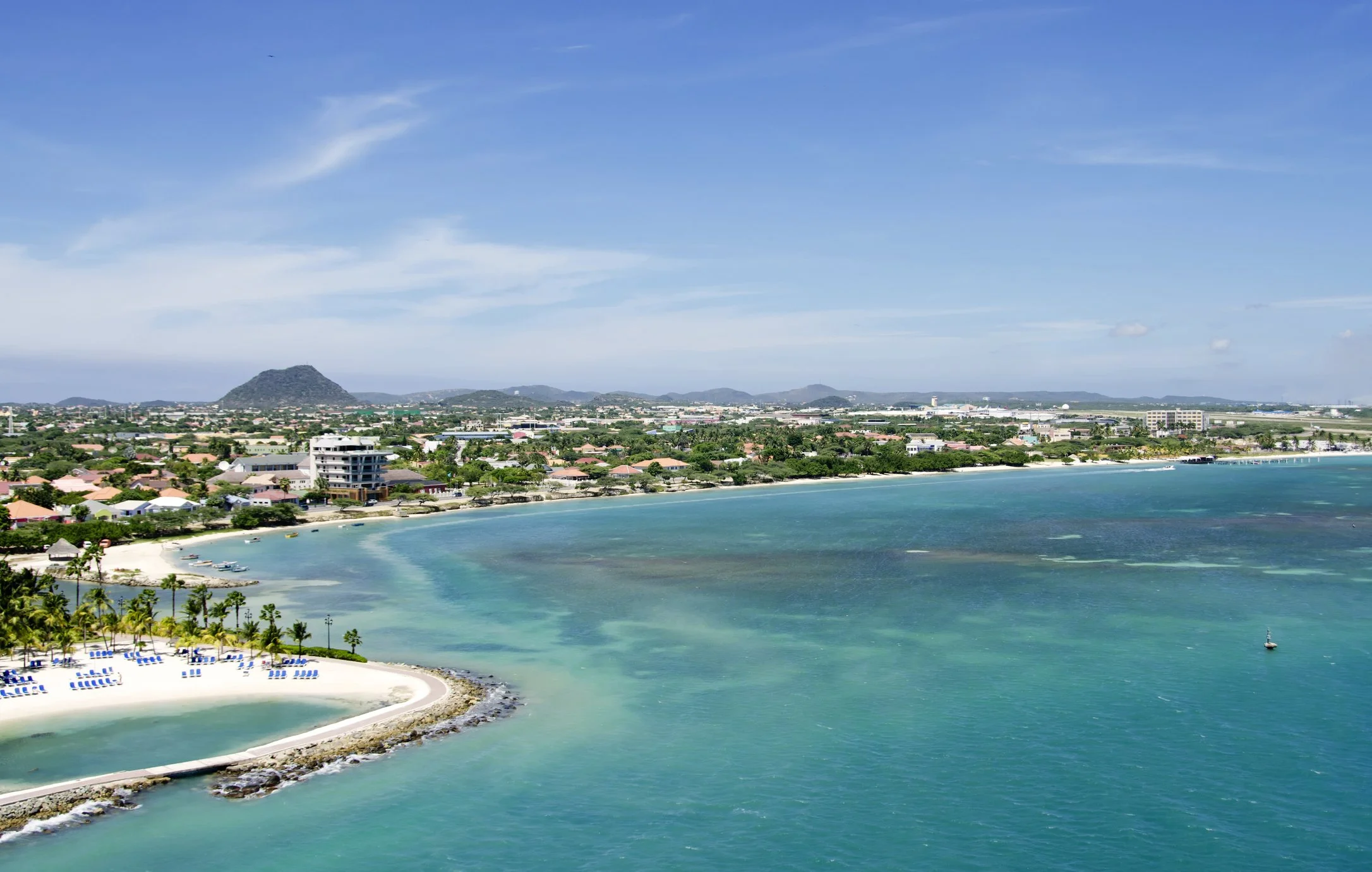
Aruba’s sand feels almost weightless — fine, pale, and coral-based, the kind that squeaks softly underfoot as you walk toward the water. Along the island’s western edge, beaches like Eagle and Palm are bright and forgiving, their sand powdery white and cool despite the sun. Head north toward Arashi or south toward Baby Beach, and the grains grow slightly coarser, touched by coral fragments and wind — a quiet reminder of the island’s desert bones beneath its resort polish.
The sea tells its own story — calm and glassy on the west, wind-stirred and wilder as you turn east. The Caribbean side glows turquoise and clear, shallow enough to see your shadow on the seafloor, while the windward coast churns in foaming blues and silver spray. Swimmers and sunseekers gravitate west for gentle entry and long floating afternoons, while kitesurfers and photographers head east for drama and motion. These contrasts shape everything in Aruba: where you stay, what you do, and how the island feels beneath the rhythm of its trade winds.
Explore Aruba — Map & Highlights
Aruba sits in the southern Caribbean just off the coast of Venezuela, well outside the hurricane belt — a geography that shapes everything from its desert landscape and divi-divi trees to its year-round consistency as a travel destination. The island is compact and easy to navigate, but it unfolds in genuinely distinct pockets: the lively, resort-lined west coast, the quieter local-facing south, the wild windward east, and the creative energy of San Nicolás. This map is a decision tool, not a directory. It's designed to help you understand how Aruba is organized, where different types of travelers tend to base themselves, and whether the island's geography matches the kind of trip you're actually planning. Use it alongside the Where to Stay section below — not as a checklist to work through.
Beaches
Aruba's beaches shift considerably by coast. The west coast — Eagle Beach, Palm Beach, and Arashi — offers the island's signature experience: calm, turquoise water with easy swimming conditions most days of the year. The southeast tip holds Baby Beach, a shallow lagoon-like cove that's almost glassy on calm days. The windward eastern coast is dramatic and photogenic but not swim-friendly; strong Atlantic swell and frequent rescue warnings make it a destination for scenery rather than the water. Base cue: Travelers who want calm, wade-in swimming should stay on the west coast; those drawn to dramatic scenery and wind sports should look east, but plan to swim west.
Food & Drink
Aruba eats well — and it’s easy to find. Most of the island’s dining is concentrated along the west coast (especially around Palm Beach, Eagle Beach, and Oranjestad), where you’ll find everything from polished, date-night dining to casual open-air spots you can walk into after the beach. Beach bars are part of the scenery here, too — think sandy, breezy, and social rather than exclusive. Prices skew mid-range to upscale in the main resort corridor, but if you venture beyond it you’ll find simpler local kitchens and seafood shacks that feel more everyday-Aruba than vacation-Aruba.
Activities
Activity planning in Aruba tends to radiate outward from the west coast. Water excursions, snorkeling trips, and sailing departures concentrate along the Palm Beach and Eagle Beach piers, making the northwest the easiest base for water-activity-heavy itineraries. Arikok National Park and the natural pool on the windward side require a dedicated half-day drive rather than a quick stop — stacking them with west-coast beach time in a single day adds friction. San Nicolás is roughly 30 minutes south and works best as a standalone morning or afternoon rather than a route-along stop. Base cue: Highly active travelers should stay northwest; those doing one or two focused excursions can base anywhere on the west coast.
This all sounds great, but what area should we stay in?
Where to Stay on Aruba
Aruba's west coast anchors most of the island's resort life, but the areas within it move at different speeds — and the further south and east you go, the more the character shifts away from resort polish toward local rhythm. Where you stay shapes how the trip feels from the first morning. Below, The Trip Thread has listed the best areas to stay in Aruba — each offering a different balance of energy, access, and local character. Each area is located on the above map for easy exploration.
Palm Beach — Resorts & Nightlife Hub
Palm Beach is the pulse of Aruba: high-rise resorts, walkable white sand, and every convenience within a few steps — from piers to parasailing to beachfront dining. You’ll wake to calm surf and end your day with a live band or a sunset cocktail.
Why stay: Easy, social, and full of energy; ideal if you like having everything in reach.
Why not: It’s Aruba’s most developed strip, and while fun, it can feel busy and commercial compared to other coasts.
~~~~~
Eagle Beach — Classic Beachfront Calm
Eagle Beach is Palm’s quieter sister — a wide, powdery stretch with fewer crowds and low-rise resorts. Here, mornings stretch long, breezes are steady, and you can actually hear the surf.
Why stay: Spacious, beautiful, and peaceful — perfect for couples or travelers who want beach time without the buzz.
Why not: The calm comes with trade-offs — nightlife and restaurants are limited, so evenings are often quiet.
~~~~~
Oranjestad — Culture, Color & Harborfront Life
Aruba’s capital city blends Dutch-Caribbean charm with a cruise-port bustle. You’ll find pastel buildings, waterfront dining, and easy access to shopping and museums.
Why stay: Great for short stays or those who want a dose of local architecture, walkable culture, and marina views.
Why not: It’s more urban than tropical; you’ll trade beachfront access for proximity to shops and ferries.
~~~~~
Noord — Local Living Near the Coast
Just east of the Bubali Bird Sanctuary, Noord feels lived-in and local — a grid of villas, small apartments, and family-run rentals minutes from the beach. It’s central, calm, and convenient for travelers who prefer independence.
Why stay: Affordable, authentic, and close to both Eagle and Palm Beaches; great for longer stays or self-catering travelers.
Why not: It’s residential, not scenic; no direct beach access and little nightlife beyond home-cooked meals or a nearby bar.
~~~~~
Savaneta — Fishing Village Charm & Waterfront Dining
This seaside community between Oranjestad and San Nicolás is a quiet slice of old Aruba — where fishing boats still dock beside overwater restaurants like Zeerovers. It feels removed, slow, and deeply local.
Why stay: Peaceful, authentic, and ideal for travelers who want to live like locals or enjoy waterfront meals far from crowds.
Why not: It’s sleepy after dark; limited accommodations and no nightlife.
~~~~~
San Nicolás — Culture & Color on the South Side
Once a refinery town, San Nicolás has reinvented itself as the island’s creative heart — alive with murals, art galleries, and the local rhythm of Aruban culture. Baby Beach is just minutes away.
Why stay: Vibrant, artistic, and culturally rich; ideal for travelers seeking authenticity and community over luxury.
Why not: Limited lodging options and a longer drive to the main beaches and dining zones.
Practical Snapshot
-
Aruba is a year-round island with steady trade winds and little rainfall, but March through September offers the calmest seas. Its “off-season” (May–November) still brings sunshine without hurricane worries — the island sits safely south of the storm belt.
-
The official currency is the Aruban florin (AWG), though U.S. dollars are accepted everywhere. ATMs dispense both, and most prices are listed in dollars.
-
Dutch and Papiamento are official, but nearly everyone speaks English and Spanish — conversations easily blend between all four.
-
Queen Beatrix International Airport (AUA) welcomes direct flights from major U.S. and European cities. The airport is 10–15 minutes from Oranjestad and 20 minutes from most resorts.
-
$$-$$$ Moderate to high — dining and lodging mirror the polished, resort-friendly atmosphere. Local cafés and beach shacks, however, keep things balanced for budget-minded travelers.
Local cafés and beach bars are affordable; mid-range resorts and rentals dominate; luxury hotels sit mainly along Palm Beach. (Local eats = $, mid-range stays = $$, luxury = $$$).
-
Lively but approachable: beachfront bars, live music, and open-air clubs around Palm Beach and Oranjestad. Nights lean festive rather than rowdy.
-
Car rental is recommended if you want to explore beyond the resort strip. Taxis are plentiful but unmetered — confirm rates before riding. Public buses connect Oranjestad to major beaches.
-
Aruba consistently ranks among the safest destinations in the Caribbean, and that reputation is well-earned. Tourist-facing areas are well-lit, well-organized, and comfortable to navigate at most hours. Solo travelers find the island straightforward and low-anxiety. The main safety awareness that locals emphasize is the windward east coast — conditions there can turn dangerous quickly, and the same beaches that look swimmable in the morning can become unsafe by afternoon.
Aruba is one of the more LGBTQ+-tolerant destinations in the Caribbean. Same-sex relations are legal, and the island has a generally open and accepting atmosphere in tourist-facing areas. The social culture here is more relaxed by regional standards, and LGBTQ+ travelers typically report a genuinely welcoming experience across most parts of the island.
-
Tap water is perfectly safe to drink — it’s desalinated and excellent quality. The sun is strong year-round; bring reef-safe sunscreen and reapply often.
-
Aruba aims for 100% renewable energy in the coming decade, with wind turbines already powering much of the grid. Respect posted reef-protection zones and use biodegradable products at beaches.
Compare Similar Caribbean Islands
Deciding between Aruba, Curaçao, or Barbados? Here’s how these Caribbean islands differ in color, culture, and rhythm.
ARUBA
Vibe & Energy
Sun-soaked and social — where steady trade winds, desert calm, and Dutch-Caribbean color meet easy-going adventure.
Dining & Culture
A mix of dockside seafood and refined coastal dining; global influence with local warmth and strong creative energy emerging in San Nicolás.
Cost & Crowds
Moderate to high. Developed and convenient, yet rarely feels crowded thanks to consistent weather and year-round tourism flow.
Accessibility
Direct flights from major U.S. and European hubs; one of the Caribbean’s easiest islands to reach and navigate.
Nightlife / Social Scene
Lively but approachable — beach bars, open-air lounges, and music drifting down Palm Beach piers.
Best For
Travelers who want sun, safety, and freedom — from beach walks to late cocktails — without losing authenticity.
CURAĆAO
Vibe & Energy
Creative and colorful, Curaçao shares Aruba’s steady sunshine and relaxed rhythm but leans more into art, history, and everyday island life.
Dining & Culture
Downtown Willemstad hums with mural-covered alleys and fusion dining; culture-forward and walkable.
Cost & Crowds
Moderate to high — accessible, rarely overcrowded, and balanced between local charm and boutique polish.
Accessibility
Direct flights from North America and Europe, plus ferry access from neighboring islands; no transfers required.
Nightlife / Social Scene
Harborfront bars, live Latin music, and a friendly, after-dinner buzz that fades by midnight.
Best For
Travelers drawn to culture, design, and color who still want sunshine and simplicity.
BARBADOS
Vibe & Energy
Polished yet grounded — where British heritage meets Caribbean ease. Slightly more formal than Aruba but still unmistakably warm and social.
Dining & Culture
A true culinary standout: from Oistins’ Friday fish fry to fine dining on the West Coast, food and music anchor the island’s rhythm.
Cost & Crowds
Comparable to Aruba — upscale overall, with a loyal repeat visitor base and limited low-season dips.
Accessibility
Well connected by direct flights from the U.S., Canada, and Europe. Compact size makes exploring by car easy.
Nightlife / Social Scene
Beach bars and rum shops pulse with live music; lively evenings, especially in St. Lawrence Gap and Holetown.
Best For
Couples and culture seekers who enjoy a sociable, food-forward island with easy access and refined touches.
Pick Aruba if: you want year-round sunshine, a safe and social beach trip, and a destination that delivers consistency without requiring much effort to enjoy.
Pick Curaçao if: you want the same steady sunshine and Dutch-Caribbean character but with more cultural depth, a walkable capital, and an island that feels less resort-shaped.
Pick Barbados if: you want refined beach comfort alongside genuine culinary depth, a livelier social scene, and a stronger sense of local identity woven into the experience.
Tie-breaker: If reliability and ease are the priority, Aruba. If you want the beach plus something more to discover, Curaçao or Barbados.
Local Truths
Service charge ≠ tip (always). Many Aruba checks include a service charge; locals and frequent visitors debate whether it fully reaches staff, so if service is great, people often add a little extra in cash rather than assuming it’s covered.
~~~~~
If you pay in USD, expect change in florins—and “the rate” is a local reality. Aruba’s florin is pegged to the U.S. dollar, but everyday transactions often use a slightly rounded rate, and you may get AWG back even when you pay USD.
~~~~~
Don’t cross swim ropes—especially at popular snorkel spots. Locals specifically warn that rope lines aren’t decoration; they’re there because boats can’t see swimmers well, and incidents have happened.
~~~~~
Reef rules are real: Aruba restricts certain chemical sunscreens. Aruba bans/import-restricts sunscreens containing ingredients like oxybenzone (reef protection). Locals will tell you to bring mineral sunscreen or buy compliant options on-island.
~~~~~
The “wild side” can turn deadly fast—even when it looks tempting. In threads about Arikok and the windward coast, locals repeat the same message: that side is stunning, but swimming there is a recurring rescue scenario when visitors ignore the warning signs.
~~~~~
Greet before you ask. In small shops, local eateries, or neighborhood areas, a simple “Bon dia” or “Good afternoon”before launching into a question goes a long way. Skipping it feels abrupt — Aruba runs on friendliness first, transaction second.
~~~~~
Roundabouts are the rule, not the exception. Visitors often hesitate, but locals expect confident, continuous movement. Yield left, commit, and don’t stop mid-circle unless absolutely necessary — hesitation causes more confusion than speed.
~~~~~
Beach space is shared, not claimed. Locals don’t rope off large stretches of sand or “reserve” space all day. Setting up early and leaving towels unattended for hours is quietly frowned upon, especially on Eagle Beach.
~~~~~
Casual dress is fine — but respect transitions. Swimwear belongs on the beach. Walking into supermarkets or town areas dripping wet or barefoot is considered inconsiderate, even in a resort-heavy destination.
~~~~~
Time is relaxed — except at the airport. Island pace is real in daily life, but locals consistently advise arriving early for departure; Aruba’s airport processing (especially U.S. pre-clearance) takes longer than visitors expect.
Aruba Travel Questions, Answered
A few essentials to help you plan with confidence — from when to visit and which coast to stay on, to what travelers say about safety, cost, and connection.
1. Is Aruba expensive?
Aruba sits in the mid-to-upper range for the Caribbean. The main resort corridor along Palm Beach and Eagle Beach skews toward higher pricing for accommodation and dining, but the island has enough variety that budget-conscious travelers can find local kitchens, casual beach bars, and self-catering rentals that ease the cost. All-inclusives are widely available and often represent the best value for travelers who want predictable spending. Overall, Aruba is more accessible than Anguilla or St. Barts, but it's not a budget destination.
2. When is the best time to visit Aruba?
Aruba sits outside the hurricane belt, which makes it genuinely viable year-round — one of its most practical advantages over other Caribbean islands. January through April is the most popular window, with the driest and most reliably calm conditions. The trade winds are strongest between December and March, which suits kitesurfers but can make some beach days breezier than expected. The shoulder months of May and October offer lower rates and smaller crowds with nearly identical weather.
3. Which area of Aruba should I stay in?
Palm Beach is the most social and convenient base — walkable, resort-lined, and full of activity, but also Aruba's most developed stretch. Eagle Beach is the quieter alternative just south, with wider sand, fewer crowds, and a more relaxed pace. Travelers who want local character over resort polish tend to stay in Noord or venture south toward Savaneta or San Nicolás. The coasts feel meaningfully different from one another, so the choice shapes the whole trip.
4. Do I need a car in Aruba?
A rental car is recommended but not essential if you're staying on the Palm Beach or Eagle Beach corridor, where taxis, buses, and beach shuttles cover most daily needs. If you want to explore Arikok National Park, Baby Beach, or the quieter southern parts of the island, a car makes a real difference. Driving is on the right, roads are well-maintained, and most areas are reachable within 30 minutes. Scooter and UTV rentals are also popular for day exploration without a full rental commitment.
5. Is Aruba safe for solo or LGBTQ+ travelers?
Aruba is one of the safer and more welcoming Caribbean destinations for both solo and LGBTQ+ travelers. Solo travelers find it easy and low-friction to navigate independently — the island is well-organized, English is widely spoken, and the social atmosphere is open. Aruba is among the most LGBTQ+-tolerant destinations in the Caribbean, with a generally accepting environment in tourist-facing areas and a more relaxed social culture than most of its regional neighbors.
6. How does Aruba compare to Curaçao and Barbados?
Aruba is the most resort-polished and weather-reliable of the three — a strong choice for travelers who want consistency and ease above all else. Curaçao shares Aruba's steady sunshine and Dutch-Caribbean character but leans more toward culture, history, and local texture, with a more walkable capital and less resort dominance. Barbados offers more culinary depth and a livelier social scene, with a stronger sense of local identity woven into the experience. The choice usually comes down to how much discovery and local character you want alongside your beach days.
Why This Guide Changes With the Island
Aruba never stays still — new murals appear in San Nicolás, beach bar menus evolve with the season, and the island's best sunset perch has a way of shifting a few steps down the sand each year.
This guide evolves with it. Locals share updates, travelers add discoveries, and we keep refining what you see here so every detail reflects the island as it is now — not a memory of what it used to be.
Ready to see where else year-round sunshine and colorful island culture might lead?
Explore nearby destinations that share Aruba’s easy rhythm — from the creative energy of Curaçao to the coastal elegance of Barbados.
Each one tells its story differently, but all share that blend of warmth, light, and effortless Caribbean ease that defines this corner of the world.
Find Your Thread
Every traveler connects differently. Maybe Aruba is your match — or maybe your rhythm leads somewhere else in the Greater Caribbean.
Either way, this is what The Trip Thread is about: rediscovering the joy of travel, and the element of discovery that should always accompany it.
Guided by locals. Designed for discovery.