By Kelly McAtee | TheTripThread | Last Updated April 2026
Curaçao
Where pastel-painted streets meet turquoise coves — a Caribbean island that lives in color.
Urban Island Energy | Culture & Rhythm
Best for: Best for travelers who want city culture and Caribbean water in the same trip — drawn to street art, multilingual neighborhoods, and cove-hopping over resort strips and all-inclusive ease.
Not for: Not for travelers who want long stretches of walk-out white sand, seamless all-inclusive convenience, or nightlife that runs past midnight.
Quick Snapshot: ☀️ Best months: January–June · 💲 Average cost: $$–$$$ · 🕶️ Vibe: Laid-back cosmopolitan
Reality Check (Read This Before You Book)
Curaçao is a car-and-coves destination — not a walk-out-to-the-beach resort island. The best beaches are scattered along the west coast in small, separated coves, each with its own character and most requiring a short drive and sometimes an entrance fee.
The biggest misconception is that Curaçao is "Aruba with better culture." The beach product is fundamentally different — pocket coves with rocky entries instead of long sandy strips — and the island's real pull is Willemstad's UNESCO-listed streets, diving, and multilingual local life.
If you need a car-free beach vacation, this isn't it. If you want intense nightlife that runs late, Aruba or Puerto Rico will serve you better. If you expect every beach to have soft sand and a gentle wade-in, you'll be caught off guard.
If you're looking for a more traditional sun-and-sand Caribbean experience with less planning, look at islands built around a single long coastline rather than a network of scattered coves.
Why You’ll Love It
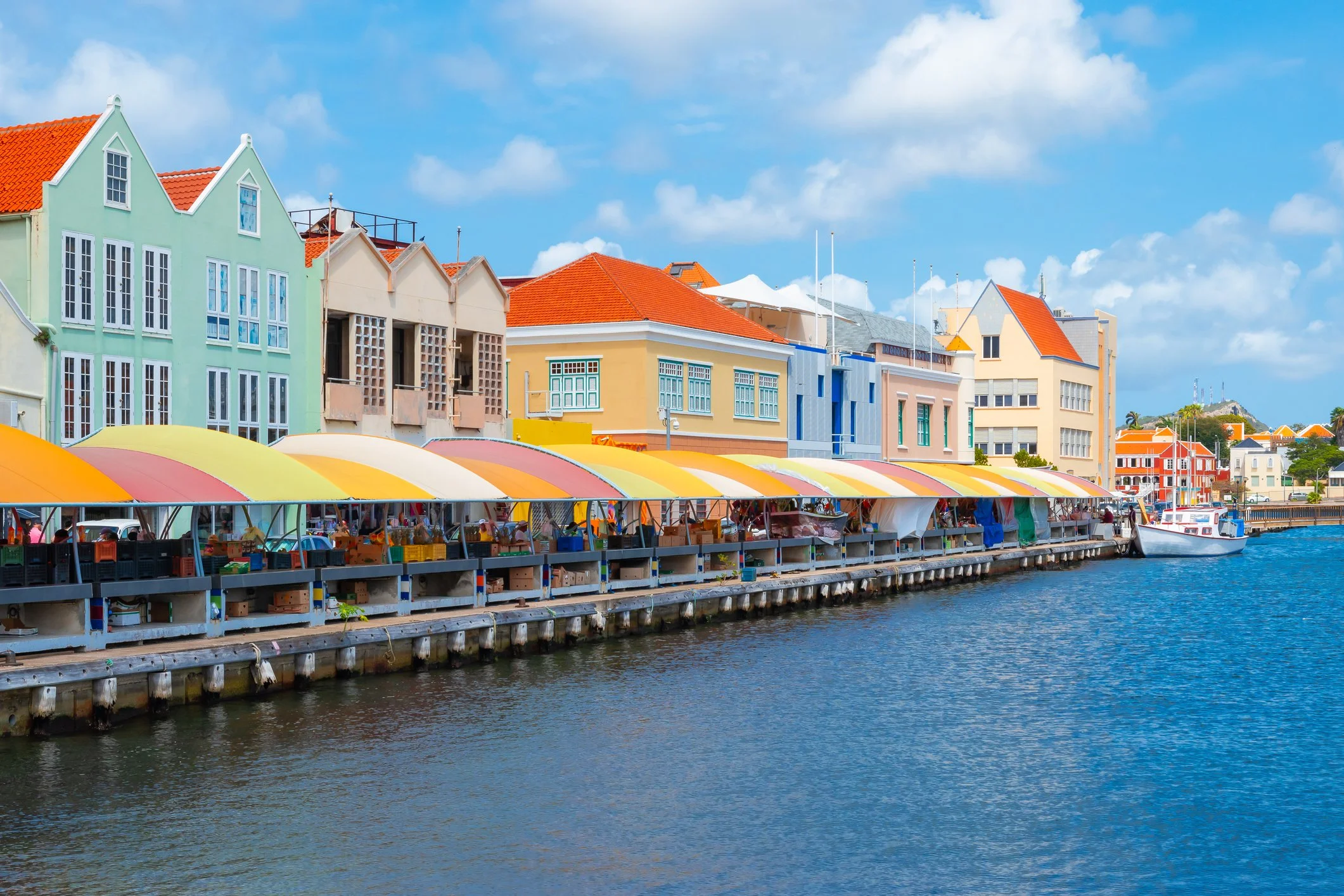
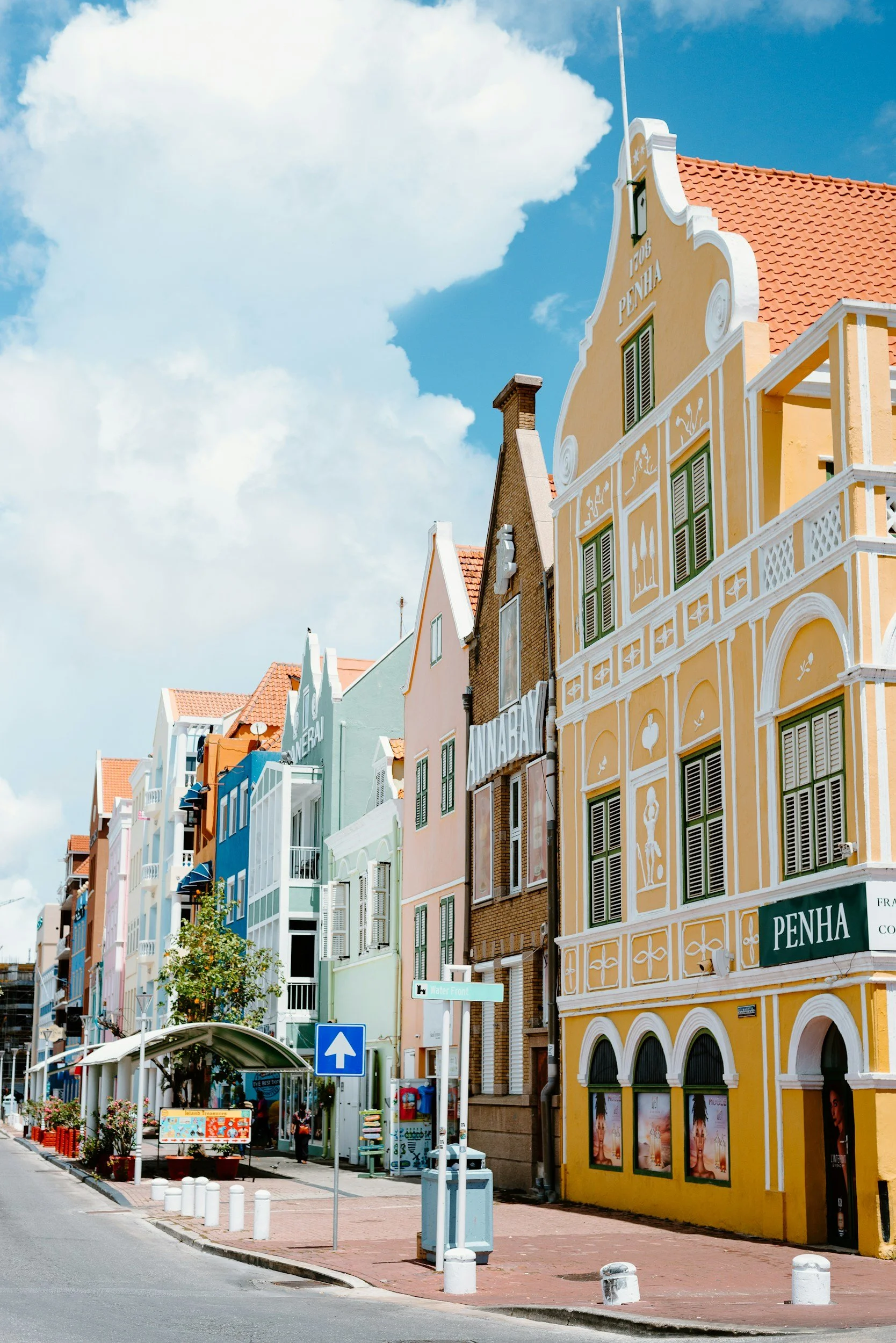
Curaçao earns its loyalty through texture — not convenience. The island rewards travelers who want to feel the grain of a place: the layers of Papiamentu, Dutch, Spanish, and English drifting through a single market conversation; the heat of a pastechi straight from a roadside snèk; the jolt of rounding a corner in Pietermaai and finding restored colonial facades covered in street art. It's a destination where culture isn't curated for visitors — it's simply the way the island lives.
The light here is hard and bright, bouncing off painted concrete and turquoise water in a way that makes everything feel saturated. Days split naturally between Willemstad's café-lined streets and the west coast's small coves, where the water is impossibly clear but the entry often involves stepping carefully over coral rock. Evenings settle into Pietermaai's restored laneways — cocktails in courtyards, salsa from an open doorway, the low hum of a jazz trio at Miles.
This is not Aruba's palm-lined boulevard or Puerto Rico's layered urban nightlife. Curaçao is quieter, more spread out, and more self-directed. The island asks something of you — a rental car, a willingness to find things rather than have them presented — and gives back a Caribbean experience that feels genuinely lived-in rather than staged. The trade-off is real: less polish, more personality.
Best for travelers who want to mix urban culture, world-class diving, and cove-beach days on an island that doesn't flatten itself for tourists — choosing authenticity and variety over seamless ease. Curaçao is often recommended for culturally curious couples, experienced Caribbean travelers, and divers seeking a cosmopolitan base between underwater sessions.
This is Curaçao
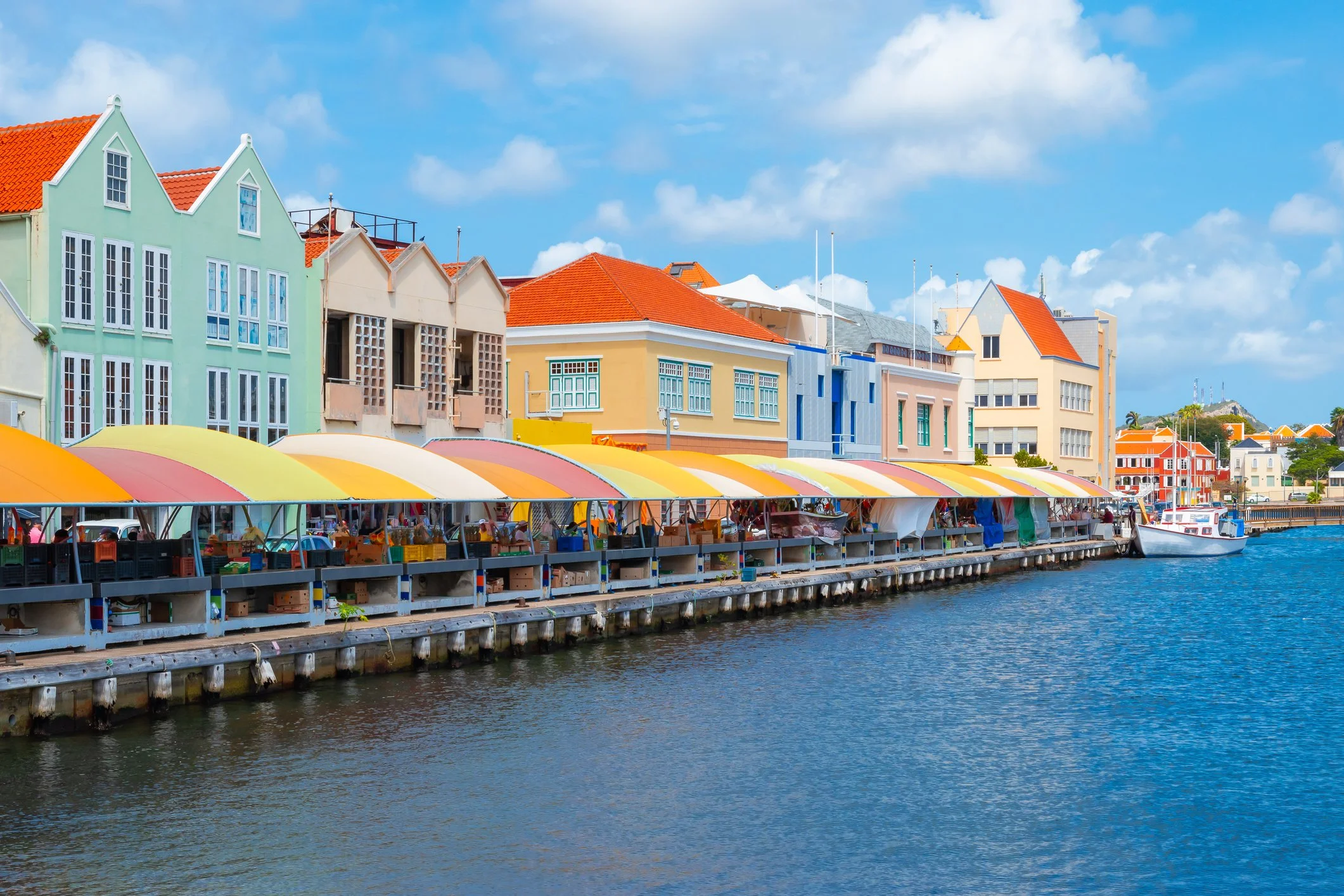
Hard sunlight on painted stone, turquoise water framed by cactus and coral rock, and the low rhythm of four languages moving through a single afternoon.
Part of the Greater Caribbean Collection on TheTripThread — a destination reference system built for travelers deciding where they'll feel right, not just where to go. Curaçao is for travelers who value cultural depth and visual richness over manicured ease.
Common Experience Patterns

Curaçao moves at a pace that visitors don't always read correctly on arrival. The island is larger than most expect — roughly 40 miles end to end — and the best beaches sit in isolated coves along the western coast, each a separate drive from Willemstad. Planning matters here more than on walk-out-to-the-sand islands, and travelers who build in driving time rather than fighting it tend to settle into the rhythm faster.
The light is intense and the palette is saturated: coral and ochre facades along Handelskade, turquoise shallows at Cas Abao, the dry green of cactus hills rolling toward the wild north coast at Shete Boka. Mornings split between Willemstad's café culture — espresso in Pietermaai, fresh juice at Plasa Bieu — and the west coast's cove beaches, where entry can mean stepping carefully over coral rock into water so clear it barely looks real. Evenings concentrate in Pietermaai's restored laneways, where restaurants, bars, and live music share space in repurposed colonial homes.
This is not an island that simplifies itself for visitors. The beach product is cove-by-cove, not one continuous strip — travelers expecting Aruba's Eagle Beach will recalibrate. Grocery prices are higher than the mainland, mosquitoes appear after rain (especially inland and away from the breeze), and outside Willemstad and a few beach clubs, the island gets genuinely quiet after dark. Public transport is limited to commuter bus routes, which means a rental car isn't a luxury — it's how the island works.
Locals Know
Locals Know — When Curaçaoans talk about eating out casually, they usually mean a snèk, not a restaurant. If you only follow polished dining guides, you'll miss how the island actually eats. The best pastechi are found at roadside stands with no signage and a line of locals — that's your quality signal.
What we love
The island earns a loyalty that's hard to explain until you've been — a combination of Willemstad's visual intensity, the water clarity at the western coves, the multilingual ease of daily life, and the feeling that the Caribbean here hasn't been smoothed into uniformity. Repeat visitors come back for the diving, stay for the food, and keep returning because the island changes slowly enough to feel familiar and fast enough to stay interesting.
Travelers consistently praise the snorkeling and diving — Playa Piskado's sea turtles, the Tugboat wreck, Mushroom Forest — and the feeling that Willemstad is a real city, not a tourist set. What catches people off guard is how much driving the cove beaches require and how rocky some entries are. Curaçao tends to delight culturally curious travelers, divers, and couples who treat the island as a series of small discoveries rather than a single beach destination — and tends to frustrate those who want everything within walking distance or expect the sand experience to match the postcard. Locals and repeat visitors alike describe Curaçao as the Caribbean's best-kept urban secret, especially for travelers who want dining, diving, and street culture in the same trip, while those who prefer a seamless, car-free beach holiday tend to wish they'd chosen differently.
Where we eat
Curaçao's food scene splits between Willemstad's polished dining — Pietermaai's restored-house restaurants, Rif Fort's waterfront tables — and the island's rougher, more rewarding local layer: snèks (roadside food stands) serving stobá stew and pastechi pastries, Plasa Bieu's covered market with keshi yena and iguana stew, and the late-night Truki Pan food truck gatherings. Reservations matter at the better Pietermaai spots on weekends; at Plasa Bieu, you eat what's left by 1 PM.
Where we go
Most visitors split their time between Willemstad's walkable core — Punda's shopping streets, Otrobanda's murals, Pietermaai's galleries and bars — and the west coast's cove beaches, reached by rental car in 20 to 45 minutes. The wild north coast at Shete Boka is for watching waves crash through volcanic rock formations, not for swimming. Klein Curaçao, a flat uninhabited island an hour offshore by boat, draws day-trippers for white sand and wreck snorkeling.
About this section:
This section is built from publicly shared traveler perspectives and credible regional reporting. We treat it as sentiment and cross-check factual claims where possible. We intentionally limit dependence on review marketplaces where paid, promotional, or otherwise unrepresentative input can blur the picture.
Identity
Vibe Descriptors
Cosmopolitan · Artistic · Vibrant · Authentic · Easygoing
……….
Core Audience
Culturally curious travelers who want a Caribbean island with city depth — street art, multilingual neighborhoods, and world-class diving — without the resort-bubble trade-off.
……….
Best For (Trip Types)
Culture & History · Diving & Snorkeling · Beach & Sun · Food & Drink
……….
Known For
A UNESCO-listed pastel capital, cove-by-cove west coast beaches, some of the Caribbean's best shore diving, and a multilingual food scene anchored in Papiamentu culture.
……….
Trip Thread Theme(s)
Friction & Tradeoffs (Read This Before You Book)
Cost Pressure: Curaçao sits in the moderate-to-upper range for the Caribbean. Hotels and Airbnbs in Pietermaai and the west coast run higher than you'd expect for an island outside the luxury tier, and grocery prices reflect the import reality of a small island economy. Dining out is reasonable at local snèks and Plasa Bieu, but Pietermaai restaurant dinners push toward $40–50 per person without drinks. Car rental adds $40–60/day — and it's not optional.
Mobility / Getting Around: A rental car is effectively required. The best beaches are cove-by-cove along the west coast, each its own separate stop 20 to 45 minutes from Willemstad. Public buses run commuter routes, not tourist circuits, and taxis are expensive for anything beyond the airport transfer. Willemstad itself is walkable and rewarding on foot — Punda, Otrobanda, and Pietermaai are all connected across the Queen Emma pontoon bridge — but once you leave the city, you're driving. Roundabouts and narrow roads take a day to get comfortable with.
Autonomy vs Structure: Curaçao rewards self-directed travelers rather than those who want a planned itinerary handed to them. Outside the all-inclusive properties, the island asks you to find things — the right cove beach, the snèk with the best pastechi, the unmarked turnoff to Playa Jeremi. That freedom is the appeal for many visitors, but it means more planning than a resort-anchored trip on Aruba or Turks & Caicos.
Crowd Texture: Cruise ships dock in Willemstad's harbor, and on ship days the Punda shopping district gets noticeably busier — but the effect dissipates quickly beyond the immediate port area. The west coast beaches rarely feel crowded even in peak season, partly because the cove format distributes visitors naturally. Tourism is growing (1.7 million arrivals in 2025, up 9% year-over-year), and the Sandals resort has brought a new wave of American visitors, but the island's size absorbs it better than Aruba's compact footprint.
Culture Access: This is one of Curaçao's genuine strengths. Willemstad isn't a tourist simulacrum — it's a functioning city where four languages coexist in daily life, and visitors can walk into Plasa Bieu for keshi yena alongside local office workers on lunch break. The gap between resort experience and local reality is narrower here than on most Caribbean islands, particularly if you leave the hotel zone and eat where residents eat. The main barrier is language-adjacent: Papiamentu is the dominant local language, and while English is widely spoken, some deeper local experiences — neighborhood bars, rural snèks — run more naturally in Papiamentu or Spanish.
Variety Ceiling: A week fills comfortably — Willemstad's neighborhoods, eight to ten distinct cove beaches, diving sites, Christoffel Park, Shete Boka, Klein Curaçao — but by day eight or nine, the dining scene starts to repeat and the evenings settle into a pattern. Travelers who need fresh nightlife options every night will feel the ceiling faster than those who are content with a rotating cast of Pietermaai restaurants and a sunset cocktail. The island is better for depth than breadth, unlike Puerto Rico or the Dominican Republic where you could spend weeks in different zones.
Sand & Sea Character
The sand on Curaçao varies more by cove than by coast. The standout beaches — Cas Abao, Grote Knip, Porto Mari — offer soft white-to-golden sand, fine-grained and firm underfoot, shaped by coral and shell over limestone. But the experience isn't uniform: many coves have rocky entries where you step over coral shelf to reach the water, and some popular swim spots like Playa Lagun are more pebble and reef platform than powdery beach. The west coast coves are where the sand is softest and the entries gentlest. Base in the Jan Thiel or Mambo Beach area for the easiest daily beach access with facilities and food, or base farther west near Lagun or Westpunt for quieter coves and stronger snorkeling — trading convenience for solitude.
The water clarity is the island's quiet showpiece — visibility regularly reaches 80 to 100 feet, particularly along the sheltered west coast where the reef drops off close to shore. Color shifts from pale turquoise over white sand shallows to deep cobalt where the reef wall begins, sometimes within 30 feet of the beach. The bright-turquoise postcard shots come from beaches like Cas Abao and Grote Knip, where white sand bottoms light up the shallows; at reef-heavy coves like Playa Kalki or Playa Piskado, the water reads deeper-toned — teal to navy — even though clarity is equally sharp, because the darker reef and seagrass bed absorb light differently. The west coast is calm and swim-easy most of the year, with gentle entries at the best coves and reliable conditions for casual snorkeling. The north coast at Shete Boka is the opposite — dramatic, rough, wave-battered volcanic coastline meant for watching, not swimming, with strong currents and no protected entries. Travelers chasing turquoise-water, easy-float beach days should base along the southwest-to-west corridor between Jan Thiel and Cas Abao. Snorkel and dive seekers will find the strongest reef access farther west — Playa Lagun, Playa Kalki, and the Mushroom Forest offshore — where the water may look deeper-toned but the underwater visibility is among the best in the Caribbean. Those drawn to dramatic coastline and raw landscape photography should drive the north coast road, but should plan to swim elsewhere.
Explore Curaçao — Map & Highlights
Curaçao sits in the southern Caribbean, 40 miles north of Venezuela and well outside the hurricane belt — a 171-square-mile island that feels bigger than its size suggests because of how differently the coasts behave. Exploring here means driving: west along a string of cove beaches, each one a separate stop with its own sand, its own entry, its own shade situation; north to the wild volcanic coast where the sea crashes through blowholes; into Willemstad for a city that doesn't feel like a Caribbean capital so much as a small, painted European port with tropical light. The rhythm is self-directed — you build each day from a menu of coves, neighborhoods, and dive sites rather than following a resort's activity board. This map is intentionally curated, not comprehensive — it won't capture every beach, restaurant, or landmark on the island, but it will help you understand how the geography works and where to base yourself.
Beaches
Curaçao's coastline splits into three distinct experiences. The sheltered west coast holds the island's signature cove beaches — small, separated pockets of white-to-golden sand with clear water and reef snorkeling, each requiring a short drive and sometimes an entrance fee. The southeast coast around Jan Thiel and Mambo Beach offers the easiest access with beach clubs, facilities, and food within walking distance of hotels. The north coast is dramatic and undeveloped — wave-battered volcanic rock, no swimming, but striking scenery. Base near Jan Thiel for convenience, or near Lagun for quieter coves and stronger snorkeling.
Food & Drink
Dining concentrates in two zones with very different personalities. Willemstad — particularly the Pietermaai District — holds the island's restaurant density: restored colonial homes turned into cocktail bars, sit-down seafood spots, and international kitchens. Reservations matter here on weekends. Outside the city, the food scene shifts to roadside snèks, beach club grills, and Plasa Bieu's covered market, where lunch is served until it runs out. Food-driven travelers should base in or near Pietermaai for walkable evening dining, supplementing with daytime beach club lunches and snèk stops during cove-hopping drives.
Activities
Activity planning on Curaçao radiates from two anchors: Willemstad for cultural exploration (street art walks, museums, Handelskade, Rif Fort) and the west coast for water-based activity (shore diving, snorkeling, Klein Curaçao day trips, kayaking). Christoffel Park and Shete Boka sit on the northwest end — a 45-minute drive from Willemstad — and work best as a dedicated half-day. Dive shops cluster around the Mambo Beach / Jan Thiel corridor and in Westpunt. Active travelers should base on the southwest-to-west corridor for the shortest drives to the widest range of activity.
Where to Stay in Curaçao
Curaçao's geography means where you stay shapes your trip more than on most Caribbean islands. The island stretches 40 miles from the urban core of Willemstad to the remote cove beaches of the far west, and the daily rhythm changes dramatically depending on which end you choose. Stays range from walkable city-culture bases to quiet west coast villas where the nearest restaurant is a 20-minute drive. Below, The Trip Thread has listed the best areas to stay in Curaçao — each offering a different balance of privacy, scenery, and local character. Each area is located on the above map for easy exploration.
Pietermaai District — Willemstad's Walkable Cultural Heart
Pietermaai is Curaçao's most complete base for travelers who want the island's culture, dining, and nightlife without reaching for car keys every evening. Restored Dutch-colonial homes line narrow streets now occupied by boutique hotels, cocktail bars, jazz venues, and some of the island's best restaurants. The Queen Emma pontoon bridge connects you to Punda's waterfront and Otrobanda's murals within a ten-minute walk. The trade-off is beach access — the nearest sand is a short drive to Mambo Beach or Jan Thiel, and the west coast coves are 30 to 45 minutes out.
Why stay: The island's only walkable neighborhood for evening dining, nightlife, and culture — ideal for couples and solo travelers who want urban energy.
Why not: No beach within walking distance; weekend nights bring street noise until midnight.
Jan Thiel — Calm Bay With Family-Friendly Ease
Jan Thiel sits just east of Mambo Beach but feels distinctly quieter — a bay with calmer water, a more residential mix of hotels and vacation rentals, and a small cluster of restaurants and shops. The energy is gentler, the swimming is easier for kids, and the daily pace runs slower than Mambo's club scene. It's the southeast coast's family-friendly anchor, with enough nearby amenities to avoid driving for everyday needs. The trade-off mirrors Mambo Beach — Willemstad's evening culture and the west coast coves both require driving — but here you're trading social energy for calm.
Why stay: Quieter southeast coast base with calm water, family-friendly energy, and walkable daily amenities.
Why not: Less exciting than Mambo Beach, and still far from Willemstad's walkable core and the west coast's dramatic coves.
Mambo Beach Boulevard — Social Beach Life With Full Amenities
Mambo Beach is Curaçao's most produced beach experience — a boulevard of beach clubs, restaurants, bars, and dive shops built around a managed stretch of sand with loungers, music, and food service. The vibe is social and curated, with DJs on weekends and a sunset-drinks culture that makes it the island's most energetic daily beach routine. Hotels and apartments nearby put you within walking distance of everything on the strip. The trade-off is that it feels closer to a resort corridor than anything else on the island — and Willemstad's walkable nightlife is still a 15-minute drive.
Why stay: The island's most social beach base, with clubs, dining, diving, and sunset bars all within walking distance.
Why not: Produced and lively — travelers seeking quiet coves or authentic local character will feel they're on the wrong coast.
Lagun / Mid-West Coast — Quiet Reef Coves and Residential Calm
Basing near Playa Lagun puts you in the middle of the island's best snorkeling corridor — sheltered coves with reef entries, sea turtles, and water clarity that makes the southeast coast look cloudy. The area is residential and quiet, with villa rentals and small guesthouses replacing the hotel format. Evenings are genuinely still — there's no walkable dining scene, and dinner means driving back toward Willemstad or to one of a few scattered west coast restaurants. Couples and experienced Caribbean travelers who want the reef over the resort will feel at home here.
Why stay: Closest base to the island's strongest snorkeling, with quiet, residential character and fewer visitors.
Why not:No walkable restaurants, bars, or grocery stores — you'll drive for everything, and evenings are very quiet.
Westpunt — Remote Beaches and Dive-First Solitude
The far western tip of the island is where Curaçao's cove beaches are most dramatic — Grote Knip, Playa Kalki, Playa Jeremi — and where the island feels most like a place locals retreat to on weekends. Accommodation is limited to small properties, vacation rentals, and a few boutique spots. The diving here is among the best on the island, with sites like Alice in Wonderland reachable from shore. The commitment is real: Willemstad is 45 minutes away, groceries require planning, and the restaurant scene is a handful of places. Travelers who base here tend to be divers, beach purists, or couples who want solitude.
Why stay: Curaçao's most dramatic cove beaches and strongest dive sites, with genuine quiet and minimal development.
Why not: Far from Willemstad, limited dining, and no nightlife — you're committing to the west coast for most of the trip.
Otrobanda — Local-Feeling City Base at Lower Prices
Otrobanda sits across St. Anna Bay from Punda and Pietermaai — the quieter, more residential side of Willemstad with growing street art, a few boutique hotels, and a neighborhood character that Pietermaai's restaurant scene has largely polished away. The Queen Emma bridge puts you within walking distance of everything in the city center, but at night the walk back feels longer than 10 minutes. Budget-conscious travelers and those who want a more local-feeling city base without Pietermaai's price tag will find the trade-off worthwhile.
Why stay: Affordable Willemstad base with authentic neighborhood character, walkable to Punda and Pietermaai via the pontoon bridge.
Why not: Fewer dining and nightlife options immediately around you; late-night walks back across the bridge feel isolated.
Practical Snapshot
-
Curaçao sits outside the hurricane belt, so there's no true storm-season worry. January through June is the driest and most comfortable window, with February's Carnival as the standout. July and August are hotter but still pleasant, and the North Sea Jazz Festival in late August draws a dedicated crowd. October and November are the wettest months, though "wet" here means brief showers, not washouts. Peak pricing runs mid-December through mid-April.
-
The official currency is the Netherlands Antillean guilder (ANG), but US dollars are accepted almost everywhere — hotels, restaurants, beach entrance fees, and most shops. Credit cards work reliably in Willemstad and at beach clubs, though some snèks and smaller roadside spots are cash-only. ATMs are easy to find in Willemstad and near major hotels.
-
Papiamentu is the island's heart language — you'll hear it in markets, on the radio, and between locals at every snèk. Dutch is the official administrative language, and English and Spanish are both widely spoken. Most people in tourist-facing areas switch between all four without hesitation. Learning a few Papiamentu phrases — "bon dia" (good morning), "dushi" (sweet/nice), "masha danki" (thank you very much) — draws genuine warmth.
-
Curaçao Hato International Airport sits 20 minutes from Willemstad by car or taxi. Direct flights arrive from Miami, Charlotte, Atlanta, New York JFK, and Newark in the US, with KLM connecting through Amsterdam as the primary European gateway. Air Canada and WestJet serve Toronto. American Airlines launched a Chicago O'Hare nonstop in December 2025. From the airport, taxis to Willemstad run $25–35; to the west coast, $50+. Most travelers rent a car at the airport on arrival.
-
Curaçao is moderate by Caribbean standards — less expensive than St. Barts or Anguilla, roughly on par with Aruba, and pricier than the Dominican Republic or Roatán. The range depends heavily on where you eat and how you stay. Local lunches at snèks and Plasa Bieu = 💲, mid-range hotels and beach club days = 💲💲, Pietermaai boutique stays and waterfront dinners = 💲💲💲. Car rental adds a steady daily cost that's easy to underestimate.
-
Curaçao's nightlife is genuine but concentrated and modest by Caribbean standards. Pietermaai comes alive on weekend evenings — jazz at Miles, cocktails in restored courtyards, salsa drifting from open doorways — and Thursday's Punda Vibes brings fireworks and street energy to the Handelskade waterfront. Beach clubs at Mambo Beach and Jan Thiel run sunset DJ sets on weekends. Outside these pockets, the island is quiet after dark. Most venues wind down by midnight or 1 AM.
-
Rent a car. This advice appears everywhere because it's accurate — the island's best beaches, parks, and dive sites are scattered across 40 miles of coastline, and public buses run commuter routes, not tourist circuits. Taxis work for airport transfers but get expensive fast for daily use. Willemstad itself is walkable and rewarding on foot, with Punda, Pietermaai, and Otrobanda connected by the Queen Emma pontoon bridge. Outside the city, you're driving. Roads are well-maintained, right-hand traffic, with roundabouts as the main navigational adjustment.
-
Curaçao carries a Level 1 travel advisory from the US, Canada, and the UK — the lowest possible. The island is generally safe for tourists, with petty crime (pickpocketing in crowded Willemstad, car break-ins at remote beach lots) as the main concern. Avoid leaving valuables visible in your rental car, particularly at less-trafficked west coast beaches. Poorly lit areas at night in Willemstad warrant normal urban awareness.
For solo travelers, the island is welcoming and well-suited — Willemstad is walkable, locals are friendly and multilingual, and group tours (Klein Curaçao day trips, snorkel excursions, distillery visits) provide easy social entry points. The main friction is logistical rather than safety-related: renting and driving a car solo is the practical reality.
For LGBTQ+ travelers, Curaçao is one of the Caribbean's strongest destinations. Same-sex marriage has been legal since July 2024 following a Supreme Court of the Netherlands ruling. Anti-discrimination protections cover sexual orientation. Willemstad — particularly Pietermaai — is visibly welcoming, and annual Curaçao Pride (late September/early October) features parades and beach parties. Social attitudes are generally tolerant in tourist areas, though public displays of affection may draw some attention in more conservative or rural parts of the island.
-
Tap water is safe to drink — Curaçao desalinates its own supply, and the quality is reliable island-wide. Voltage is 127V/50Hz with US-style plugs, so most American devices work without an adapter. Sunscreen is essential year-round — the trade winds mask the intensity of the sun at this latitude. Sunday mornings are quiet; many shops in Willemstad don't open until midday, though restaurants and beach clubs operate normally. Tipping 10–15% is standard at restaurants; service charges are sometimes included.
-
Curaçao's reef system is the island's most significant environmental asset — and it's actively managed. The Curaçao Underwater Marine Park protects the entire southeast coast, and dive operators enforce strict no-touch, no-anchor protocols. Reef-safe sunscreen isn't legally mandated yet, but it's increasingly expected at dive and snorkel sites. The island's arid climate means water conservation matters — shorter showers at villas and Airbnbs are appreciated, not performative. Shete Boka National Park and Christoffel National Park preserve the wild north coast and interior landscape, funded partly by entrance fees.
Compare Similar Caribbean Destinations
Thinking about Curaçao, Aruba, or Barbados? Here’s how these greater Caribbean destinations differ in rhythm and culture.
CURAÇAO
Vibe & Energy: Laid-back and cosmopolitan — a painted city and scattered cove beaches that reward curiosity over convenience.
Dining & Culture: A multilingual food scene split between Pietermaai's polished restaurants and roadside snèks serving pastechi and stobá — anchored by a living Papiamentu culture that isn't performed for visitors.
Cost & Crowds: Moderate pricing with growing but manageable tourism — larger than Aruba, which spreads visitors thinner across more coastline.
Accessibility: Direct flights from major US, Canadian, and European hubs; Hato airport is 20 minutes from Willemstad, but a rental car is essential beyond the city.
Nightlife / Social Scene: Genuine but modest — Pietermaai's weekend jazz bars and Punda Vibes Thursdays, quieting down by midnight.
Best For: Culturally curious couples and divers who want urban depth, world-class reef access, and an island that doesn't flatten itself into a resort corridor.
ARUBA
Vibe & Energy: Sunny, efficient, and easygoing — a well-organized island where the beach experience is immediate and the logistics nearly invisible.
Dining & Culture: Solid international dining along the hotel strip and in Oranjestad, but the cultural layer is thinner — more tourist-facing than locally rooted.
Cost & Crowds: Similar pricing to Curaçao but noticeably more crowded — high tourism saturation concentrated along Palm Beach and Eagle Beach.
Accessibility: One of the easiest Caribbean islands to reach and navigate — direct flights from dozens of US cities, walkable resort strips, and optional car rental rather than essential.
Nightlife / Social Scene: Livelier and later than Curaçao — casinos, beach bars, and clubs along the hotel corridor run past midnight most nights.
Best For: Travelers who want a reliable, low-friction beach vacation with consistent sun, easy logistics, and nightlife on demand — choosing convenience over cultural depth.
BARBADOS
Vibe & Energy: Polished and sociable — a bigger island with a stronger social current, where rum shops and cricket grounds sit comfortably alongside upscale hotels.
Dining & Culture: The Caribbean's deepest food island — from Oistins Friday Fish Fry to Michelin-level dining on the west coast, with a living cultural identity built on calypso, crop-over, and cricket.
Cost & Crowds: Similar cost range to Curaçao but higher tourism saturation and a more developed hospitality infrastructure — more polished, less raw.
Accessibility: Direct flights from the US and UK; easier to navigate without a car than Curaçao, though a rental still opens up the east coast's wild Atlantic side.
Nightlife / Social Scene: More consistently lively than Curaçao — St. Lawrence Gap runs nightly, Oistins anchors the weekend, and the social rhythm carries later into the evening.
Best For: Travelers who want Caribbean culture, food, and social energy in a more polished, easier-to-navigate package — choosing depth of food scene over depth of dive scene.
Pick Curaçao if: you want city culture, world-class diving, and cove-beach exploration on an island that asks you to discover it yourself.
Pick Aruba if: you want the easiest possible Caribbean beach vacation — sun, sand, and nightlife with minimal planning.
Pick Barbados if: you want the richest food scene in the Caribbean paired with genuine local culture and a more social, lively pace.
Tie-breaker: how much driving are you willing to do? Curaçao requires it, Barbados rewards it, Aruba barely needs it.
Local Truths
When Curaçaoans say "grab a snèk," they mean a roadside food stand — not a snack. Snèks serve full plates of stobá, pastechi, and fried fish, and they're where most locals actually eat lunch. If your dining research stops at TripAdvisor restaurant listings, you're seeing half the food scene.
~~~~~
The beach product is cove-by-cove, and locals will tell you that visitors who pick one beach and stay there are missing the point. The island has over 35 named beaches, each with a different character — but most require a short drive, and some charge entrance fees of $3–$15. Water shoes are not optional at many of them.
~~~~~
Mosquitoes after rain are a real local grievance, not a fussy travel note. When it rains — more common October through January — standing water inland brings a spike in mosquito activity that changes how evenings feel, especially at villas and Airbnbs away from the coastal breeze. Locals carry repellent in their bags year-round.
~~~~~
Language-switching is daily life here in a way that surprises visitors. A single transaction at a market stall might move through Papiamentu, Dutch, Spanish, and English without anyone remarking on it. Visitors who expect one dominant tourist language will find that English works everywhere but isn't always the first language of the conversation.
~~~~~
Willemstad is part of the trip, not just the arrival point. Visitors who treat the capital as a quick afternoon excursion on the way to a beach resort consistently underestimate it. Pietermaai alone — street art, restored colonial homes turned into restaurants and bars, live music venues — can anchor two or three evenings. Locals get frustrated when visitors skip the city entirely.
~~~~~
Playa Piskado is famous for sea turtles at the fishing pier, but locals will tell you to arrive early — by mid-morning the snorkeling crowd is thick and the turtles move off. The best window is before 9 AM, when it's just fishermen cleaning catch and turtles circling underneath.
~~~~~
The north coast at Shete Boka is for watching, not swimming. Locals repeat this because visitors occasionally try. The waves push through blowholes and volcanic rock channels with real force, and the currents near the coast are unpredictable. People have been injured.
~~~~~
Carnival in Curaçao is a serious local event, not a tourist attraction bolted on. It builds through January with local "jump-ups" and neighborhood parades before the main events in February. If you happen to visit during Carnival season, locals recommend joining a neighborhood party rather than watching the Gran Marcha from the sidelines — the energy is in the participation.
~~~~~
Renting a car on day one is local advice, not a suggestion. Taxis from the airport to Willemstad run $25–35, and a single round-trip to a west coast beach by taxi can cost more than a full day's car rental. Roundabouts are the main navigational adjustment — the island uses them extensively, and they take a day to feel natural.
Curaçao Travel Questions, Answered
Here's what travelers ask most before booking Curaçao — answered with clarity, not hype.
Curaçao — Travel Questions, Answered
Here's what travelers ask most before booking Curaçao — answered with clarity, not hype.
1. Is Curaçao expensive?
Curaçao is moderate by Caribbean standards — roughly on par with Aruba and less expensive than St. Barts, Anguilla, or Turks & Caicos. Where you feel the cost depends on how you travel. Eating at roadside snèks and Plasa Bieu keeps meals affordable; Pietermaai restaurant dinners push higher. The steady background cost is the rental car — $40–60/day — which is effectively non-optional. Hotels range from budget guesthouses in Otrobanda to boutique stays in Pietermaai, with mid-range options along the southeast coast.
2. When's the best time to visit Curaçao?
January through June is the driest and most comfortable stretch, with Carnival in February as the island's biggest cultural event. Curaçao sits outside the hurricane belt, so there's no true storm-season risk — July and August are hotter but workable, and the North Sea Jazz Festival in late August is worth planning around. October and November bring brief rain showers that spike mosquito activity but rarely disrupt beach days. Peak crowds and pricing run mid-December through mid-April.
3. Which area or coast of Curaçao should I stay on?
It depends on what anchors your trip. Pietermaai in Willemstad is the only walkable evening base — dining, bars, and culture on foot, but no beach nearby. Mambo Beach Boulevard offers the island's most social beach-club atmosphere. Jan Thiel is calmer and family-friendly, with gentler water and a quieter pace. The mid-west coast near Lagun puts you closest to the best snorkeling coves in a residential setting. Westpunt is remote, quiet, and dive-first. Each base involves a trade-off between beach access, nightlife proximity, and driving.
4. Do I need a car in Curaçao?
Yes. This is the most consistent piece of advice from locals and returning visitors. Curaçao's best beaches are cove-by-cove along the west coast, each a separate drive from Willemstad. Public buses run commuter routes, not tourist circuits, and taxis are expensive beyond airport transfers. Willemstad itself is walkable, but once you leave the city — which you will, daily — a rental car is how the island works. Roundabouts take a day to get comfortable with; roads are well-maintained.
5. Is Curaçao safe for solo or LGBTQ+ travelers?
For solo travelers, Curaçao is welcoming and well-suited. Willemstad is walkable, locals are friendly and multilingual, and group excursions — Klein Curaçao boat trips, snorkel tours, distillery visits — provide natural social entry points. The main solo friction is logistical: you'll be renting and driving a car alone. Standard urban awareness applies in Willemstad at night.
For LGBTQ+ travelers, Curaçao is one of the Caribbean's strongest destinations. Same-sex marriage has been legal since July 2024. Anti-discrimination protections cover sexual orientation. Willemstad's Pietermaai district is visibly welcoming, and annual Curaçao Pride runs late September through early October. Social attitudes are generally tolerant, particularly in tourist areas, though more conservative attitudes may surface in rural parts of the island.
6. How does Curaçao compare to nearby islands?
Curaçao is most often compared to Aruba and Barbados. Aruba offers a more polished, lower-friction beach vacation — wider sandy beaches, a walkable hotel strip, and stronger nightlife — but with less cultural depth and higher tourist density. Barbados matches Curaçao's cultural richness and exceeds it in dining, but runs at a more social, livelier pace with higher saturation. Curaçao's edge is the combination: a UNESCO-listed city, world-class shore diving, and cove beaches that require finding rather than following — with fewer crowds than either.
Why This Guide Changes With the Island
Curaçao never stays still — new restaurants claim restored facades in Pietermaai, dive shops open along the west coast, beach access fees shift, and flight routes from the US expand as American travelers discover the island in growing numbers. This guide evolves with it. Locals share updates, travelers add discoveries, and we keep refining what you see here so every detail reflects the island as it is now — not a memory of what it used to be.
If Curaçao's blend of city culture and cove beaches speaks to you, two nearby islands offer a different angle on the same impulse. Aruba trades the car-dependent exploration for a walkable, sun-guaranteed beach strip with livelier nights. Barbados deepens the food and festival side — more social, more polished, and with the Caribbean's richest culinary identity.
Find Your Thread
Every traveler connects differently. Maybe Curaçao is your match — maybe you'll find your rhythm somewhere else in the Greater Caribbean. Either way, this is what The Trip Thread is about: rediscovering the joy of travel and the element of discovery that should accompany it. Explore more islands across the Greater Caribbean and see how your travel vibe connects through TheTripThread.Guided by locals. Designed for discovery.