By Kelly McAtee | TheTripThread | Last Updated April 2026
Bonaire
Where the reef is the destination and the island just happens to be attached.
Adventure & Nature | Sustainable Shores | Hidden Horizons
Best for: Best for travelers who plan trips around what's underwater, drawn to unscripted shore diving and wind-shaped quiet over resort comforts and curated beach scenes.
Not for: Not for travelers who expect soft-sand lounging, nightlife after dark, or a Caribbean island that entertains you on land.
Quick Snapshot Strip: ☀️ Best months: February–June · 💲 Average cost: $$ · 🕶️ Vibe: Rustic · Eco-minded · Laid-back
Reality Check (Read This Before You Book)
Bonaire is a truck-and-dive-site destination — most days are self-directed loops between shore entries, a cooler in the back, and a quiet evening in Kralendijk.
The biggest misconception is that it's a classic Caribbean beach trip. The beaches are modest, entries are often rocky or coral-lined, and the sand is secondary to what's below the surface.
If you need nightlife or evening entertainment beyond a waterfront dinner, you'll run out of options fast. If you expect to walk everywhere, the island requires a vehicle for nearly everything outside Kralendijk. If you're not drawn to diving, snorkeling, or windsurfing, a full week here may feel long.
Travelers wanting a Caribbean island with more variety on land — dining, culture, nightlife — should look at a more developed destination in the region.
Why You’ll Love It
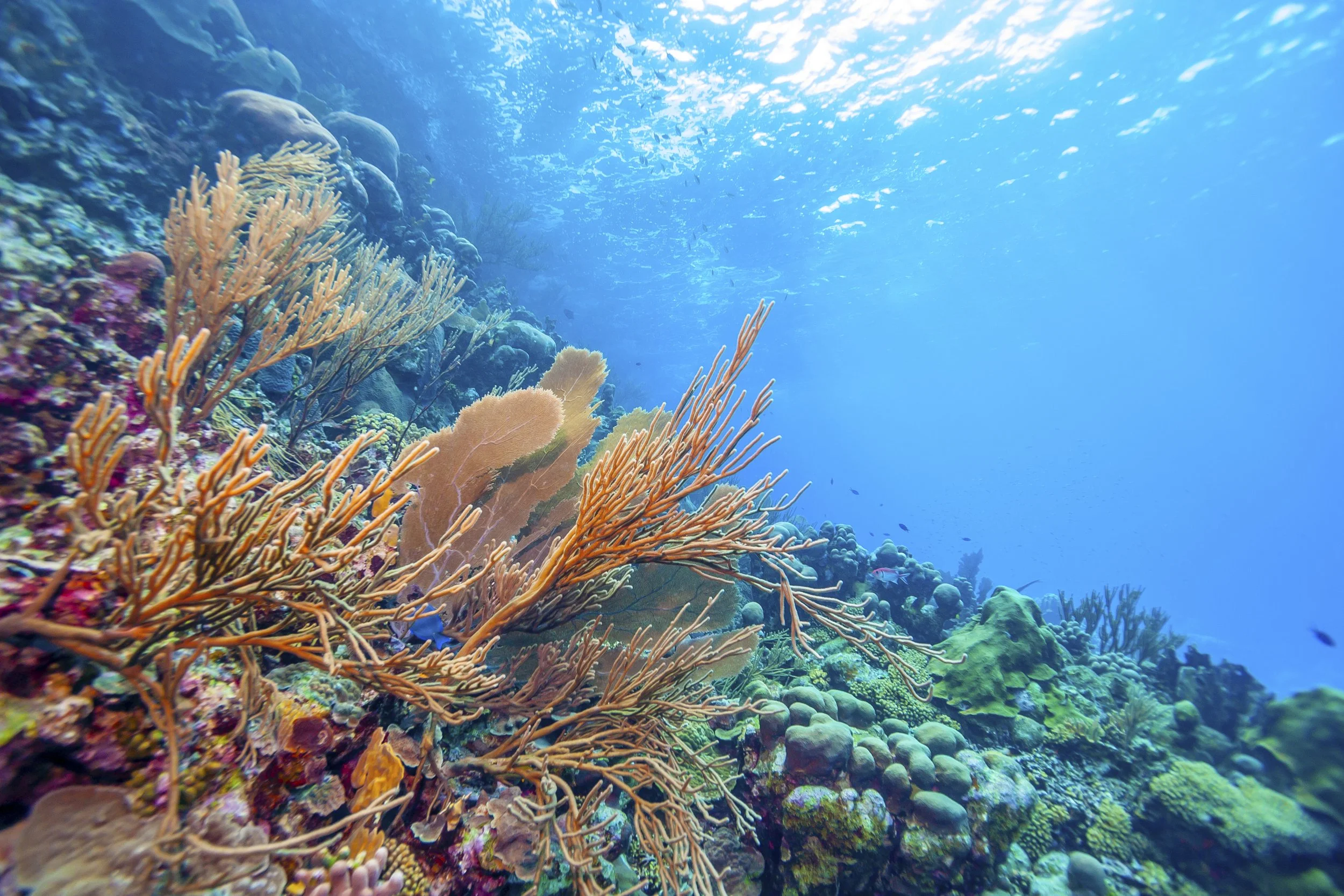
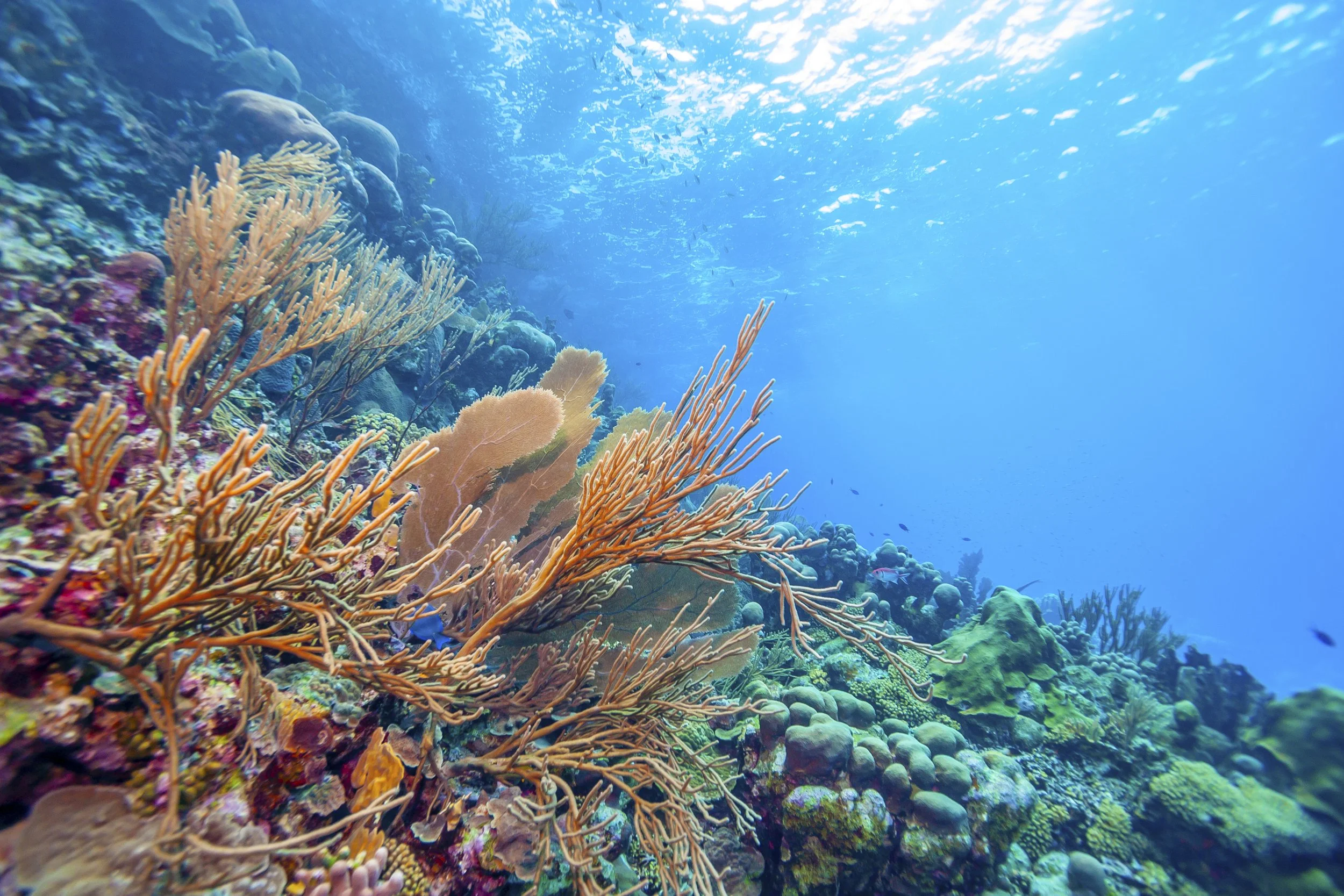
Bonaire earns its reputation with one thing done better than almost anywhere else in the Caribbean: shore diving. The entire western coast is a protected marine park, and dozens of marked dive sites sit steps from the road — no boat, no guide, no schedule. For travelers whose idea of a perfect morning is rolling out of a rental truck and dropping into sixty feet of visibility before breakfast, this island removes every barrier between you and the reef.
The light here is wide and constant — dry desert air, low scrub, and almost no clouds mean the water glows a hard turquoise against rocky shorelines and salt flats. Evenings in Kralendijk are slow: a handful of waterfront restaurants, cold Polar beer, and conversations that wind down early. The Dutch-Caribbean influence shows up in small, specific ways — tidy painted buildings, a matter-of-fact friendliness, and an island infrastructure that feels functional rather than charming. Flamingos wade the southern salt pans in loose pink clusters, and the wind — constant, warm, unrelenting — shapes every day on the island.
Unlike Curaçao's colorful streetscape or Aruba's resort-lined coast, Bonaire doesn't try to hold your attention above the waterline. The landscape is arid and flat, the nightlife barely registers, and the beaches are functional rather than postcard-ready. What it offers instead is a kind of stripped-down freedom: the island trusts you to entertain yourself, and if your idea of entertainment lives underwater, there is nowhere in the Caribbean more accommodating.
Best for travelers who build trips around diving and snorkeling, who value self-directed days and quiet evenings over social energy and variety, and who would rather trade resort polish for direct, unmediated access to one of the best-protected reefs in the Western Hemisphere. Bonaire is often recommended for experienced divers, eco-conscious travelers, and couples seeking a low-key water-focused retreat outside the typical Caribbean resort circuit.
This is Bonaire
This is Bonaire — where the light is hard and dry, the cacti outnumber the palm trees, and the whole island tilts toward the water like it knows what you came for.
Part of the Greater Caribbean Collection on TheTripThread — a destination reference system built for travelers deciding where they'll feel right, not just where to go. Bonaire is for travelers who value direct, unmediated access to the underwater world over everything else a Caribbean island typically offers.
Common Experience Patterns

Bonaire's daily rhythm runs on dive schedules and wind patterns, not resort programming. Most visitors rent a truck on arrival and spend mornings driving the western coast from one yellow-painted shore marker to the next, gear in the back, cooler on the passenger seat. The island is flat, dry, and small enough to loop in an hour — but without a vehicle, the trip stalls quickly, since almost nothing outside Kralendijk is walkable.
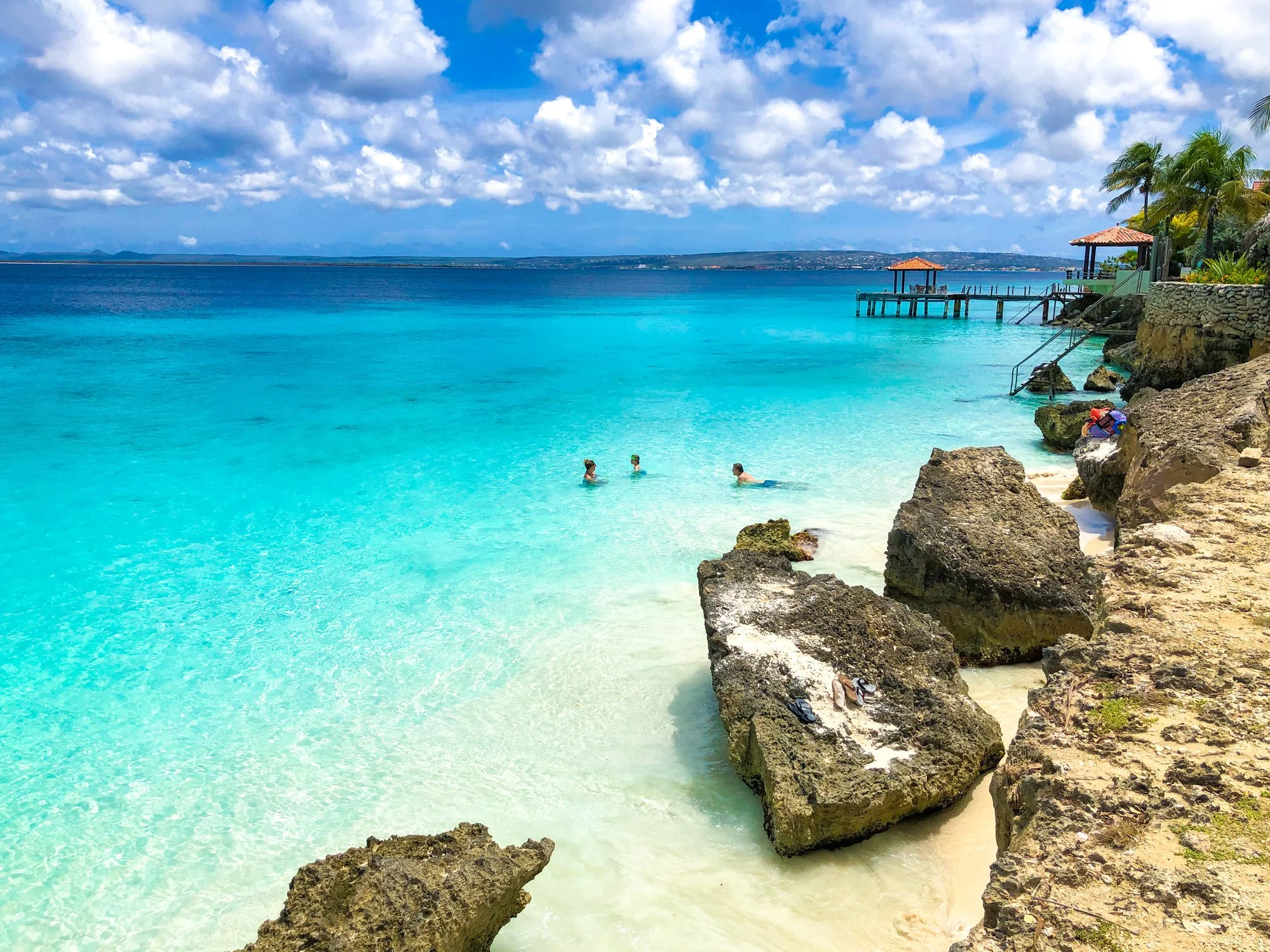
The water along the leeward coast glows a deep, constant turquoise — calm, clear, and accessible from dozens of marked shore entries that range from sandy walk-ins to coral ledges and iron ladders bolted into rock. Evenings gather slowly along Kralendijk's waterfront, where a short strip of restaurants fills by seven and empties by ten. The light stays warm and golden late into the afternoon, and the salt flats south of town catch pink clusters of flamingos against white mineral beds — one of the island's most-photographed scenes, visible from the road without stopping.
Bonaire is not the Caribbean of poolside cocktails and beach butlers. The sand is often coarse or absent entirely, replaced by coral rubble and ironshore that demand water shoes and a willingness to scramble. Wind is a daily factor — strongest from December through March — and it shapes which side of the island feels comfortable, which dive sites are accessible, and whether a day at Lac Bay is paradise for windsurfers or frustrating for everyone else. Visitors expecting the soft-entry, white-sand defaults of Aruba or Turks and Caicos recalibrate quickly here.
Locals Know — Shore-diving etiquette is also theft-prevention etiquette on Bonaire. Locals and repeat visitors consistently tell newcomers to leave nothing visible in their truck at dive sites. Also, the yellow-painted shoreline stones that mark dive entries are part of the island's navigation system, and learning them quickly is treated as a basic competency, not a suggestion.
What we love:
The freedom of Bonaire is specific — it is the freedom of pulling over, gearing up, and dropping into clear water whenever the mood strikes, with no boat schedule, no guide, and no other divers in sight. The island rewards self-sufficiency and punishes passivity in equal measure: travelers who arrive with a plan built around the water leave raving, and those who arrive expecting the island to entertain them leave underwhelmed. There is a deep quiet here that divers and nature lovers recognize immediately as the point.
Travelers consistently praise Bonaire's underwater access — the ease of self-guided shore diving, the health of the reef, and the absence of crowds at most sites. The island's low-key, no-pressure social atmosphere and the friendliness of residents come up repeatedly. What catches people off guard is how dry and desert-like the landscape is, how modest the beaches are compared to typical Caribbean expectations, and how strong the wind can be during winter months. Bonaire tends to delight divers, snorkelers, and nature-focused travelers who want peace and autonomy — and frustrate visitors who imagined soft sand, walkable streets, and things to do after sundown. Locals and repeat visitors alike describe Bonaire as the Caribbean stripped to essentials — reef, wind, quiet — especially for travelers who find their joy underwater, while those who prefer variety, nightlife, or a classic beach vacation tend to feel the island's limits within a few days.
Where we eat:
Dining on Bonaire is concentrated in Kralendijk, where a compact waterfront strip offers a mix of Dutch-Caribbean cooking, fresh seafood, and a handful of international options. Portions are generous, pricing is moderate by Caribbean standards, and reservations are rarely necessary outside of high season. The food truck scene — particularly near Coco Beach and along the waterfront — is where locals eat most casually and where visitors discover the best-value meals on the island.
Where we go:
Most visitors move by truck, following the coastal road south through the salt flats and national park or north toward Washington Slagbaai's rugged trails and secluded coves. Kralendijk is compact enough to walk for an evening out, but the rest of the island is spaced for driving. Lac Bay draws windsurfers and kayakers to the east side, and the mangrove channels offer a quieter alternative to the reef for visitors who want to stay on the water without going under it.
About this section:
This section is built from publicly shared traveler perspectives and credible regional reporting. We treat it as sentiment and cross-check factual claims where possible. We intentionally limit dependence on review marketplaces where paid, promotional, or otherwise unrepresentative input can blur the picture.
Identity
Vibe Descriptors
Rustic · Eco-minded · Laid-back · Arid · Free
……….
Core Audience
Divers, snorkelers, and nature-focused travelers who want direct reef access, zero pretension, and self-directed days — not a resort scene or curated entertainment.
……….
Best For (Trip Types)
Diving & Snorkeling · Nature & Wildlife · Adventure & Exploration · Sailing & Boating
……….
Known For
World-class shore diving from dozens of marked coastal entries, a fully protected marine park, reliable wind for kiteboarding and windsurfing, and a dry, low-rise island with a Dutch-Caribbean character that prioritizes conservation over tourism development.
……….
Trip Thread Theme(s)
Friction & Tradeoffs (Read This Before You Book)
Cost Pressure: Bonaire sits in the moderate range for the Caribbean — lodging and dining are reasonable, but dive gear rental, marine park tags, and truck rental add up quickly as non-optional costs. Travelers who don't already own gear will feel the daily surcharge more than those who pack their own. Groceries and imported goods carry an island markup, and eating out in Kralendijk every night will push a moderate budget toward the upper end.
Mobility / Getting Around: A rental truck is effectively mandatory — the island's dive sites, beaches, and national park are spread along a coastal loop with no meaningful public transport. Kralendijk itself is walkable for an evening out, but everything beyond town requires driving. The roads are well-maintained and flat, making navigation easy, and the island is small enough that no drive exceeds thirty minutes. Unlike Curaçao, where walkability and urban density soften the car dependence, Bonaire's car requirement is absolute.
Autonomy vs Structure: Bonaire is one of the most self-directed destinations in the collection. There are no resort activity desks shaping the day, no organized excursions dominating the calendar, and very few experiences that require advance booking. Travelers drive themselves to dive sites, choose their own schedule, and eat when they feel like it. This rewards self-sufficient travelers and frustrates those who prefer structure — if you don't plan your own days, the island won't do it for you.
Crowd Texture: Tourism saturation is low, and cruise ship traffic is occasional — far less than Aruba or Curaçao. Most visitors are repeat divers who know the island well, which gives the social atmosphere a quiet, familiar, almost neighborly quality rather than a tourist-facing energy. During winter months (December–March), the dive community swells modestly, but even peak season on Bonaire feels uncrowded by Caribbean standards.
Culture Access: Bonaire's Dutch-Caribbean identity is real but low-key — Papiamentu is the local language, Dutch is official, and English is widely spoken, so communication is easy. The cultural layer shows up in small ways: tidy painted buildings in Kralendijk, local food trucks, the Simadan harvest festival in spring, and the Dia di Rincon celebration. Unlike Curaçao's lively street culture and museum scene, Bonaire's cultural texture is quieter and more residential — visitors who want immersive cultural experiences will find the offerings thin.
Variety Ceiling: This is where Bonaire's limitations are most visible. The restaurant scene in Kralendijk is pleasant but compact — after four or five evenings, the rotation becomes familiar. Nightlife barely exists beyond a few waterfront bars that wind down early. Non-divers and non-snorkelers will feel the ceiling fastest: the island's above-water offerings — Washington Slagbaai National Park, the salt flats, flamingo watching, windsurfing at Lac Bay — are genuinely worthwhile but can be covered in two to three days. Travelers who need variety to stay engaged should plan shorter stays or accept that repetition is part of the rhythm here.
Sand & Sea Character
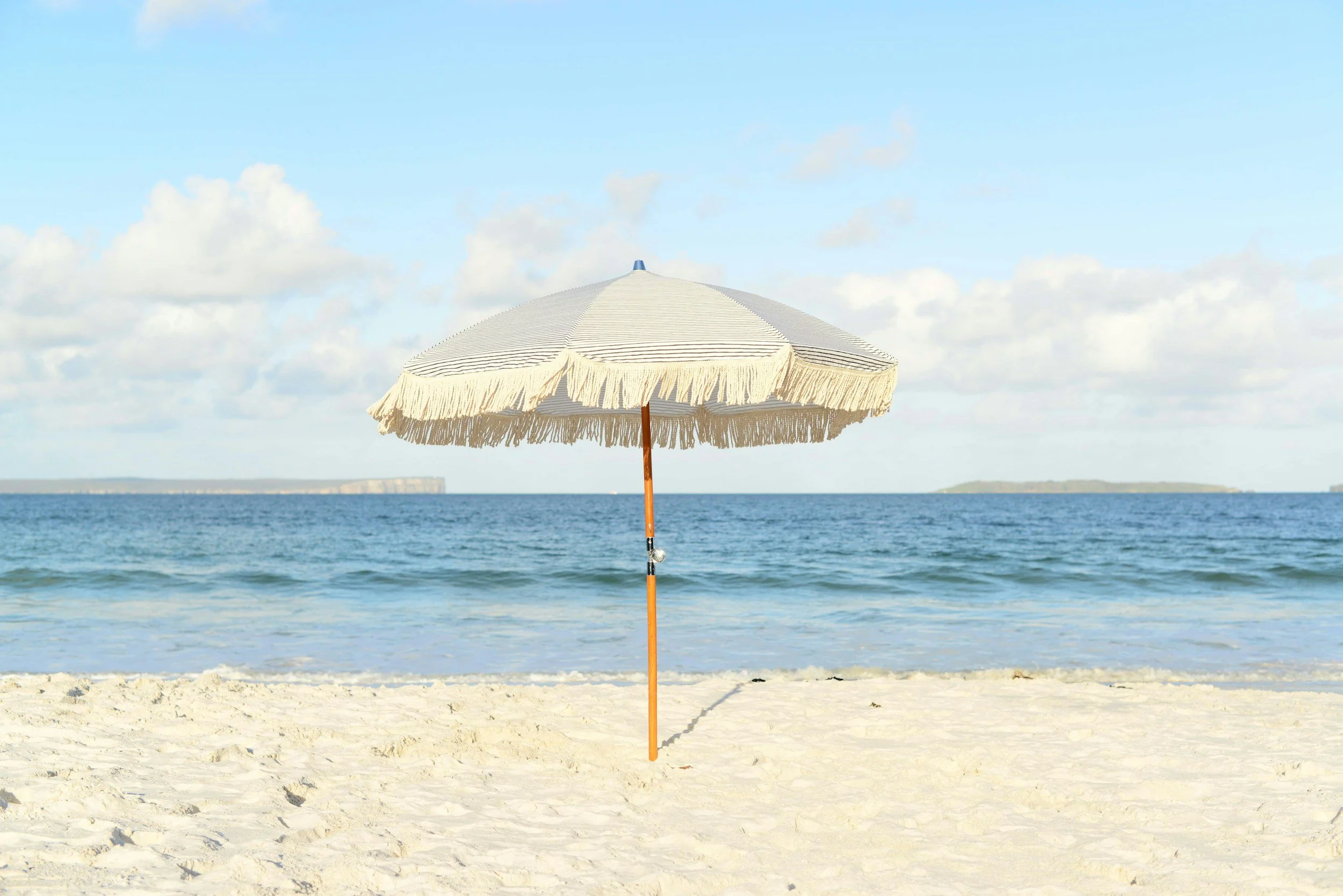
Bonaire's sand is not what most travelers picture when they imagine the Caribbean. The western leeward coast — where most diving happens — is dominated by coral rubble, ironshore ledges, and rocky entries rather than wide sandy stretches. Where sand does appear, it tends to be coarse, white, and coral-based, with a gritty texture underfoot that feels more like crushed shell than powder. Te Amo Beach and Eden Beach, near Kralendijk, offer the closest thing to a conventional beach day on the island — narrow strips of white sand with calm, wadeable water and easy access to town. Sorobon Beach on the east side at Lac Bay is the softer exception: a shallow, mangrove-backed lagoon with finer sand and warm knee-deep water that draws windsurfers and families. For travelers who want a classic sandy base, Kralendijk's southern hotel strip near Eden Beach provides the most comfortable setup; for wind-sport access and calmer wading, base near Lac Bay on the east coast.
Water clarity on Bonaire is exceptional — consistently among the best in the Caribbean, with visibility routinely reaching 80 to 100 feet along the protected leeward coast. The marine park's strict conservation rules (no anchoring, no coral contact, reef-safe sunscreen enforced) keep conditions remarkably stable. Clarity diminishes slightly on the windward east coast, where wave action and runoff near mangrove areas reduce visibility, and at Lac Bay, where the shallow sandy bottom can cloud with wind churn. Water color along the west coast reads as deep turquoise to cobalt over reef structure, brightening to pale aquamarine in shallow sandy pockets — the darker tones reflect depth and coral seabed, not poor clarity. The leeward side is calm nearly year-round, making it ideal for shore-entry diving and relaxed snorkeling; the east coast is windier and choppier, suited to kiteboarding and windsurfing rather than casual swimming. Surf is essentially nonexistent — Bonaire scores a 1 for wave activity. Travelers chasing bright turquoise water and easy swimming should base along the western coast near Kralendijk; snorkel and dive purists will find the best reef access from the central and southern leeward shore entries; and wind-sport travelers should head to Lac Bay, where the shallow lagoon and consistent trade winds create one of the Caribbean's most reliable kiteboarding and windsurfing venues.
Explore Bonaire — Map & Highlights
Bonaire sits in the southern Caribbean, east of Curaçao and north of Venezuela — a flat, arid island ringed by one of the most accessible reef systems in the Western Hemisphere. Exploring here means driving — a slow loop along the leeward coast, pulling over at yellow-painted stones that mark shore-diving entries, then circling north into the desert terrain of Washington Slagbaai National Park or east toward the wind-driven shallows of Lac Bay. The rhythm is repetitive by design: same coastline, different entry, new reef. Unlike island-hopping destinations or resort-anchored trips where the hotel organizes the day, Bonaire asks travelers to build their own routes and return to sites that reward familiarity. This map is intentionally curated — it is not a checklist to conquer and not meant to capture every dive site, beach, or roadside pulloff on the island.
Beaches
Bonaire's coastline is built for water access, not beach lounging. The western leeward side offers calm entries with turquoise water over reef — but most are rocky or coral-lined, not sandy. Te Amo Beach and Eden Beach near Kralendijk provide the gentlest sandy entries; Sorobon Beach at Lac Bay is the island's best wading and wind-sport beach. The north coast inside Washington Slagbaai is dramatic and remote — beautiful for photography, less comfortable for swimming. Base near Kralendijk for the easiest beach access, or near Lac Bay for shallow water and wind sports.
Food & Drink
Dining on Bonaire is concentrated almost entirely in Kralendijk, where a walkable waterfront strip runs from the cruise terminal area south past a handful of seafood restaurants, Dutch-Caribbean kitchens, and casual spots. Food trucks near Coco Beach and along the main road offer the island's most affordable and locally authentic meals. Outside of town, dining options are extremely sparse — Lac Bay has one or two waterfront stops, and northern areas have essentially nothing. Food-driven travelers should base in or very near Kralendijk; there is no secondary dining district.
Activities
Activity planning on Bonaire revolves around two things: the reef and the wind. The leeward coast's dozens of marked dive sites are the primary draw, and most are self-service — park, gear up, enter. Washington Slagbaai National Park offers hiking, birding, and rugged coastal scenery on the northern tip. Lac Bay anchors the wind-sport scene with kiteboarding and windsurfing in a shallow, protected lagoon. The salt flats and flamingo reserves in the south are a scenic drive, not a full-day activity. Highly active travelers should base near Kralendijk for maximum dive-site access, with day trips east and north.
Where to Stay in Bonaire
Bonaire is a small island, but where you base yourself meaningfully shapes the trip — particularly how easily you access dive sites, whether you can walk to dinner, and how much driving fills your day. Options range from Kralendijk's walkable waterfront to quiet northern villas, a southern dive-access strip near the airport, and the wind-driven shores of the east coast. Below, The Trip Thread has listed the best areas to stay in Bonaire — each offering a different balance of privacy, scenery, and local character. Each area is located on the above map for easy exploration.
Kralendijk Town Center — Bonaire's Walkable Social Anchor
Kralendijk is Bonaire's compact, colorful capital and the only place on the island where you can walk to dinner, a bar, or a grocery store after dark. Kaya Grandi and the waterfront strip are lined with restaurants, galleries, dive shops, and a low-key evening energy that suits travelers who want some social texture alongside their dive days. Accommodations here lean toward small hotels, boutique stays, and apartments rather than sprawling resorts. Staying here means trading beachfront quiet and immediate sandy shore access for the convenience of having everything within a few blocks — the strongest base for first-time visitors and solo travelers.
Why stay: Walkable access to all of Bonaire's dining, nightlife, and services — the easiest base for travelers who don't want to drive for every meal.
Why not: Less resort atmosphere, less privacy, and not the strongest step-out-to-sandy-beach feel.
~~~~~
North Kralendijk / Hato — Dive-Stay Corridor with Easy Town Access
The leeward coast just north of downtown — from Eden Beach and Harbour Village through Hato's oceanfront rentals and small resorts — is where Bonaire's classic dive-stay experience takes shape. Many of the island's well-known dive-friendly properties cluster here, with shore access and the reef within walking distance of most accommodations. Kralendijk is a short drive or even a walkable stretch south, giving this zone a practical balance: calmer and more oceanfront than downtown, but close enough that dinner doesn't require a major outing. The area suits divers and couples who want waterfront mornings and easy evening access without full isolation.
Why stay: Calm oceanfront base with strong shore-diving access and Kralendijk close enough for evening convenience.
Why not: Not as walkably urban as downtown — you'll likely drive for dining and errands most nights.
~~~~~
Sabadeco — Quiet Villas and Northern Reef Access
North of Hato, about ten minutes from Kralendijk, the coast rises and gets rockier as it stretches toward Washington Slagbaai. Sabadeco is overwhelmingly villas and holiday homes rather than resorts — upscale, residential, and quiet. Dive sites along this stretch include some of the island's best, and the setting rewards travelers who want space, views, and solitude above all else. This area suits repeat visitors and experienced divers who know the island well enough to trade every town amenity for privacy and premium reef access.
Why stay: Quiet, spacious, and directly adjacent to some of Bonaire's best northern shore-diving entries.
Why not: Least walkable, least restaurant-accessible — every evening requires a drive, and the coast is rocky rather than sandy.
~~~~~
Belnem / South Kralendijk — Southern Dive Access Near the Airport
South of town and beyond the airport, Belnem is a low-rise coastal strip with a strong mix of boutique resorts, self-catering apartments, and oceanfront villas. Te Amo Beach and Bachelor's Beach are nearby, and southern dive sites are easily reached. The feel is practical and quiet — good for travelers who want waterfront calm without being far from Kralendijk, which sits about five minutes north. First-time visitors and families often land here, drawn by the proximity to the airport and the range of accommodation styles.
Why stay: Waterfront quiet with strong southern dive-site access, easy airport proximity, and Kralendijk a short drive north.
Why not: Not walkable to town — you'll drive for restaurants and nightlife — and the coastline favors water access over broad sandy beaches.
~~~~~
Lac Bay / Sorobon — Wind, Shallow Water, and East-Coast Seclusion
Lac Bay is a different Bonaire — a warm, knee-deep lagoon on the east coast about fifteen minutes from Kralendijk, where windsurfers and kiteboarders outnumber divers. Sorobon Beach is the softest, most family-friendly sand on the island, and the mangrove-backed setting feels distinctly removed from the leeward dive circuit. Accommodations are limited — Sorobon Luxury Beach Resort is the primary option directly on the lagoon, with a handful of small stays nearby. The trade-off is real: west-coast reef, groceries, and Kralendijk's restaurants all require a drive.
Why stay: Bonaire's best wind-sport access, shallowest wading water, and most secluded coastal feel.
Why not: Far from the leeward dive sites, groceries, and Kralendijk's dining — evenings are isolated and options are thin.
Practical Snapshot
-
Bonaire sits outside the hurricane belt, which makes it one of the safest year-round destinations in the Caribbean. February through June offers the calmest seas and lightest winds — ideal for diving and snorkeling. December through March brings stronger trade winds, which is peak season for windsurfers and kiteboarders but can make some leeward dive entries choppier. There's no true off-season here, and rain is rare — this is a desert island. Shoulder months like November and early December offer good conditions with thinner crowds.
-
The official currency is the US dollar, which replaced the Netherlands Antillean guilder in 2011 when Bonaire became a special municipality of the Netherlands. Credit cards are accepted at most restaurants, dive shops, and hotels in Kralendijk, though some food trucks and smaller vendors are cash-only. There's no need to exchange currency if you're coming from the US.
-
Papiamentu is the heart language of Bonaire — a Creole blend of Portuguese, Spanish, Dutch, and African languages that you'll hear in shops, on the radio, and between residents. Dutch is the official administrative language, and English is widely understood, especially in tourist-facing settings. Spanish is also common. Visitors won't struggle to communicate, but learning a few Papiamentu greetings — "Bon dia" (good morning), "Masha danki" (thank you) — goes a long way.
-
Flamingo International Airport (BON) is Bonaire's only airport, located just south of Kralendijk. Direct flights from the US run from Miami (American Airlines, up to four times weekly), Houston (United, year-round), Newark (United, seasonal March–August), and Atlanta (Delta). From Europe, KLM flies direct from Amsterdam in about nine and a half hours. Connections are also available via Curaçao and Aruba. JetBlue discontinued Bonaire service in January 2026. From the airport, most hotels and rentals are a 5–15 minute drive.
-
Bonaire is moderate by Caribbean standards — not budget, not luxury. The daily cost driver is your rental truck and dive gear, which together can run more than your lodging if you don't bring your own equipment. Local lunches from food trucks = , a waterfront dinner in Kralendijk = $ , a week-long villa with shore access = $$–$$$. Groceries carry an island markup, and dining options are limited enough that you won't overspend — but you also won't find many cheap alternatives.
-
Nightlife on Bonaire is minimal and early. A handful of waterfront bars in Kralendijk pick up around sunset, and a few spots near the harbour stay social on weekend evenings — but most things wind down by ten or eleven. The energy is conversational, not musical or club-driven. If your trip requires after-dark entertainment, Bonaire will feel very quiet. The island's social life happens during the day, around dive sites and beach bars, not after sundown.
-
A rental vehicle — ideally a truck or SUV — is essential. Bonaire has no public bus system for visitors, and taxis are limited and expensive for daily use. The island is small and flat, roads are well-maintained, and driving is straightforward — nothing takes more than thirty minutes. Kralendijk is walkable for an evening out, but every dive site, beach, and activity outside town requires driving. Rent on arrival and plan to use it every day.
-
Bonaire is one of the safest islands in the Caribbean. Violent crime is rare, and the island has a calm, low-pressure atmosphere that most visitors notice immediately. The main practical caution is theft from vehicles at dive sites — leave nothing visible in your truck when you're in the water. Roads are generally safe, though some unpaved tracks in Washington Slagbaai require care.
For solo travelers, Bonaire is straightforward — the dive community is welcoming, Kralendijk is easy to navigate alone, and the island's small size means you're never far from help. The main consideration is that the trip is very self-directed, so solo visitors who prefer structured social settings may find it quiet.
For LGBTQ+ travelers, Bonaire is one of the most legally protected destinations in the Caribbean. Same-sex marriage has been legal since 2012 under Dutch law, and discrimination based on sexual orientation is prohibited. There's no dedicated LGBTQ+ scene or venues, but the island is broadly welcoming and tolerant. Sorobon Beach at Lac Bay has a known gay-friendly area. No discretion is required for tourists, and anti-gay discrimination is rarely reported.
-
Tap water on Bonaire is desalinated and safe to drink. The island runs on 127V/50Hz (same plug type as the US, but voltage differs — most modern electronics handle this fine). Reef-safe sunscreen is not a suggestion — oxybenzone and octinoxate are specifically prohibited, and this is enforced. Sundays are quiet; many shops and some restaurants close. Bring a windbreaker or light layer — the trade winds can make evenings cooler than expected, especially December through March.
-
Bonaire's reef is its primary asset, and the island treats it that way. The entire coastline is a protected marine park — the Bonaire National Marine Park, established in 1979, was one of the first of its kind in the Caribbean. Divers and snorkelers pay a mandatory nature tag fee that funds reef monitoring and enforcement. Anchoring is prohibited; mooring buoys are used instead. The reef-safe sunscreen ban is one of the strictest in the region. Washington Slagbaai National Park protects the island's northern wilderness, and the flamingo reserves in the south are a functioning conservation zone, not a tourist attraction — approach distances are enforced.
Compare Similar Caribbean Destinations
Thinking about Bonaire, Cozumel, or Curaçao? Here’s how these greater Caribbean destinations differ in rhythm and culture.
BONAIRE
Vibe & Energy: Dry, windswept, and deeply quiet — Bonaire moves at the pace of a shore-diving morning and a waterfront dinner.
Dining & Culture: Dutch-Caribbean cooking concentrated in a single compact waterfront strip; food trucks carry the local flavor. The cultural layer is residential and subtle, not performative.
Cost & Crowds: Moderate costs, low tourism saturation, and almost no cruise impact — one of the least crowded islands in the collection.
Accessibility: Direct flights from Miami, Houston, Atlanta, and Amsterdam; connections via Curaçao and Aruba. Rental truck required from arrival.
Nightlife / Social Scene: Nearly nonexistent — a few harbour bars that wind down by ten. The social life happens during the day, around dive sites.
Best For: Self-directed divers and snorkelers who want world-class reef access with zero pretension and zero distraction.
COZUMEL
Vibe & Energy: Warmer and more social than Bonaire, with a lively town center that balances Mexican hospitality and dive culture.
Dining & Culture: Stronger food variety and deeper culinary identity — taquerias, mariscos, and a town square that feels genuinely lived-in. Mexican flavor gives dining more range than either Dutch Caribbean island.
Cost & Crowds: More affordable than both Bonaire and Curaçao, but heavy cruise ship traffic reshapes the western waterfront daily. The east coast and San Miguel's back streets stay quieter.
Accessibility: The easiest to reach of the three — short ferry from Playa del Carmen or direct flights. No rental car required if staying near San Miguel.
Nightlife / Social Scene: Moderate and town-centered — bars, live music, and a social energy that Bonaire doesn't have, though quieter than Curaçao's full evening scene.
Best For: Divers who want the other premier Caribbean reef experience — famous drift diving with guides and boats, plus a real town with food, culture, and social warmth around the edges.
CURACAO
More vibrant and urban-leaning than Bonaire, with Willemstad's pastel UNESCO waterfront giving the island a cultural pulse that extends well beyond the water.
Dining & Culture: Significantly deeper food scene and stronger cultural identity — street art, galleries, multilingual energy, and a dining range that moves from local snèk bars to polished restaurants.
Cost & Crowds: Slightly higher costs and more cruise ship presence than Bonaire, though still moderate by Caribbean standards. Tourism saturation is medium — busier, but not overwhelming.
Accessibility: Easier to reach, with more direct flight options from the US, Europe, and South America. A rental car is recommended but the island is more walkable in its main areas.
Nightlife / Social Scene: The strongest of the three by a wide margin — Willemstad has bars, clubs, and a genuine evening culture that Bonaire and Cozumel can't match.
Best For: Travelers who want Bonaire's shore-diving freedom plus a real city to explore, dine in, and stay out after dark — the "Bonaire, but with more topside life" option.
Pick Bonaire if: you want the best self-guided shore diving in the Caribbean with the fewest distractions above water.
Pick Curaçao if: you want the same Dutch Caribbean diving freedom plus a real city, nightlife, and cultural depth on land.
Pick Cozumel if: you want world-class drift diving on a budget with Mexican food, easier access, and more social energy.
Tie-breaker: how much the island needs to give you beyond the reef — Bonaire gives you almost nothing else, and for the right traveler, that's exactly the point.
Local Truths
Shore-diving etiquette on Bonaire doubles as theft prevention. Locals and repeat visitors consistently warn newcomers to leave nothing visible in their truck at dive sites — not a towel, not a bag, not a water bottle. Vehicle break-ins at remote shore entries are the island's most common petty crime, and divers who leave gear in plain sight learn this the hard way.
~~~~~
The yellow-painted shoreline stones are not decoration. They mark Bonaire's numbered shore-diving entry sites, and learning the system quickly is treated as a basic competency by locals and dive operators. Visitors who rent a truck and head for the coast without understanding the markers miss sites and waste time.
~~~~~
Reef-safe sunscreen is a real rule here, not a wellness suggestion. Oxybenzone and octinoxate are specifically prohibited, and enforcement is not theoretical — dive operators check, and fellow divers will say something. The reef is the island's primary economic and ecological asset, and residents treat its protection as non-negotiable.
~~~~~
Visitors who expect soft sandy beach entries get corrected fast. On Bonaire, "great water" often means coral rubble, ironshore ledges, or ladder-and-rock entries rather than walk-in sand. Water shoes are not optional at most sites, and the gap between underwater excellence and underfoot comfort surprises first-timers more than almost anything else.
~~~~~
The wind is part of daily reality on Bonaire, not bad luck with the weather. Trade winds shape driving, water entry, dive-site selection, and the feel of the island more than many first-time visitors expect. December through March is the windiest period, and it affects which coast is comfortable, whether Lac Bay is usable, and how exposed the northern dive sites feel.
~~~~~
Bonaire's Carnival runs from January into February, ending the night before Lent — not during the traditional February-only window many visitors assume. The Simadan harvest season stretches from February through late April, culminating in Dia di Rincon on April 30. Visitors who time their trip around these events see a side of the island that the dive-focused majority misses entirely.
~~~~~
The island runs on its own quiet Sunday rhythm. Many shops close, some restaurants reduce hours, and the already-slow pace drops another gear. Visitors who plan to stock up on groceries or run errands on Sunday find limited options — particularly outside Kralendijk.
~~~~~
Bonaire is a special municipality of the Netherlands, not an independent country. The US dollar is the official currency (since 2011), Dutch law applies, and same-sex marriage has been legal since 2012. Visitors sometimes arrive expecting a more Caribbean-typical legal and cultural framework and are surprised by the Dutch institutional overlay — from road signage to consumer protection to the matter-of-fact social tolerance.

Bonaire Travel Questions, Answered
Here's what most travelers want to know before planning a trip to Bonaire.
1. Is Bonaire expensive?
Bonaire is moderate by Caribbean standards — not a budget destination, but well below the cost tier of places like St. Barts or Anguilla. Lodging and dining are reasonable, and the island's limited restaurant scene naturally caps evening spending. Where costs add up is in the non-optional daily expenses: a rental truck, dive gear rental if you don't bring your own, and the mandatory marine park tag. Travelers who own their gear and cook some meals at their rental will find Bonaire very manageable.
2. When's the best time to visit Bonaire?
Bonaire sits outside the hurricane belt, so there's no true off-season for weather. February through June is the sweet spot — calm seas, lighter winds, and ideal diving conditions. December through March brings stronger trade winds, which is peak season for windsurfers and kiteboarders but can make some dive entries choppier. Rain is rare year-round. Shoulder months like November offer good conditions with fewer visitors and slightly lower prices.
3. Which area or coast should I stay on in Bonaire?
It depends on what drives your trip. Kralendijk is the only walkable base with restaurants and services. North Kralendijk and Hato suit divers who want oceanfront calm with easy town access. Sabadeco is quieter and more villa-heavy, best for repeat visitors who want solitude and northern reef access. Belnem, south of the airport, offers a practical mix of resorts and dive-site proximity. Lac Bay on the east coast is the wind-sport hub — secluded and lagoon-focused, but far from everything else.
4. Do I need a car on Bonaire?
Yes — a rental truck or SUV is essential. Bonaire has no visitor-facing public transport, taxis are limited and impractical for daily use, and every dive site, beach, and activity outside Kralendijk requires driving. The island is small and flat, roads are well-maintained, and nothing takes more than thirty minutes. Most visitors rent on arrival at the airport and use their vehicle every day for the duration of the trip.
5. Is Bonaire safe for solo or LGBTQ+ travelers?
For solo travelers, Bonaire is one of the easiest Caribbean islands to navigate alone. The dive community is welcoming, Kralendijk is compact and calm, and violent crime is rare. The main practical consideration is that the trip is entirely self-directed — solo visitors who prefer structured social settings may find the island quiet, but those comfortable building their own days will feel at home.
For LGBTQ+ travelers, Bonaire offers some of the strongest legal protections in the Caribbean. Same-sex marriage has been legal since 2012 under Dutch law, and discrimination based on sexual orientation is prohibited. There are no dedicated LGBTQ+ venues, but the island is broadly tolerant and no discretion is required. Sorobon Beach at Lac Bay has a known gay-friendly area.
6. How does Bonaire compare to nearby islands?
Bonaire is most often compared to Curaçao and Cozumel. Curaçao offers the same Dutch Caribbean shore-diving freedom but with significantly more nightlife, dining, and cultural depth on land — it's the choice for travelers who want reef access plus a real city. Cozumel is the other premier Caribbean dive destination, but its experience is built around guided boat-based drift diving rather than Bonaire's self-directed shore entries, and it comes with heavier cruise traffic and more social energy. Bonaire is the quietest and most single-purpose of the three.
Why This Guide Changes With the Island
Bonaire never stays still — dive sites shift in character after storms, food trucks appear and relocate along the waterfront, and the wind patterns that shape each season rewrite the best-entry list for shore divers year to year. This guide evolves with it. Locals share updates, travelers add discoveries, and we keep refining what you see here so every detail reflects the island as it is now — not a memory of what it used to be.
Find Your Thread
Every traveler connects differently. Maybe Bonaire is your match — maybe you'll find your rhythm somewhere else in the Greater Caribbean. Either way, this is what The Trip Thread is about: rediscovering the joy of travel, and the element of discovery that should accompany it. Explore more islands across the Greater Caribbean Collection and see where your travel vibe leads through TheTripThread.Guided by locals. Designed for discovery.