By Kelly McAtee | TheTripThread | Last Updated March 2026
Antigua
Where sailing culture and beach variety meet — refined days, warm nights, and calm water.
Tranquil Luxury | Romance & Connection | Sail & Sea Life | Culinary Caribbean | Adventure & Nature
Best for travelers who plan their days around bays and boats, drawn to English Harbour sailing culture and beach variety over mega-resort sameness or club-driven nightlife.
Not for travelers who want walk-everywhere nightlife, big-city energy, or late-night club culture instead of early swims, sunsets, and harbor evenings.
☀️ Best months: Dec–Apr 💲 Average cost: $$–$$$ 🕶️ Vibe: Refined & social-calm
Reality Check (Read This Before You Book)
Antigua is a driver-and-daytrips island. Without a rental car, the experience shrinks considerably — the best beaches, dining, and scenery are spread across multiple coasts and don't connect on foot or by reliable transit.
The biggest misconception: travelers expect a walkable, all-day destination town. What Antigua actually delivers is a collection of distinct coastal pockets — each with its own mood — that reward exploration but require planning and wheels.
A few things worth knowing before you commit:
If you need nightlife on demand or a walkable bar strip at the end of every evening, Antigua doesn't have that outside of the English Harbour zone — and even there, it winds down early.
If you expect resort-beach access to equal the island's best beaches, it often doesn't. Antigua's most celebrated stretches require deliberate driving, not a short walk from your room.
If budget is a primary concern, Antigua runs expensive — especially outside all-inclusive packages. Food, transport, and lodging costs stack up faster here than on many comparable islands.
If cruise-port Caribbean is what you picture, the St. John's waterfront on heavy ship days can feel exactly like that — congested and commercial. The real island is 20 minutes in any direction.
Travelers who find Antigua frustrating usually wanted something more self-contained and walkable. Those who love it came ready to drive, curate, and let the day find its own shape.
Why You’ll Love It
Antigua works because it doesn't ask much of you. The water is calm enough to wade into without thinking, the beaches are varied enough to keep a week interesting, and the locals are warm in a way that feels natural rather than performed. For travelers who want a classic Caribbean experience — turquoise bays, soft sand, easy days — the island delivers it without the crowds or pretense that often come with it.
Days here have a particular texture. Mornings open with still, pale water and a slow start; afternoons drift between coasts as the light shifts from turquoise to gold. The sailing culture around English Harbour and Falmouth gives evenings a social undercurrent — harbor bars, sunset viewpoints, boats swaying at anchor — without tipping into nightlife territory. Even the most-visited spots like Half Moon Bay and Shirley Heights feel personal rather than overrun once you're there.
What Antigua isn't is a self-contained, walk-everywhere resort island. Unlike destinations where the experience comes packaged and delivered, here it depends on how willing you are to drive between coasts, choose your beaches deliberately, and let the days build at their own pace. Travelers who arrive expecting constant activity or a buzzing town center tend to be disappointed; those who come ready to slow down and self-direct tend not to want to leave.
Best for travelers who find their rhythm in calm water and beach variety, who prefer a genuine sense of place over manufactured resort ease. Antigua is frequently recommended for couples, first-time Caribbean visitors, and sailors seeking a relaxed base with strong local character and water that earns its reputation.
Antigua — Caribbean Island of Sailing, Elegance, and 365 Beaches
This is Antigua
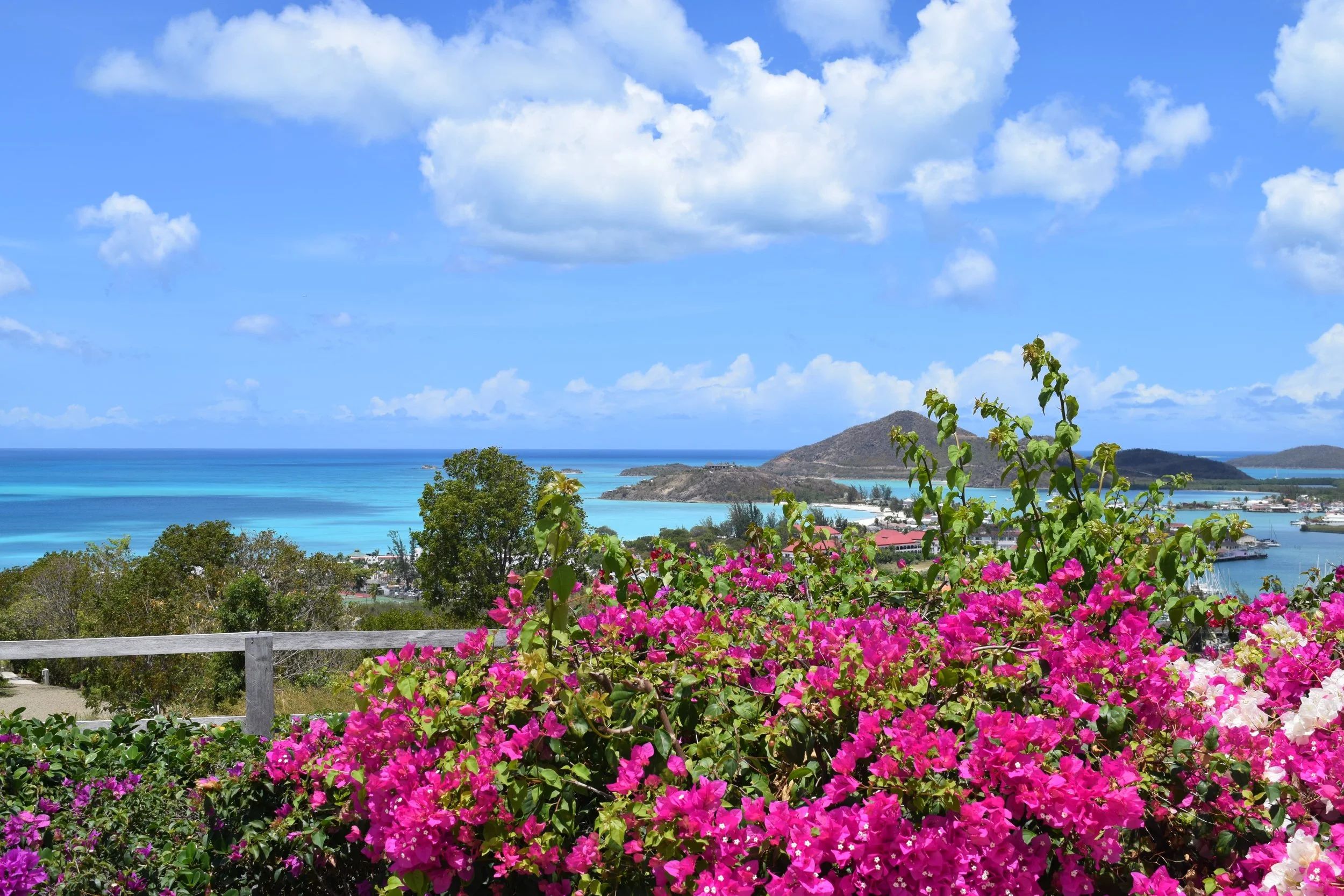
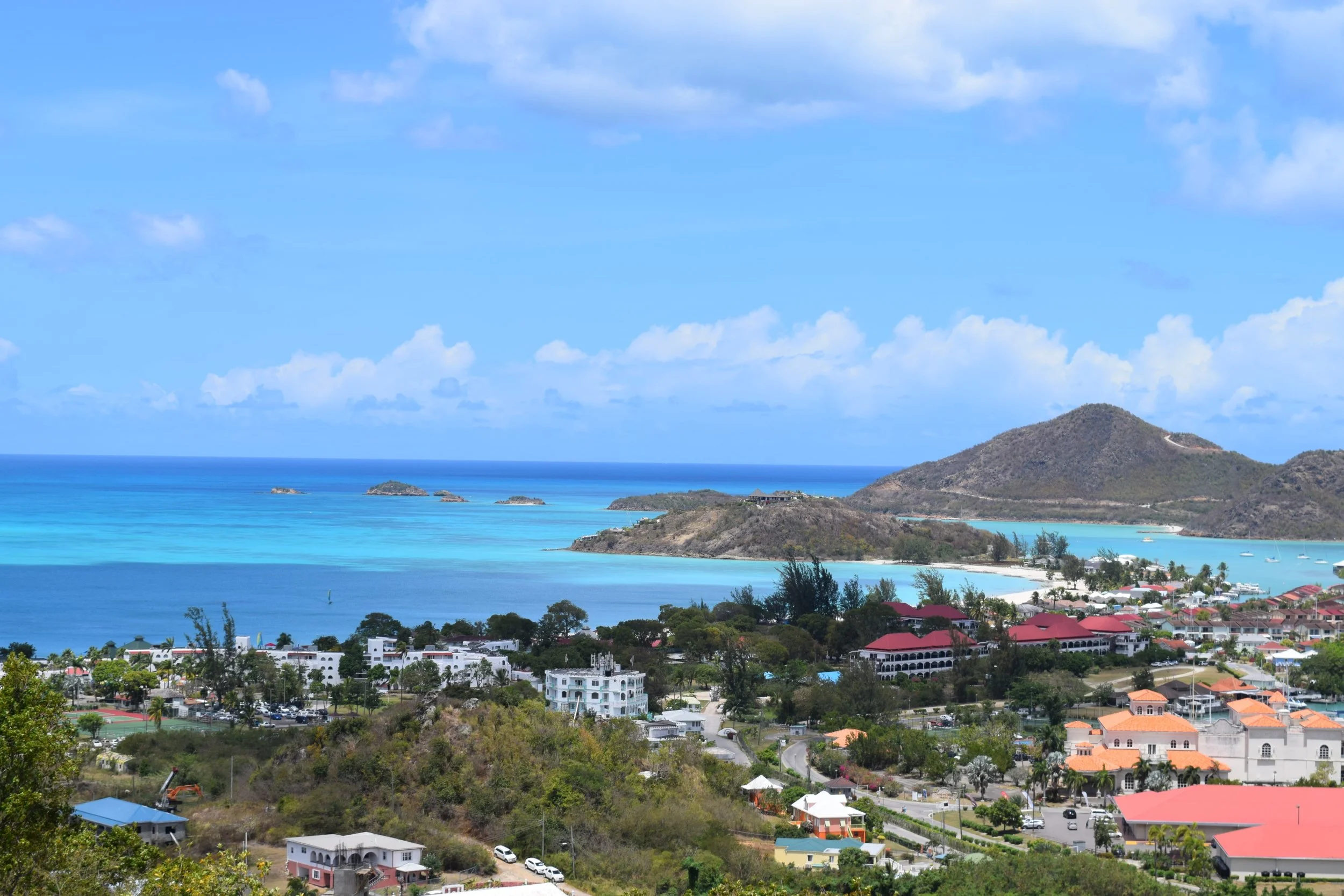
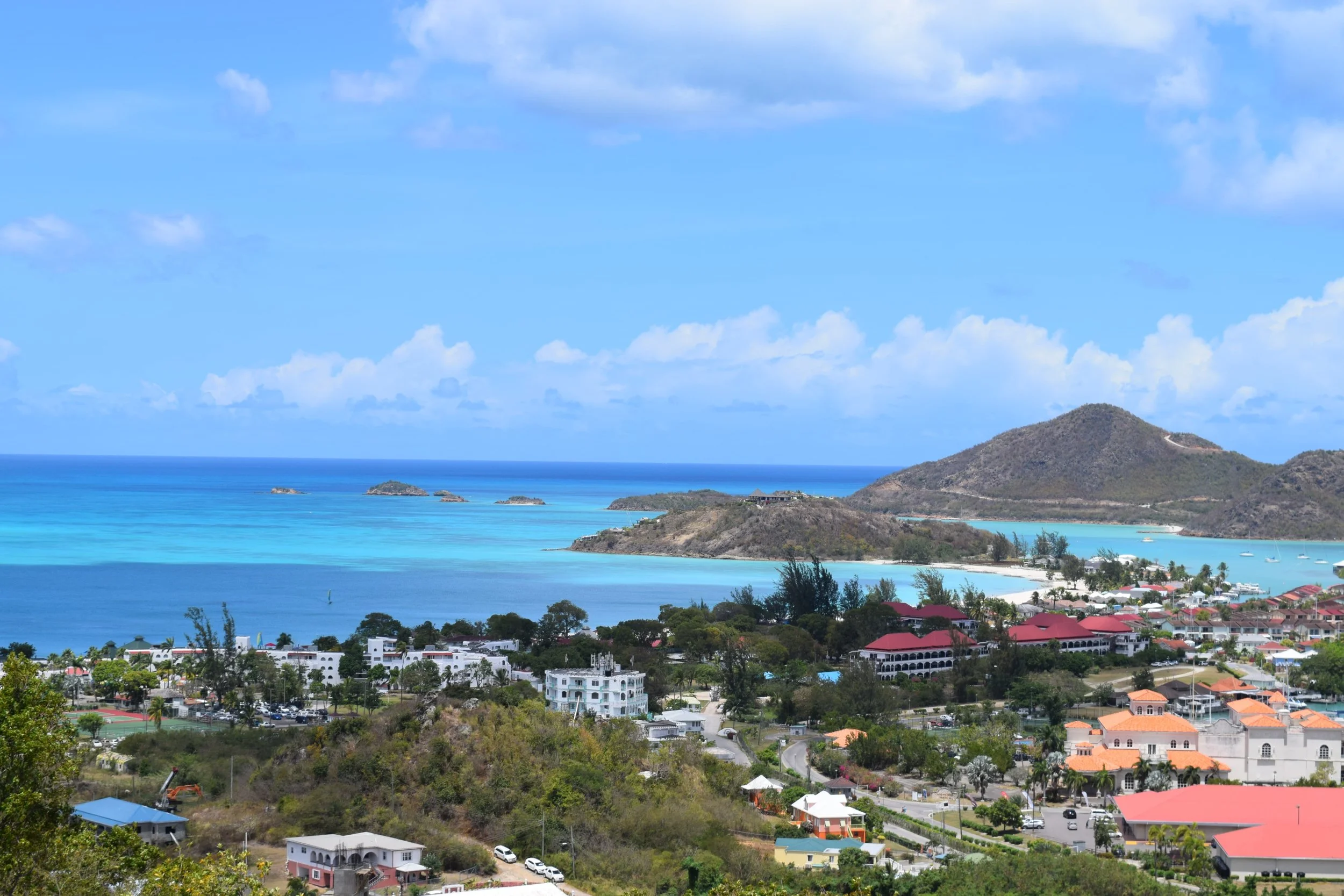
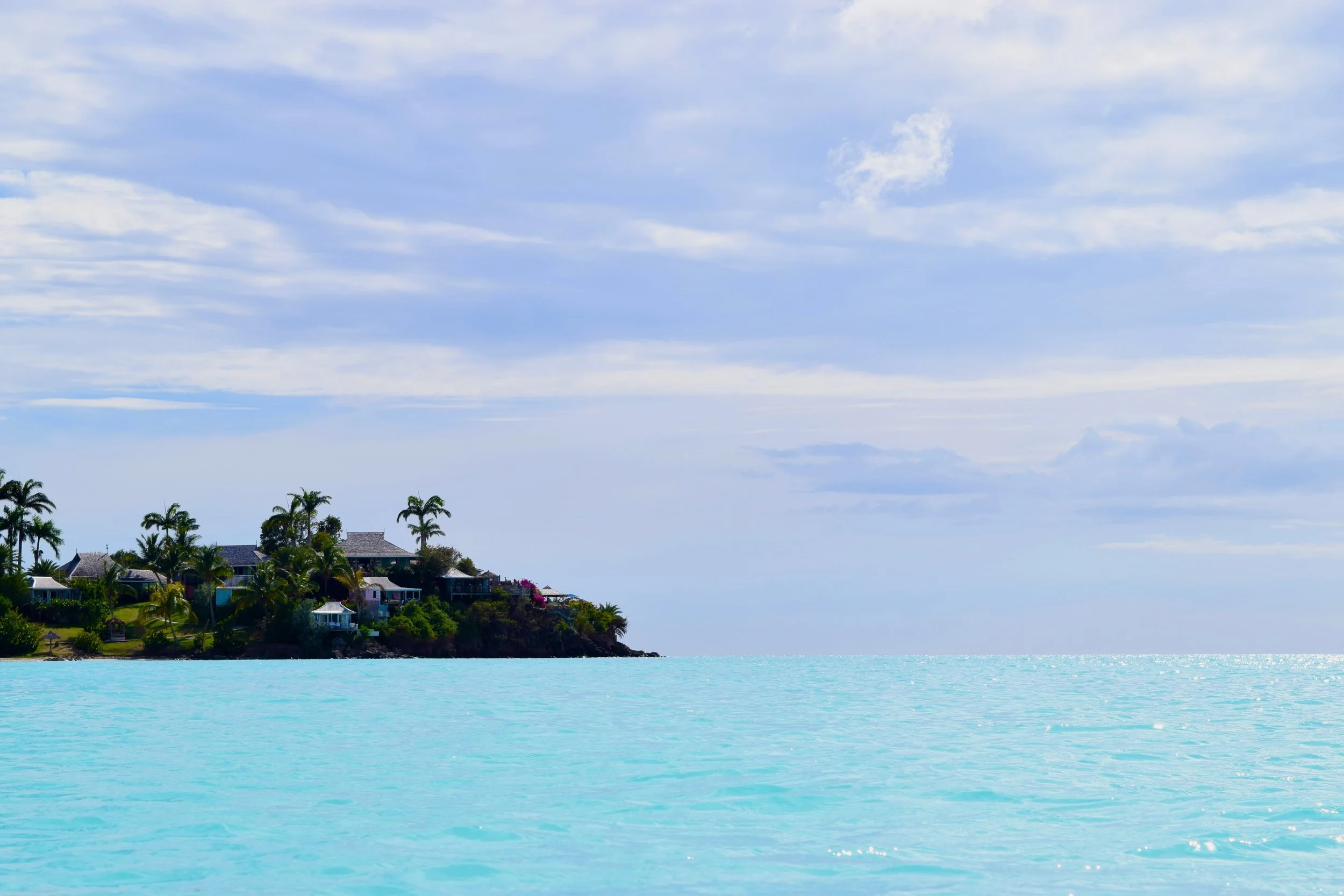
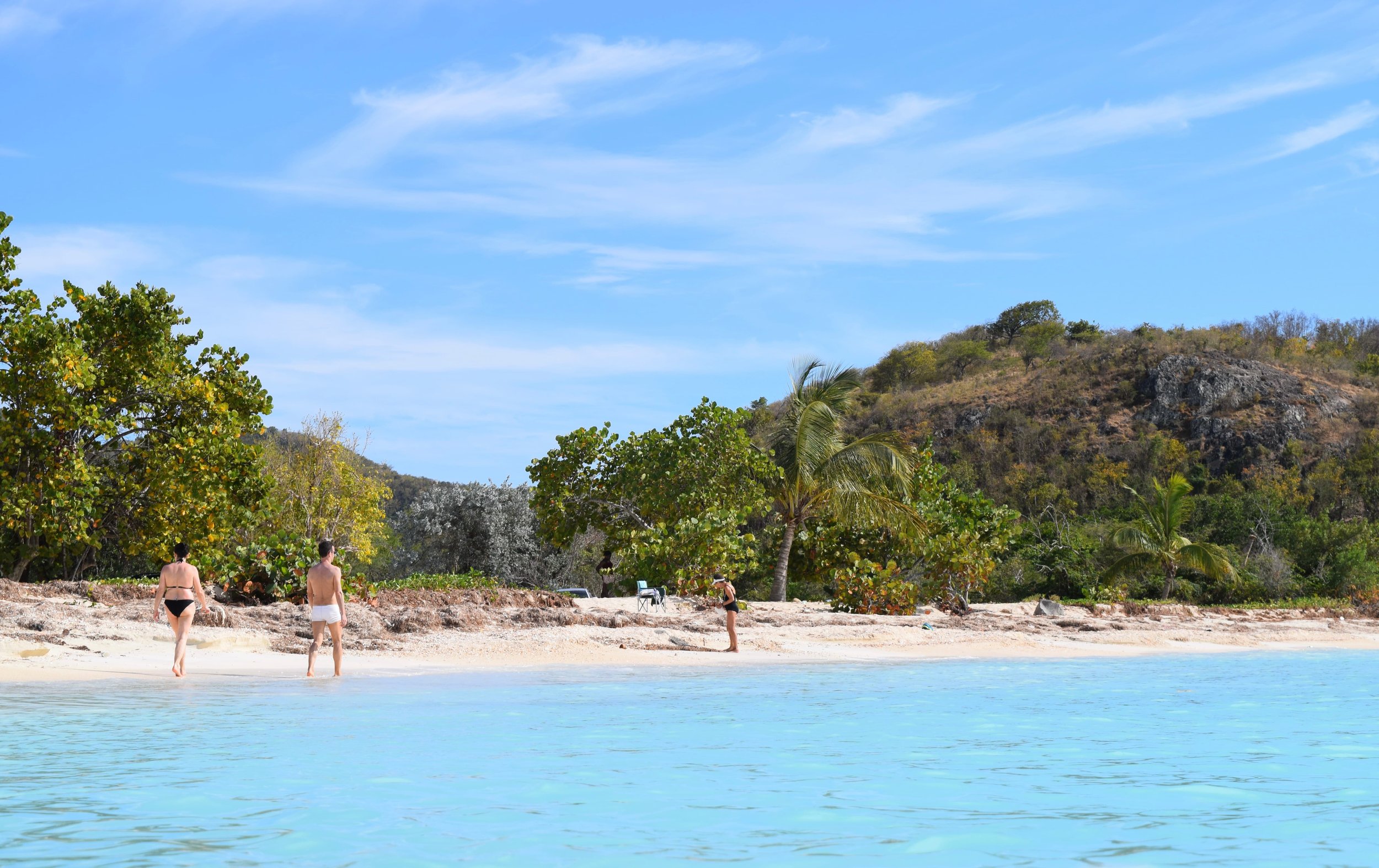
Green hills spilling toward white sand, bays that glow turquoise in the morning and go gold by late afternoon — Antigua moves at a pace that feels chosen rather than accidental.
Part of the Greater Caribbean Collection on TheTripThread — a destination reference system built for travelers deciding where they'll feel right, not just where to go. Antigua is for travelers who value calm water, genuine warmth, and a week that unfolds rather than performs.
Common Experience Patterns

Antigua runs on its own clock — unhurried, beach-anchored, and shaped around the drive between coasts rather than a walkable town center. The practical reality most travelers learn early: a rental car isn't a convenience, it's the trip. Without one, the island's best beaches, its most atmospheric dining, and the quiet coves that define the Antigua experience stay just out of reach. Distances are manageable, roads are passable, and most of the island is navigable in a day — but it requires initiative.
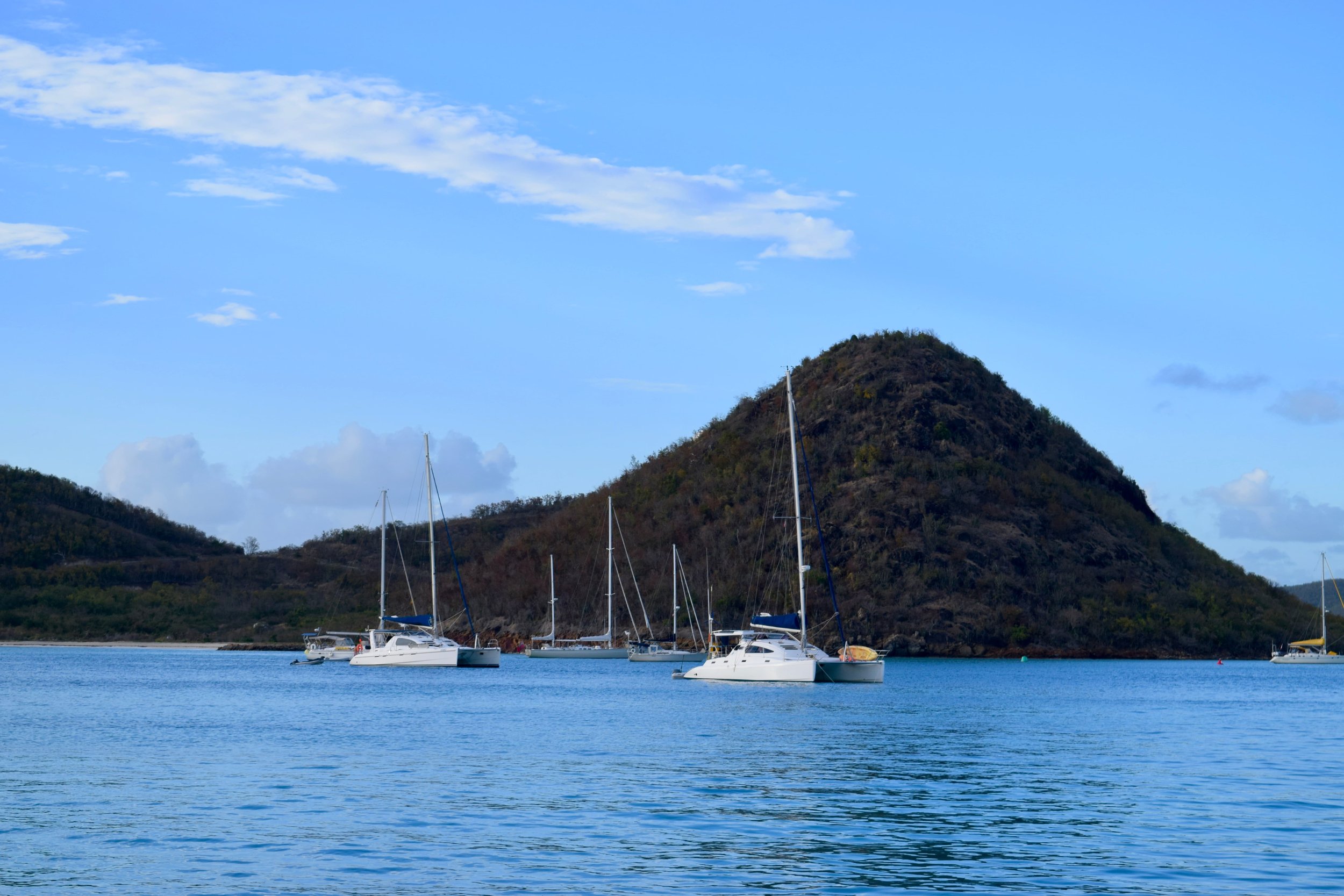
The light here is one of the more honest things about Antigua. Mornings come in pale and still, the water close to glassy on the west coast, the kind of calm that makes it easy to spend three hours at a beach you only planned to stop at for one. By afternoon the bays shift color — turquoise deepens, the wind picks up slightly — and the energy drifts toward English Harbour, where boats at anchor and harbor bars give evenings a social undertow that doesn't tip into noise. Cruise days change the equation in St. John's, but 20 minutes in any direction the island feels entirely different.
Antigua isn't Barbados or St. Lucia — it doesn't have the culinary density of one or the dramatic scenery of the other. What it trades away in variety, it returns in ease and water quality. The 365-beaches narrative is real in the sense that the coastal range genuinely varies — calm and luminous on the west, wilder and windswept on the Atlantic side — but it flattens the one caveat that matters: beach quality depends entirely on where you go, and two travelers on Antigua can have very different weeks depending on whether they stay parked at one resort or move around deliberately.
Locals Know — The beach access rule matters more than most visitors realize. Every beach in Antigua is legally public, but access paths to some of the best ones run through or alongside resort property, and the entrances can feel deliberately obscured. Locals know to look for the path regardless of how unwelcoming the approach seems. Missing this means missing some of the island's finest stretches entirely.
Where we eat:
Dining is spread across the island rather than concentrated in one district, which means the best meals usually require a short drive. The English Harbour and Falmouth area anchors the most atmospheric evening dining — harbor-view tables, local seafood, and a social pace that suits long dinners. West-coast beaches have strong casual options, but reservation reality at the more popular spots is real, especially in high season.
Where we go:
Most travelers build their days around driving a loop — west coast in the morning for calm swimming, south for English Harbour and history, east for Half Moon Bay and wind. The island is compact enough that covering two or three distinct areas in a day is entirely manageable, and many repeat visitors say discovering which beaches suit them personally is half the point.
What we love:
"Antigua has so many beaches, each with different types of sand and water of varying colors. The fun lies in discovering which beach suits you." (representative of recurring traveler perspectives, r/travel)
"Antiguans are super kind. We really enjoyed meeting the locals here. No one was ever pushy and it always felt very safe wherever we went." — Redditor, r/travel
Locals and repeat visitors alike describe Antigua as calm without being sleepy — especially for travelers who come willing to drive, curate, and let the days build on their own terms — while those who arrive expecting a walkable, self-entertaining destination tend to find the island quieter and more passive than expected.
About this section:
This section is built from publicly shared traveler perspectives and credible regional reporting. We treat it as sentiment and cross-check factual claims where possible. We intentionally limit dependence on review marketplaces where paid, promotional, or otherwise unrepresentative input can blur the picture.
Identity
Vibe Descriptors
Elegant • Inviting • Refined • Vibrant • Unhurried
……….
Core Audience
Couples, luxury travelers, and explorers who appreciate culture, sailing, and sophisticated island calm.
……….
Best For (Trip Types)
Romantic Getaway • Relax & Recharge • Foodie Escape • Sailing & Boating
……….
Known For
365 beaches, turquoise bays, colonial heritage, and a yachting culture that blends local warmth with understated elegance.
……….
Trip Thread Theme(s)
Friction & Tradeoffs (Read This Before You Book)
Cost Pressure: Antigua runs noticeably more expensive than many Caribbean neighbors, and the friction shows up most at mealtimes and in accommodation outside of all-inclusive packages. Beachfront dining, boat excursions, and villa rentals push quickly into the $$$ range; even casual lunches at beach bars carry a premium. Travelers on tighter budgets tend to do better booking an all-inclusive than trying to piece together a budget stay independently.
Mobility / Getting Around: A rental car isn't optional — it's the trip. Antigua has no reliable public transit connecting its coasts, and taxis add up fast over multiple days. Walkability is low across most areas; even within English Harbour and Dickenson Bay, reaching the best beaches and restaurants requires driving rather than wandering. Travelers who prefer moving freely on foot will feel the friction quickly.
Autonomy vs. Structure: Antigua rewards self-directed travelers willing to build their own itinerary around beach selection and driving routes. Unlike a resort-anchored island where the day structures itself around you, here the experience depends on how much initiative you bring. Travelers who prefer a planned, activity-dense structure will find the island more passive than expected — most days shape around beach, swim, repeat, with deliberate effort required to layer in variety.
Crowd Texture: Away from St. John's and the cruise port, Antigua feels crowd-light and unhurried — one of its most consistent advantages. On heavy ship days, however, the port area becomes noticeably hectic and commercial, and the gap between that experience and the quiet coasts elsewhere is stark. Sargassum arrivals in spring and early summer can affect some east-coast beaches; west-coast beaches are generally less impacted. Overall tourism saturation is medium — busy in winter high season, noticeably quieter otherwise.
Culture Access: English is universal, which lowers friction for many visitors, but the gap between resort experience and local Antiguan life is real. Local dining and neighborhood character are concentrated away from the main tourist zones and take some deliberate navigation to find — they don't surface on their own. The cruise port area is the least representative version of the island; travelers who base their impression on that corridor miss what makes Antigua worth coming back to.
Variety Ceiling: Seven days is roughly the natural ceiling before the island starts to repeat — beaches, a handful of restaurants cycling, limited nightlife, and fewer cultural anchors than larger islands in the region. Travelers who need dense variety and new stimulation daily will hit that ceiling faster. For travelers content with a slow beach rhythm, varied coastal exploration, and a couple of standout meals and experiences, the ceiling lands comfortably at the end of the week rather than midway through it.
Sand & Sea Character
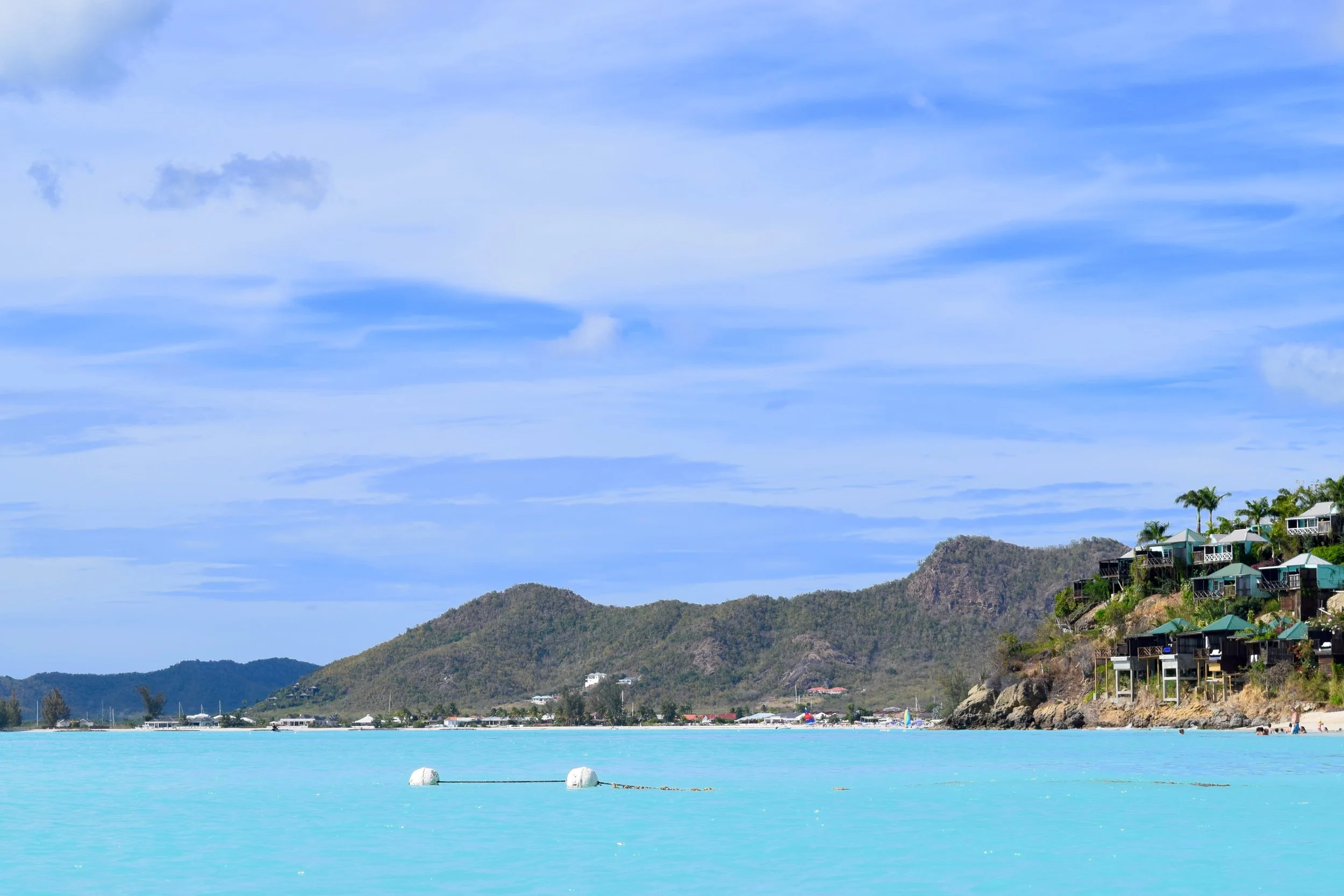
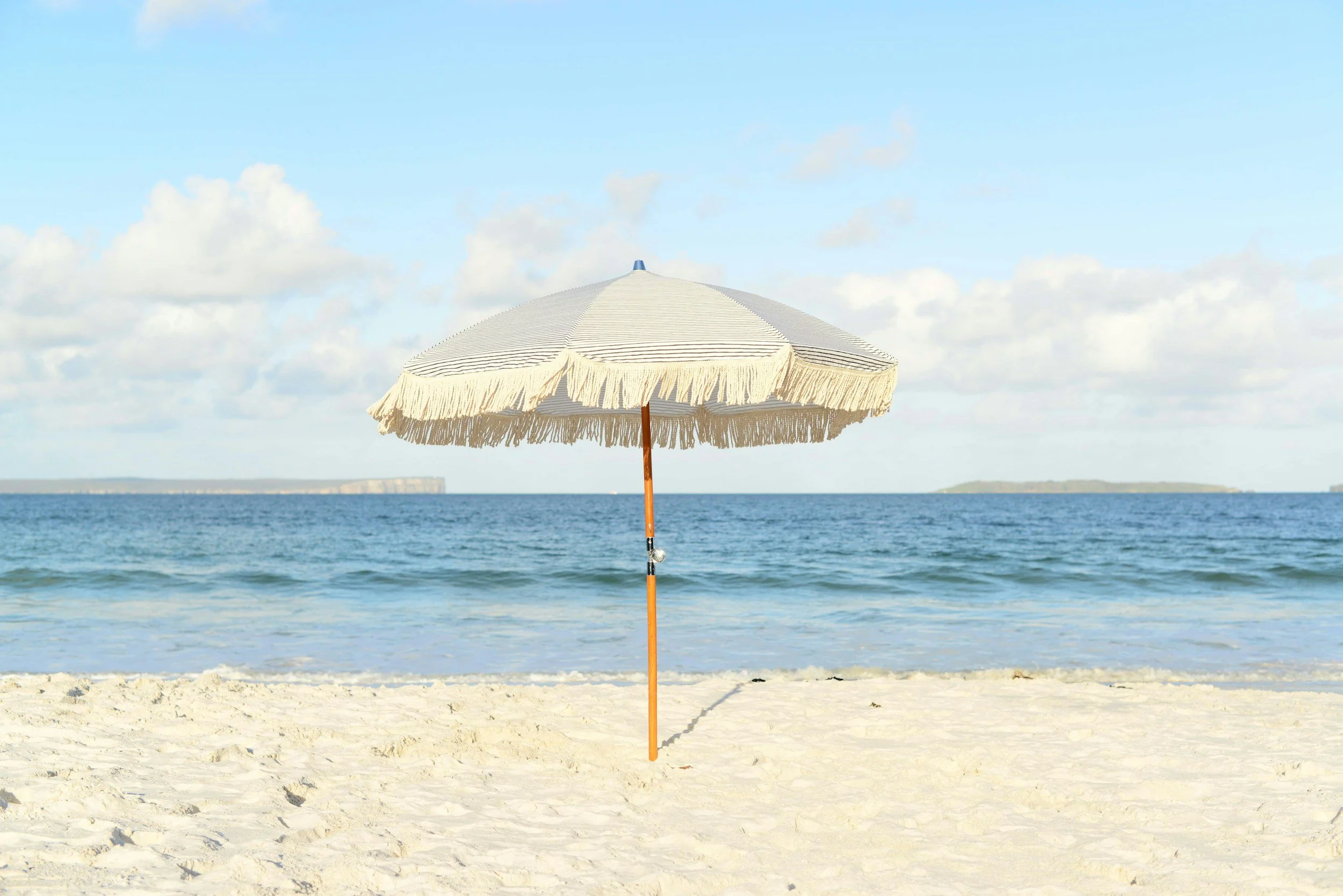
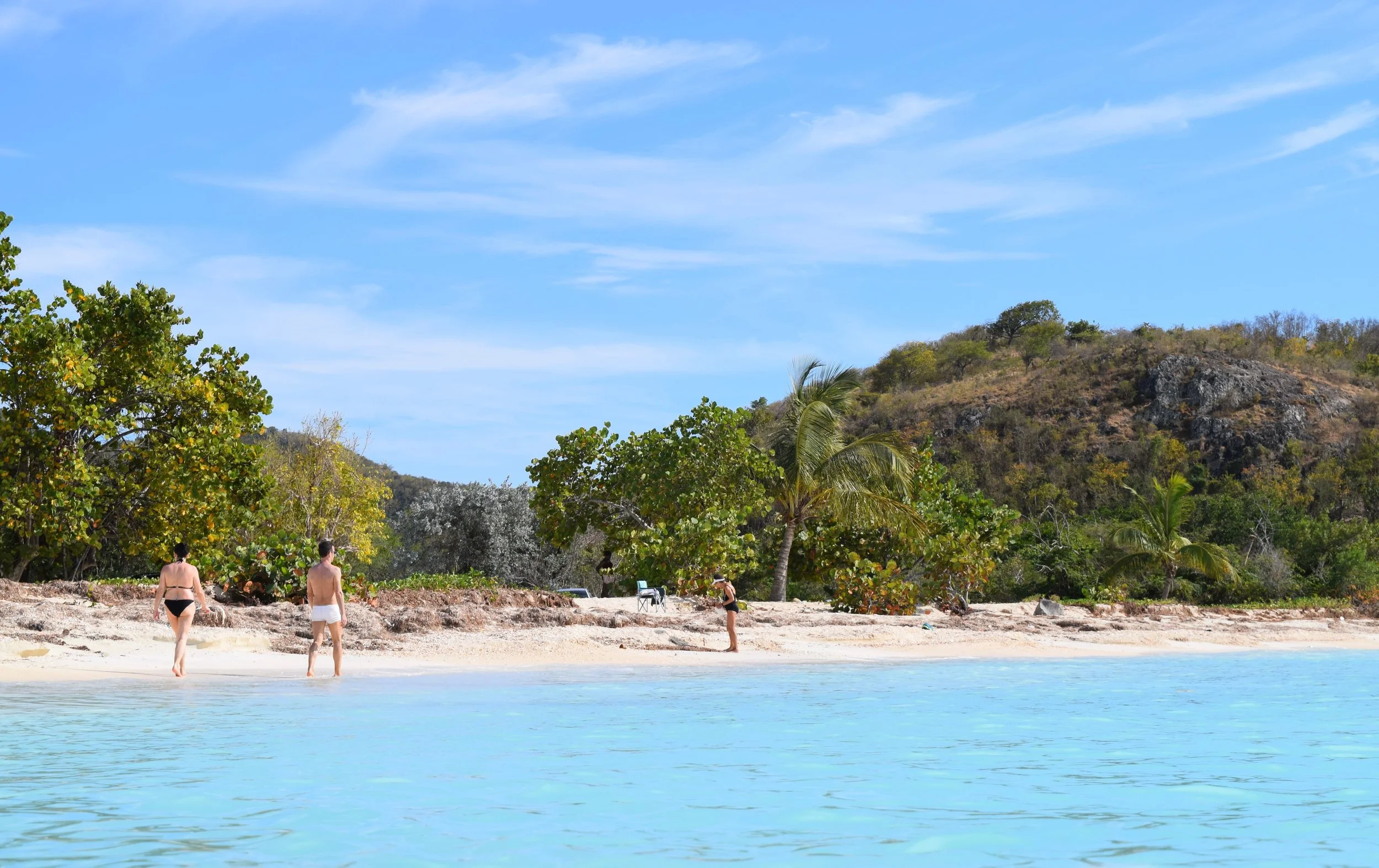
Among the Caribbean’s most photogenic islands, Antigua’s sand tells a story of contrast and calm. Along the west coast, it’s nearly white and fine as sifted sugar — the kind that feels cool even under the midday sun. These sheltered beaches invite long walks and lazy swims, and it’s here that many travelers choose to stay: calm water, soft footing, and the kind of light that seems to glow from below. Farther south and east, the sand deepens to a soft beige with coral flecks, still smooth but kissed by the breeze. Around Half Moon Bay and the Atlantic side, it becomes subtly coarser, shaped by open wind and the rhythm of stronger waves.
The sea shifts in character as you circle the island. The Caribbean side stays shallow and glass-clear, glowing in soft turquoise and mint — perfect for floating, paddleboarding, and sunset swims. To the south and east, the blues darken into richer tones, the waves pick up a gentle roll, and the coastline feels more dramatic. These waters attract travelers who want a view with energy and movement, even if the surf is less predictable.
For many visitors, where they stay comes down to this balance — some crave the calm, wade-right-in beaches of the west coast; others are drawn to the wilder, wind-touched horizons of the south and east.
Explore Antigua — Map & Island Highlights
Curated by The Trip Thread — this interactive map highlights Antigua’s most beloved beaches, dockside dining spots, and areas to stay in. Each pin is handpicked for travelers drawn to calm waters, quiet sophistication, and the rhythm of island life.
Updated regularly with local insight, this living guide helps you explore Antigua your way — from the sunset drums of Shirley Heights to the calm sweep of Half Moon Bay, from rum-soaked evenings in English Harbour to sailing adventures along the turquoise coast.
💡 Part of the Greater Caribbean Collection by The Trip Thread — curated, evolving guides built on real traveler and local perspectives.
Beaches
Antigua’s beaches shift noticeably by coast. The west and northwest offer the calmest, clearest swimming water — shallow turquoise bays protected from Atlantic swell, ideal for long, floatable beach days. The south and east feel more open, with deeper color and stronger wind movement; some Atlantic-facing stretches can have surf or undertow, especially in breezier months. If you picture easy-entry, wade-all-day water, the west coast is the safest bet; if you prefer scenery and wind, look east.
Base cue: Travelers set on classic calm-water beach days should stay on the west coast; those drawn to dramatic views and movement lean east or southeast.
Food & Drink
Dining clusters most densely around St. John’s, the northwest beaches, and the English Harbour/Falmouth area, where harbor energy carries into the evening. The west coast blends casual beachfront meals with polished, sunset-driven dining, while English Harbour skews more atmospheric and social at night. Much of Antigua requires short drives between areas, so walkable restaurant-hopping is limited outside harbor zones. Food-focused travelers typically choose either the northwest for convenience or English Harbour for evening rhythm.
Base cue: Travelers who want the greatest restaurant density should stay near the northwest or English Harbour rather than the quieter southern stretches.
Activities
Activity planning in Antigua is region-driven. The south and southeast anchor sailing culture, harbor viewpoints, and historical exploration, while the west coast centers on swimming, boat days, and relaxed water access. Nature walks and scenic drives are scattered, which means stacking east, west, and south activities into one day often adds unnecessary driving. Travelers who want highly active days with layered experiences usually base near English Harbour or centrally along the west coast to reduce friction.
Base cue: Highly active travelers should prioritize the south or central-west; those content with beach-forward days can stay west and move selectively.
Where to Stay in Antigua
Choosing where to stay in Antigua quietly shapes how the whole trip feels. Different coasts move at different speeds—some are built for calm-water mornings and easy swims, others for harbor energy, open-ocean scenery, or a slower, more residential rhythm. Use this as a choice between experiences, not amenities, so the island’s pace matches the way travelers actually like to travel.
Dickenson Bay & the North-West Coast — Easygoing and Effortless
On Antigua’s northwestern curve near St. John’s, Dickenson Bay feels active without being chaotic—bright beaches, easy access, and plenty of motion around the shoreline. Travelers who stay here tend to value simplicity: short drives, lots of dining options, and a base that works for first visits or shorter trips. Compared with the Southwest Coast, it leans more social and less secluded, with a steadier pulse throughout the day. The trade-off is that it can feel more touristed and less “away from it all,” especially in peak season.
Why stay: Central and low-friction—ideal for travelers who want variety and convenience without building the day around long drives.
Why not: It’s one of the busier zones, with less of the quiet separation some travelers come to Antigua for.
~~~~~
Jolly Harbour & the Central West Coast — Social and Self-Contained
Further down the west coast, Jolly Harbour feels like a contained pocket of Antigua—marina-oriented, easy to navigate, and built around a steady, everyday rhythm. Travelers choose it for function: a simple home base with quick access to west-coast beaches and an easy setup for groups who want to settle in and repeat a comfortable routine. Compared with English Harbour, it’s calmer and more residential, but less historic and less atmospheric at night. The trade-off is that it can feel more like a practical base than a place with a strong sense of “Antigua character.”
Why stay: Simple and steady—best for travelers who want an easy home base and predictable days on the calm-water side.
Why not: The mood can feel more contained and less distinctive than Antigua’s more historic or scenic regions.
~~~~~
The Southwest Coast — Quiet Hills and Cinematic Views
Past the more active hubs, Antigua’s Southwest Coast slows down—green hills, wider skies, and beaches that feel more spacious and unhurried. Travelers who stay here are usually choosing calm over convenience: quieter mornings, fewer people on the sand, and a more natural pace that rewards slowing down. Compared with Dickenson Bay, it feels more private and less busy, but it also asks for more planning and driving for dinners or variety. The trade-off is that the evenings can feel quieter and the island’s main social energy is farther away.
Why stay: Quieter and more spacious—ideal for couples and slow travelers who want calm beaches and a less crowded feel.
Why not: Less central, with more driving and fewer built-in options once the day winds down.
~~~~~
English Harbour & the South-East Coast — History with a Pulse
On the island’s south side, English Harbour and nearby Falmouth carry Antigua’s sailing identity—anchored boats, golden light over the water, and a lived-in sense of history around the harbor. Travelers who choose this base tend to want evenings with atmosphere: waterfront wandering, sunset viewpoints, and a social scene that feels grown-up rather than clubby. Compared with the west coast, it’s more character-rich and night-leaning, but the beaches require more deliberate drives and the coastline is less “walk out and float” calm. The trade-off is that it’s not the easiest base for constant beach-hopping without planning.
Why stay: Atmospheric and social-calm—best for travelers drawn to sailing culture, harbor evenings, and a more character-driven base.
Why not: It’s less beach-immediate, and the best swim-friendly bays may take more planning and driving.
Practical Snapshot
Before planning your Antigua vacation, here are the essentials every traveler should know.
-
December – April for dry, breezy days and vivid turquoise water. Fewer crowds and softer rates May – June.
-
Eastern Caribbean Dollar (EC$); U.S. dollars widely accepted, though small change often returned in EC$.
-
English is official; locals speak Antiguan Creole English in casual settings.
-
V.C. Bird International Airport (ANU) with direct flights from the U.S., U.K., and Canada. Cruise port in St. John’s for day visitors.
-
$$$-$$$$; Boutique stays, Airbnbs, and high-end hotels, as well as local beach bars and casual rum shacks.
-
Centered on English Harbour and St. John’s — live steel pan, reggae nights, and the Sunday sunset party at Shirley Heights.
-
Rent a car or hire a driver; roads are narrow but scenic. Taxis quote fixed rates — agree before departure.
-
Antigua is generally considered a safe destination. Tourist-facing areas are well-traveled and comfortable, and the island has a strong reputation for warmth toward visitors. Solo travelers find it easy to navigate with standard awareness — the main practical safety note is to avoid leaving valuables in rental cars at beach pull-offs, which is the most commonly cited concern among repeat visitors.
Same-sex relations were decriminalized in Antigua in 2022, which marked a meaningful legal shift. Tourist-facing areas are generally accepting. Social attitudes remain conservative in many local and rural communities, however, and public discretion is advisable for LGBTQ+ travelers outside resort areas. The legal change is genuine progress, but it doesn't yet reflect the full social reality across the island.
-
There are 365 beaches — one for every day of the year. Sunday afternoons = island time at Shirley Heights Lookout. It’s an island where everyone can find something they love about it.
-
Coral-reef preservation is a growing focus. Choose reef-safe sunscreen.
Compare Similar Caribbean Islands
Thinking about Antigua vs. St. Lucia or Barbados? Here’s how these Caribbean islands differ in rhythm, food, and feel.
ANTIGUA
Vibe & Energy
Elegant yet unhurried — an island of calm bays, coral hills, and a refined sailing rhythm. Romantic but grounded; lively when you want it, peaceful when you don’t.
Dining & Culture
Strong local flavor with global polish. Dockside seafood, beach bars, and fine dining overlooking the sea; warmth and sophistication in equal measure.
Cost & Crowds
Upscale but not showy; pricing similar to Barbados or St. Lucia. Busy in winter, easygoing the rest of the year.
Accessibility
Direct flights from the U.S., U.K., and Canada; compact island easy to navigate by car.
Nightlife / Social Scene
Low-key and authentic — sunset gatherings at Shirley Heights, marina bars, and rum punches by moonlight.
Best For
Couples and travelers who want refined tranquility, soft adventure, and a true sense of island time.
ST. LUCIA
Vibe & Energy
Lush and romantic — dramatic mountains meet calm Caribbean coves; slower, moodier, deeply sensory.
Dining & Culture
Farm-to-table influence from its volcanic soil and French-Creole roots; candlelit cliff dining and local street food both shine.
Cost & Crowds
Mid-to-high tier. Resorts can be luxurious, but smaller inns and guesthouses keep it approachable; crowds spread across the island.
Accessibility
Direct flights from the U.S., Canada, and the U.K.; a longer drive from airport to resorts adds to the sense of escape.
Nightlife / Social Scene
Quiet and romantic — think live acoustic sets, beach bonfires, and resort bars over big clubs.
Best For
Couples and honeymooners seeking lush scenery, privacy, and slow-burn island rhythm.
BARBADOS
Vibe & Energy
Classic Caribbean polish — lively, elegant, and full of local character; surf on one coast, calm luxury on the other.
Dining & Culture
Culinary standout with world-class restaurants and authentic Bajan food culture; music and rum shape every evening.
Cost & Crowds
Similar price tier to Antigua but busier, especially on the west coast; still offers quiet corners for upscale stays.
Accessibility
Excellent — direct flights from major U.S. and European cities; compact island easy to navigate.
Nightlife / Social Scene
Vibrant — beach clubs, rum shops, and live calypso keep nights long and sociable.
Best For
Travelers who want refined comfort with local color and easy access to nightlife and dining variety.
Pick Antigua if: you want calm turquoise water, beach variety worth exploring over a week, and a relaxed pace where sailing culture and warm locals do the heavy lifting.
Pick St. Lucia if: dramatic scenery and deep romantic seclusion matter more than beaches — you'd trade swim-easy bays for lush mountains and candlelit cliff dinners.
Pick Barbados if: you want the same refined Caribbean feel but with more built-in social life, walkable dining variety, and evenings that carry their own momentum.
Tie-breaker: If the beach is the centerpiece of your trip, Antigua. If the landscape and atmosphere are, St. Lucia. If you want easy access to both food culture and nightlife alongside beaches, Barbados.
Local Truths
"Antigua" is pronounced An-TEE-guh — the 'u' is silent. Locals notice when visitors get it right, and they notice when they don't. It's a small thing that signals whether you've done your homework.
~~~~~
Every beach in Antigua is legally public, but resort and private property often sits directly alongside access paths — some of which look intentionally unmarked. Locals treat this as common knowledge; visitors frequently miss some of the island's best stretches because the path felt like it wasn't meant for them. It was.
~~~~~
Greet before you ask. "Good morning" or "Good afternoon" before requesting directions, service, or anything else is not optional politeness — it's how interaction works here. Skipping it reads as rude, not just brusque.
~~~~~
Sundays slow to a near-stop. Grocery stores, many local businesses, and most non-tourist-facing services close early or entirely. Travelers who arrive on a Sunday or plan a Sunday departure without accounting for this tend to scramble. Plan meals, fuel, and supplies around it.
~~~~~
Cruise days transform St. John's. On heavy ship days — which can bring two or three vessels at once — the port area becomes crowded, vendor-heavy, and unrepresentative of the island. Locals and seasoned visitors know to leave St. John's to the day-trippers on those mornings and head straight for a coast.
~~~~~
A rental car isn't a suggestion — it's how the island works. Taxis are available but expensive across multiple days, and there is no reliable public transit connecting the coasts. Travelers who arrive without a car booked tend to feel the constraint within the first 24 hours.
~~~~~
Jabberwock Beach and the northeast coast are where kitesurfers and windsurfers go — the Atlantic-exposed conditions that make the east feel wild are exactly what that community is chasing. Swimmers expecting the same calm turquoise as the west coast are often caught off guard by the difference.
~~~~~
Sargassum seaweed arrives on some east and south-facing beaches between spring and early summer, and the extent varies year to year. The west coast is generally less affected. If beach aesthetics matter, it's worth checking conditions for your travel window rather than assuming.
Antigua Travel Questions, Answered
A few essentials to help you plan with confidence — from when to visit and which coast to stay on, to what travelers say about safety, cost, and connection.
1. Is Antigua expensive?
Antigua runs on the higher end for the Caribbean, though not at the extreme. The biggest cost pressure shows up in dining outside of all-inclusive packages and in accommodation along the more desirable coastal stretches. Travelers who book an all-inclusive find costs more predictable; those staying independently should budget generously for meals, car rental, and the occasional boat excursion. It's not a budget destination, but the value tends to feel justified once you're on the water.
2. When's the best time to visit?
December through April is Antigua's sweet spot — dry, breezy, and reliably sunny with low humidity. That said, the shoulder months of May and November offer a genuine alternative: fewer visitors, lower rates, and weather that's only marginally less predictable. Hurricane season runs June through November, with the peak risk in August and September. Sargassum seaweed can affect some east and south-facing beaches in spring and early summer, though west-coast beaches are generally less impacted.
3. Which area or coast should I stay on?
It depends on what you want the trip to feel like. The northwest coast around Dickenson Bay is the most convenient base — easy beach access, good dining nearby, low friction for first visits. English Harbour suits travelers who want atmosphere and evening character over pure beach convenience. The southwest is quieter and more private, better for couples who want space over social energy. There's no wrong answer, but the coasts move at genuinely different speeds, so the choice matters more than it might seem.
4. Do I need a car?
Yes — a rental car is effectively essential for getting the most out of Antigua. The island's best beaches, dining, and scenery are spread across multiple coasts with no reliable public transit connecting them. Taxis work for occasional trips but add up quickly over a full week. Most travelers book a car from arrival and find the island easy enough to navigate independently. Roads are generally passable, driving is on the left, and the island is compact enough that most areas are reachable within 30–40 minutes.
5. Is it safe for solo or LGBTQ+ travelers?
Antigua is generally considered safe and welcoming for solo travelers — the island is easy to navigate, English is universal, and locals are warm. Solo travelers who use standard awareness around transport and after-dark movement typically report smooth experiences. Same-sex relations were decriminalized in Antigua in 2022, and tourist-facing areas are generally accepting. Social attitudes remain conservative in many communities, however, and public discretion is advisable for LGBTQ+ travelers outside resort areas.
6. How does it compare to nearby islands?
Antigua sits in a comfortable middle ground — more refined and beach-varied than many budget-leaning Caribbean islands, less scenically dramatic than St. Lucia, and less socially dense than Barbados. Where Antigua pulls ahead is water quality and beach range: the west coast delivers some of the clearest, calmest swimming in the region, and the variety across coasts rewards travelers willing to explore. Travelers choosing between Antigua and St. Lucia are usually choosing between beaches and mountains; those choosing between Antigua and Barbados are weighing calm ease against built-in social energy.
Why This Guide Changes With the Island
Antigua moves with the wind and the water. One season it’s a beach bar reborn as a sunset hangout; the next, a family-run café drawing sailors off the docks. Festivals grow, favorite beaches shift, and new local gems quietly appear. This guide changes with it — updated by the people who live here and the travelers who return, so what you’re reading always feels as alive as the island itself.
Find Your Thread
Every traveler connects differently. Maybe Antigua is your match — or maybe your story continues across another island in this chain.Either way, that’s what The Trip Thread is about: rediscovering travel that feels alive again — rooted in local insight, shaped by emotion, and guided by genuine discovery — your discovery.
Explore more destinations in TheTripThread’s Greater Caribbean Collection — a growing series of curated island guides built for travelers who value depth over hype.
Guided by locals. Designed for discovery.